A new Slop University paper re-inspects 312 certified backyard pool barriers without notice, 1,058 times over 76 weeks, finding 61.4 per cent fully compliant at a random moment against a council register figure of 98.1 per cent.
Unannounced re-inspections across 312 backyard barriers put the average life of the certified state at 14.6 weeks, against a certificate that stands for three years
A compliance certificate on a council pool register describes a barrier that met the standard. It describes it on one morning, and it stays on the register for three years.
A paper released today went and looked at the other 155 weeks. With the agreement of 312 households, all of them holding a current certificate, School of Continuous Improvement researchers arrived unannounced on intervals drawn before recruitment and applied the same four-criterion checklist an accredited certifier applies, 1,058 times. At a randomly chosen moment, 61.4 per cent of those barriers met every criterion. The register, correctly, reported 98.1 per cent.
The two figures are both right, and the University would rather sit with that than pick between them. We would welcome the question the paper leaves open, which is how often a thing has to be looked at before a number about it can be published quarterly.
— Dr Thandiwe Solberg, Senior Lecturer and Convenor, Demo Quarter
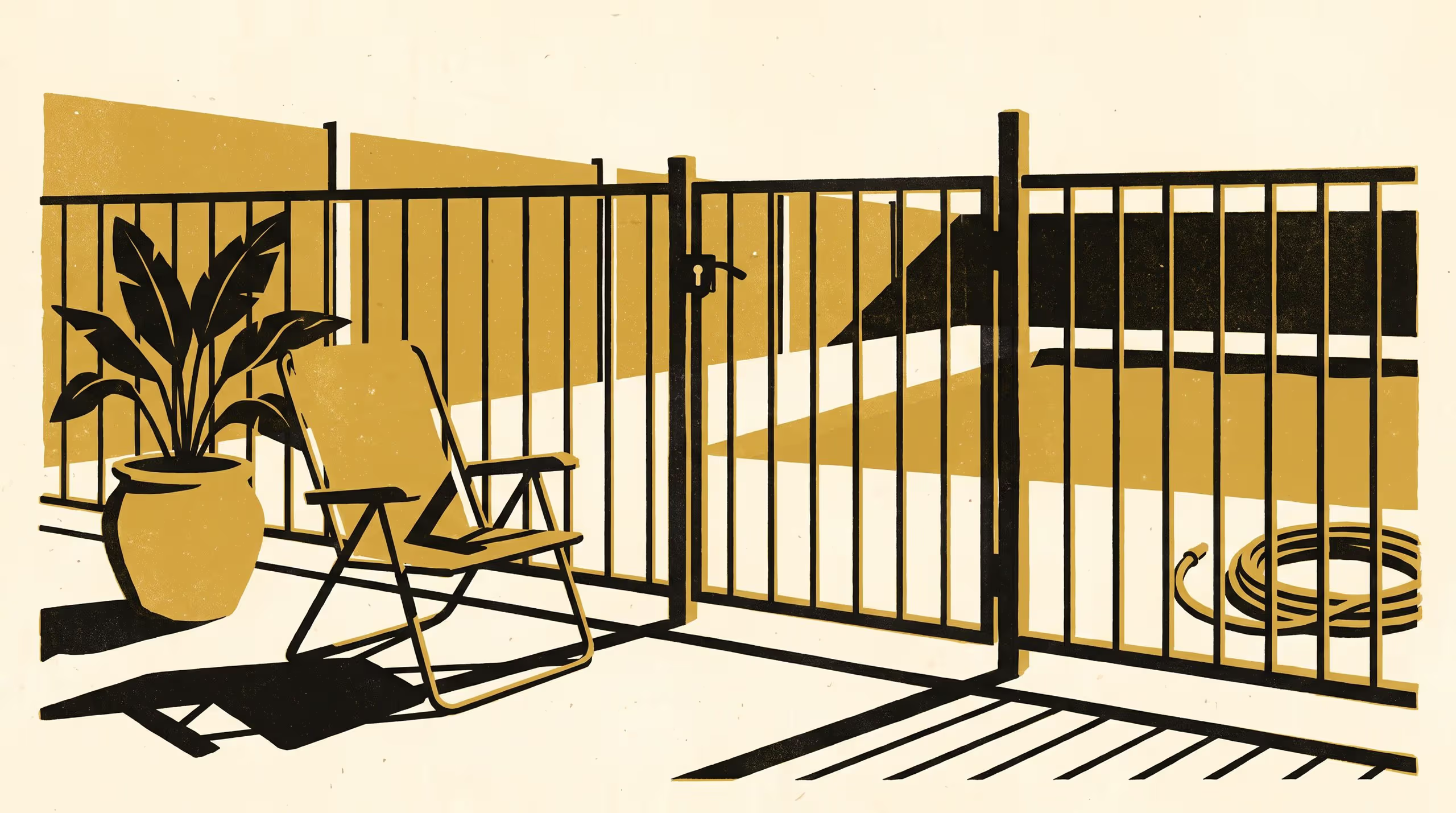
Fitted to a reversible three-state model, the barriers hold their certified state for 14.6 weeks on average and settle into a steady mix by the second quarter of the certificate’s life. What the researchers found in between was mostly a garden chair, a planter, or a wheeled bin standing inside the non-climbable zone, and mostly gone again by the next visit. “These are not barriers falling down,” said Dr Solveig Adeyemi, Lecturer in the School of Continuous Improvement. “They are barriers being lived beside.”
The Office of Research Outputs lists the paper among the year’s work on measurement intervals, and the University is glad to have it on the record. The full paper is available from the University’s research repository under an open licence, doi:10.5555/slop.5e3jfu.