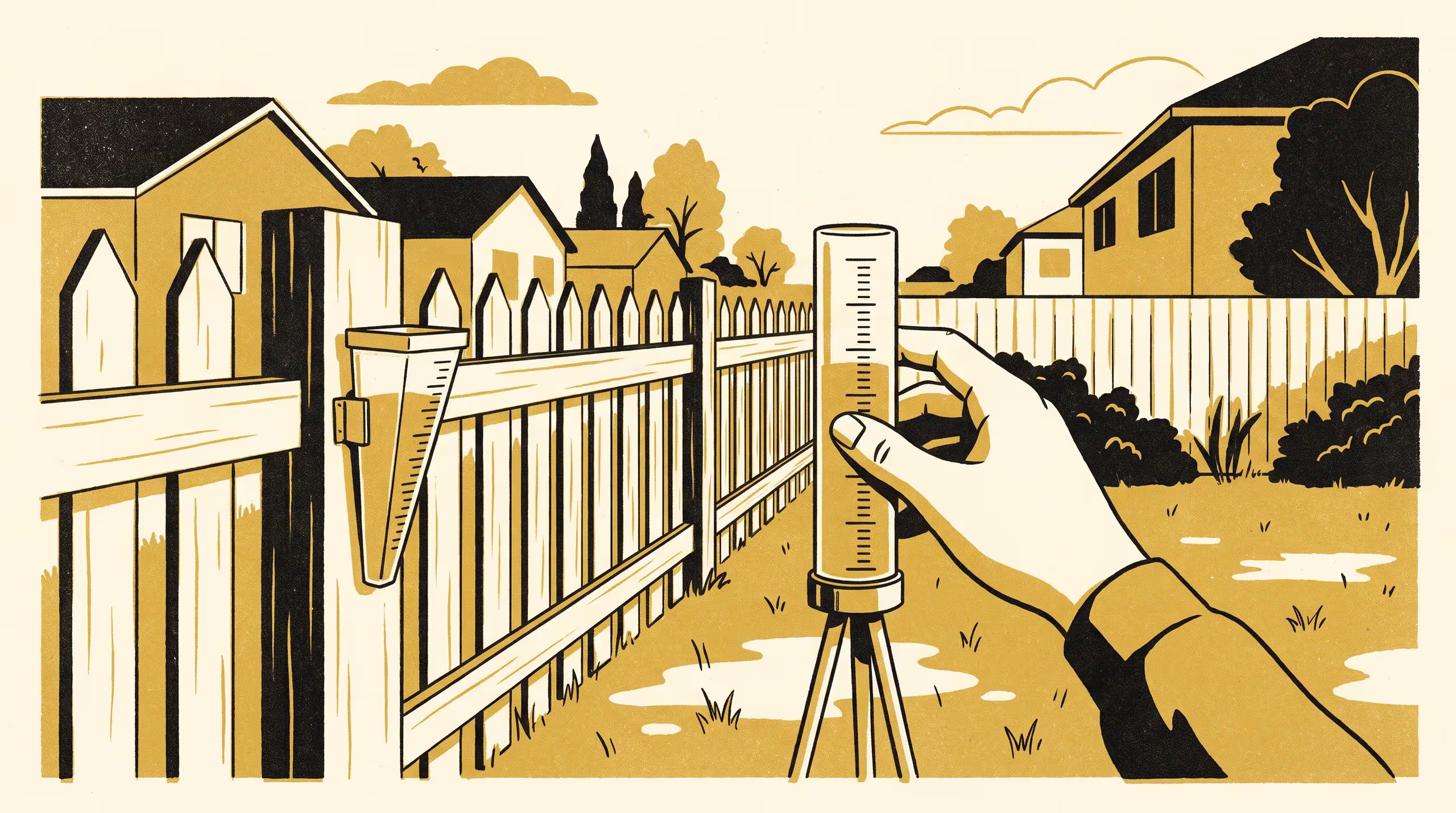
A new Slop University paper pairs 26 sites of a council's volunteer rainfall network with calibrated gauges over eighteen weeks, and follows the difference through to the rule that closes blocked-drain complaints.
Two gauges standing a pace apart can differ by more than the threshold a council uses to close a drainage complaint without sending anyone
Seventy-four households got up every morning for eighteen weeks and read a number off a piece of moulded plastic on a fence post. Whatever else the paper says, we would like it read first as a thank-you to them.
— Dr Ronja Oyelaran, Senior Lecturer, School of Emergent Priorities
Dr Oyelaran leads the paper published today through the Office of Research Outputs, which sets a metropolitan council’s community rainfall network beside the calibrated instruments the council maintains for itself.
Twenty-six of the network’s sites were paired with a council gauge on a six-monthly calibration cycle, both read to the same nominal morning boundary, producing 1,304 days over eighteen weeks on which rain was recorded. The two records track each other closely. What the paper measures instead is whether one can stand in for the other, and there the interval holding 95 per cent of the differences between them runs 24.0 millimetres wide. Readings cluster on 0 and 5 millimetres to a degree the researchers were able to quantify, and able to rule out as the main source of the spread.
The council closes a blocked-drain complaint without dispatching an inspector once the day’s community reading reaches 10 millimetres. Applied to 318 complaints, the two records reached different decisions on close to a quarter, most often in the direction of closing.
“The questions this opens are not ours alone to settle, and we would welcome the network’s members and the council sitting with us in them,” said Dr Torun Ezeigwe, Senior Lecturer and Director of the Master of Applied Measurement. The University counts the study among the kind of work it most wants its schools doing: unglamorous, close to the ground, and consequential for people who never asked to be measured.
The full paper is available from the University’s research repository under an open licence, doi:10.5555/slop.b36m76.