A new Slop University research poster instruments 22 public amenity blocks for fourteen weeks, finding button-press rates unrelated to independently audited condition and 12.0 per cent of roster hours going to the two settings that carry 29.0 per cent of the audit warrant.
A study of 22 public amenity blocks finds press counts tracking footfall rather than condition, and a cleaning roster that follows them anyway
Nobody presses the button at the boat ramp. A research poster released today by the School of Continuous Improvement reports that almost nobody presses it anywhere quiet, and that the cleaning roster has been reading the silence as good news.
A terminal nobody presses returns much the same reading as a terminal outside a spotless block. We have been treating those two as the same fact for some years now.
— Dr Osei Vandermeer, Research Fellow and Convenor of the Review Cadence Observatory
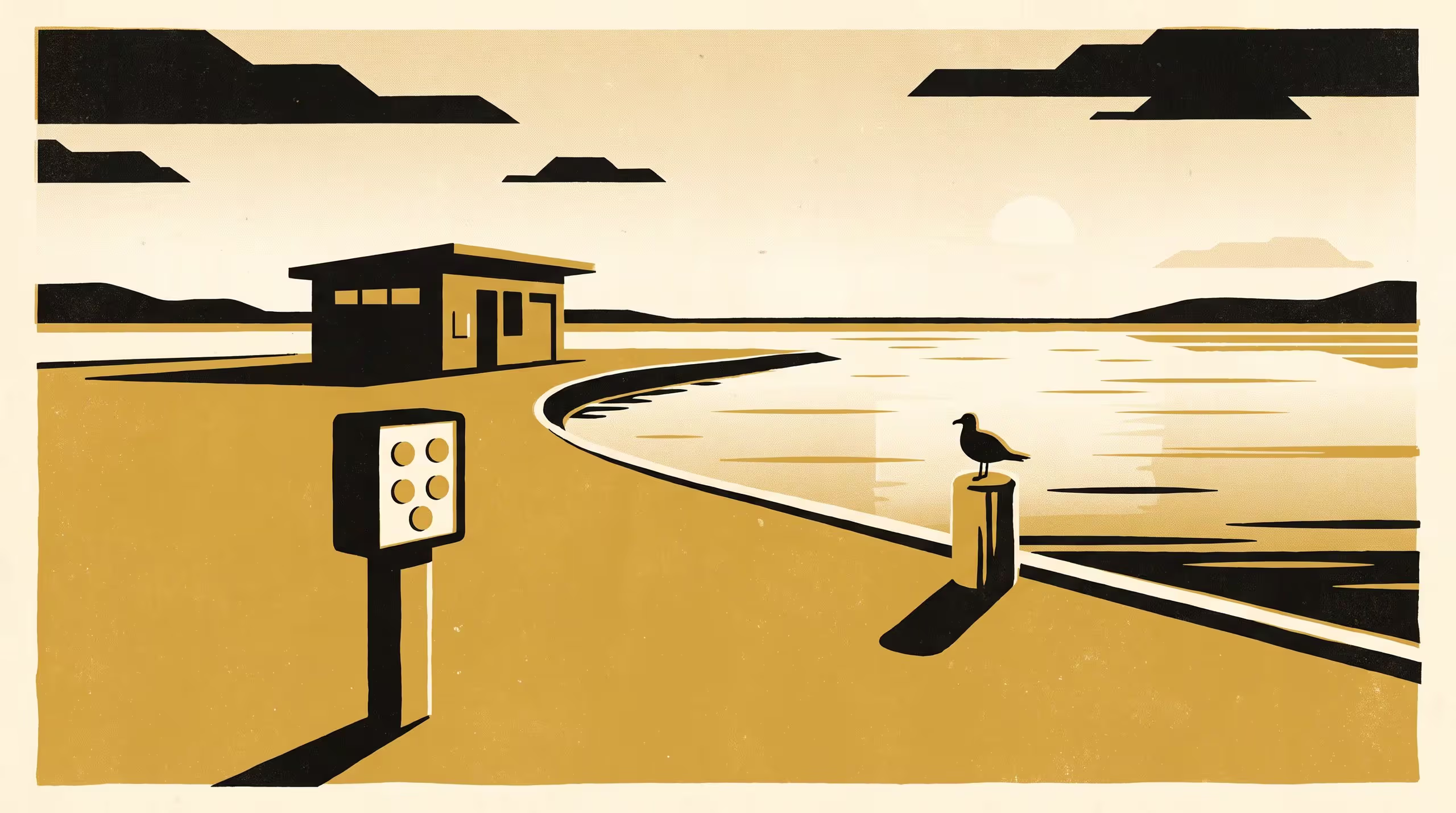
Four-button feedback terminals at 22 amenity blocks across eight settings were logged for fourteen weeks alongside doorway counts and twice-daily condition audits, carried out by assessors who could not see the telemetry and to a schedule fixed before the feed was released. Press rate per 1,000 visits turned out to bear no reliable relation to audited condition. Raw press volume tracked the number of people through the door closely.
Allocation follows the presses. The boat-ramp and cemetery settings, which between them carry 29.0 per cent of the condition warrant, received 12.0 per cent of fortnightly roster hours, and neither crossed the dispatch threshold once over the window studied.
The release sits close to what the University’s evaluation-ecosystem agenda was established to produce: work small enough in scope to reach the desk of the person who sets the roster. Dr Bram Ntuli, Lecturer and Convenor of the Improvement Grand Rounds, described the study as “the kind of thing our schools should be able to hand across without a covering note”.
“It changes what I want to ask of a feed before we let it schedule anything,” said Dr Marit Osayande, Lecturer and Convenor of the Living Dashboard. “Not whether it is reporting, but whether it would look any different if it had quietly stopped.”
The full poster is available from the University’s research repository under an open licence, doi:10.5555/slop.lmxvni.