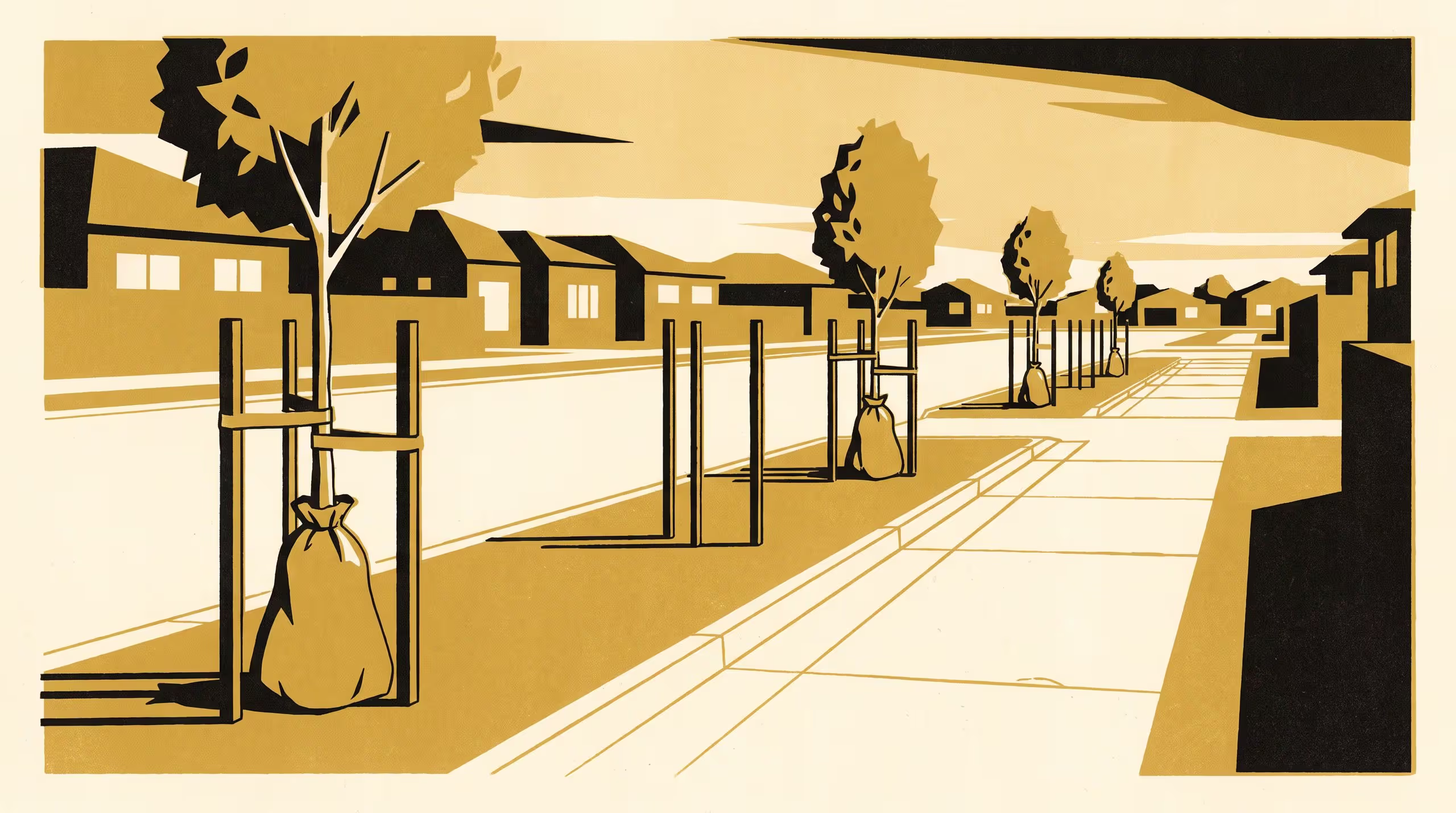
A new Slop University research poster costs a council's street-tree watering-bag rounds at $318 per additional tree surviving two summers, and finds the canopy target the council reports against books only the cost per tree planted.
A cost-effectiveness study across 386 street trees finds bagged rounds cheaper than replanting, and a canopy target that books only the plantings
There are two defensible ways to price a council’s street-tree watering round, and they differ by a factor of four. A research poster published today by the School of Continuous Improvement reports both, then follows the cheaper of them into the council’s capital-works ranking.
Three hundred and eighty-six street trees across twenty-four verge segments, in two depot areas, were followed through two summers and allocated to bagged or unbagged rounds in matched pairs. The rounds were costed from depot timesheets, metered water and the amortised bags themselves. Survival at twenty-four months was assessed by someone who did not know which segments had been watered.
Bagged trees reached establishment at 71.4 per cent against 46.9 per cent unbagged, at an incremental $318 per additional tree alive. On the council’s own figures the round is cheaper than putting a replacement in the ground.
Nobody chose to undercount this. Somebody picked a denominator years ago because it was the one the system could produce, and everything downstream has been agreeing with them ever since.
— Dr Sten Okwuosa, Senior Research Fellow and Convenor of the Impact Pathway Atlas
The canopy target the council reports against is denominated in trees planted, so the only cost it can book is the cost per planting, which held between $36 and $41 across the study period. The cost per tree still standing after two summers rose from $88 to $149 over the same eight quarters.
“A cost-effectiveness result is a small thing to produce and an awkward thing to place,” said Dr Bram Ntuli, Lecturer and Convenor of Improvement Grand Rounds. “Ours went into a ranking with no field for it.”
Arithmetic of this kind, cheap to do and inconvenient to file, is work the University is glad to have on its record. A survival-denominated variant of the canopy indicator has been tabled with the Indicator Commons.
The full poster is available from the University’s research repository under an open licence, doi:10.5555/slop.k1pyas.