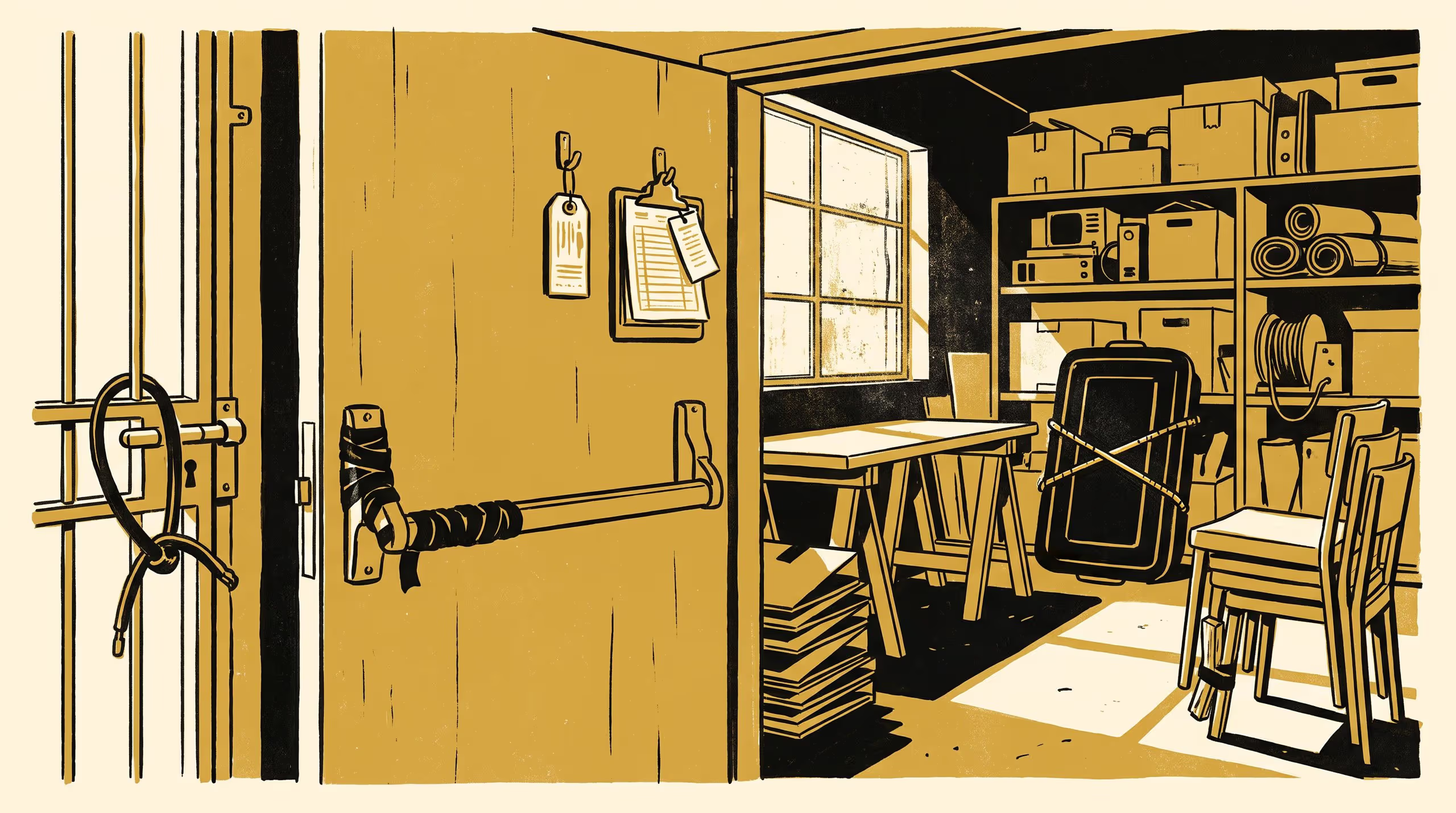
A new Slop University paper builds a seven-class taxonomy of improvised repair from 1,462 instances photographed across 214 shared community facilities, then follows it into one portfolio's maintenance system, where median time to closure fell from 34 days to six.
A field survey of 214 shared community facilities yields a seven-class taxonomy, which one facilities portfolio has since adopted as its maintenance closure codes
Two researchers spent nineteen weeks walking community halls, sporting pavilions, scout dens, bowls clubs, coin laundries and community sheds with a camera, photographing every repair that had not been made with matching parts. They came back with 1,462 of them, across 214 sites, and not one site without.
A paper published today by the School of Emergent Priorities sorts that catalogue into seven classes — binding, packing, splinting, sealing, substitution, immobilisation and annotation — and reports that two coders working separately agree on which is which often enough for the scheme to be used by people who were not there when it was written.
We arrived expecting to find things broken and found them held. A cable tie that has been on a gate for four years is not a failure of maintenance. It is maintenance, done by somebody nobody asked.
— Dr Ronja Oyelaran, Senior Lecturer, School of Emergent Priorities
The second half of the paper follows the seven classes into the maintenance system of one facilities portfolio, which adopted them as closure codes. Median time from a work order being raised to being closed fell from 34 days to six, and the open backlog contracted by 41 per cent. Over the same period the share of assets carrying at least one improvised repair rose from 44 to 63 per cent.
“A classification is a piece of infrastructure, and the School has learned that it does not stay where you put it,” said Associate Professor Kwame Lindqvist, Director of the Master of Priority Studies.
The University offers the work as evidence of what its researchers find when they go and look at the thing itself, and regards a study of repairs nobody commissioned as a proper use of a research programme.
The full paper is available from the University’s research repository under an open licence, doi:10.5555/slop.jpw07w.