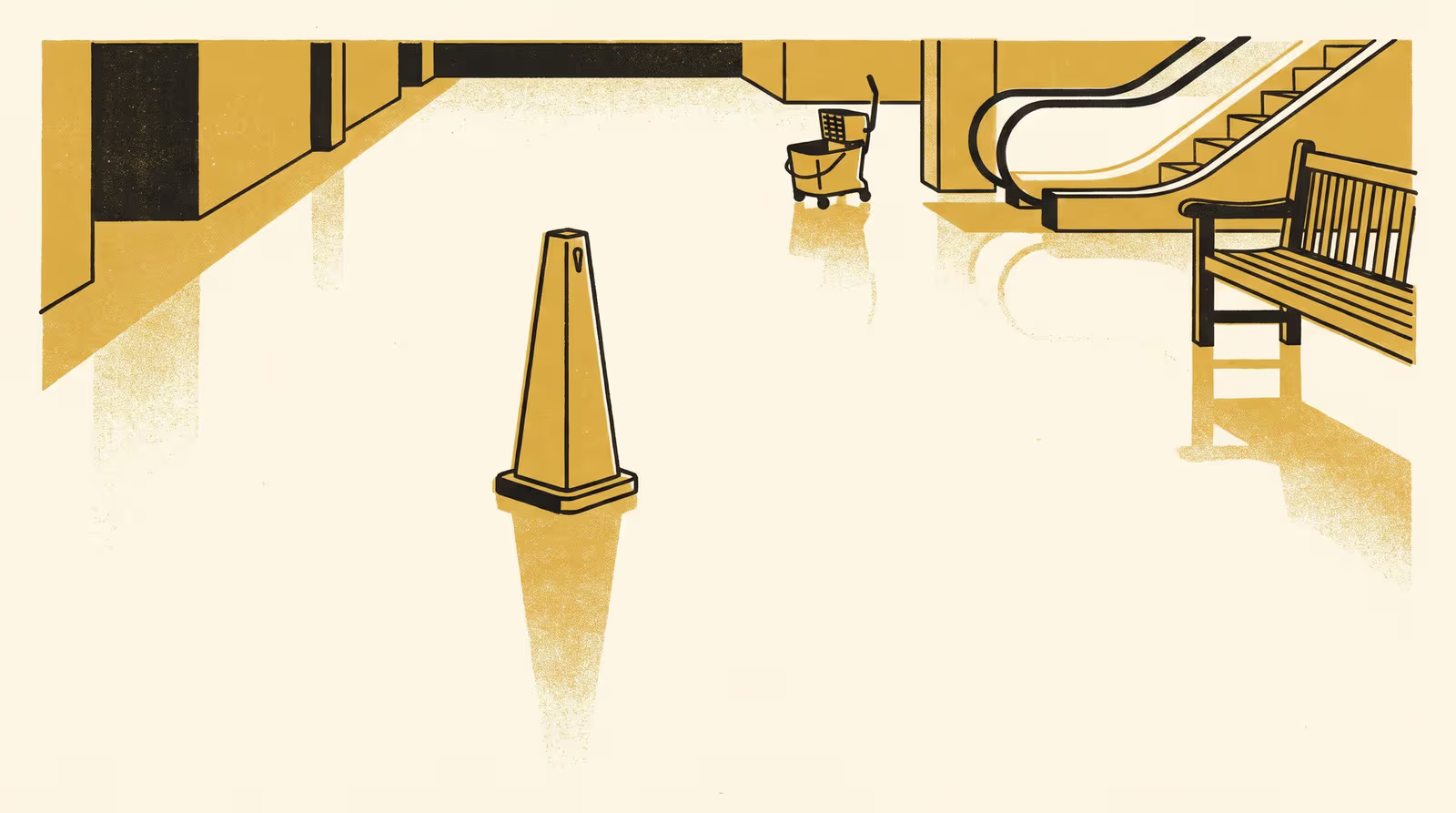
A new Slop University signage campaign fronts Dr Solveig Adeyemi with a warning cone left standing long after the spill, reducing her work on unreported incidents to a four-word headline, an attribution and a code to scan.
Somebody Saw It First puts Dr Solveig Adeyemi and a cone standing on dry floor onto the University's portrait signage panels
The spill is mopped in a minute. The cone can stand there for a fortnight, and in most systems neither event exists.
Somebody Saw It First began its run this week across the University’s portrait display panels, in renderings matched for daylight and for after dark. The artwork sets Dr Solveig Adeyemi in a shopping-centre concourse at a quiet hour, notebook open, one warning cone standing on dry floor a few paces away and the shoppers reduced to figures in the middle distance. Everything else on the panel is a four-word headline, a sentence, an attribution and a code to scan.
Dr Adeyemi, a Lecturer in the School of Continuous Improvement, came to the University from a frontline incident-reporting system, and has since followed the report as an object in its own right — through submission, escalation, triage and closure — tracking which details survive each handoff. The campaign puts the standing interest underneath that work in front of an audience: the incidents that never enter a register at all, and so are never available to be closed, counted or improved upon.
The interesting part is always the handoff nobody minutes.
— Dr Solveig Adeyemi, Lecturer, School of Continuous Improvement
“An advertisement is an unusual place to concede how much a system does not see,” said Dr Marit Osayande, Lecturer and Convenor of the Living Dashboard. “It is also, for most people, the only place they will meet us.”
The University regards the campaign as a plain statement of the School’s evaluation-ecosystem agenda, carried into the settings that agenda is about. The full advertisement is available from the University’s research repository under an open licence, doi:10.5555/slop.nru2wu.