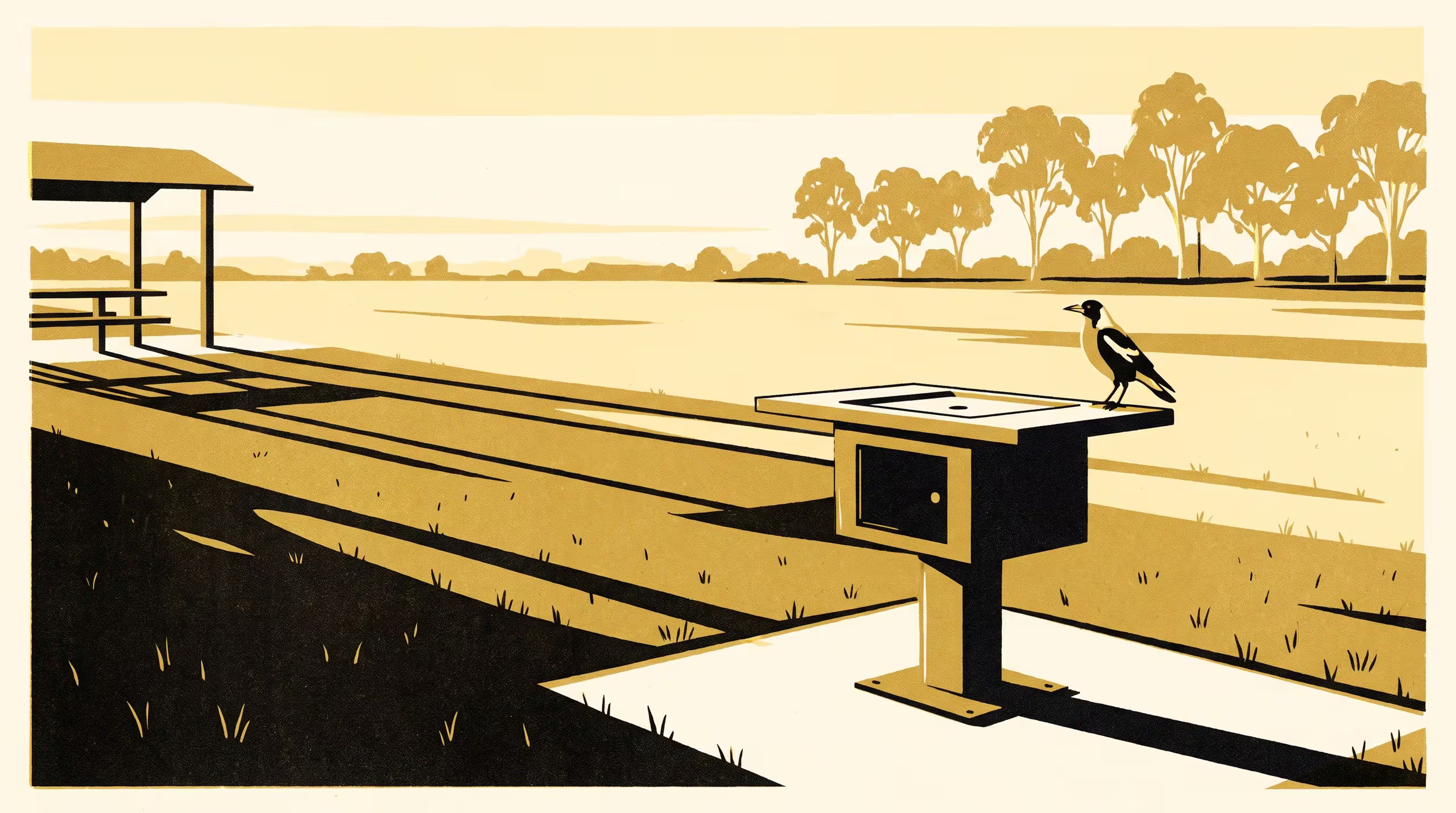
A new Slop University research poster audits 248 public barbecue units without notice, finding 82 cold at inspection and an adjusted odds of being cold six times higher in the least-used quintile, on a counter that increments only when a unit completes a heat cycle.
A research poster audits 248 units across 96 reserves and finds the usage counter that orders the renewal list only ticks when the plate heats
The School of Emergent Priorities has published new work on a difficulty its anticipatory-capability agenda keeps circling: what an instrument can report when its reading depends on the very thing it is meant to assess. The setting this time is the public barbecue.
Working across 96 reserves, Dr Ronja Oyelaran, Dr Solveig Adeyemi and Dr Torun Ezeigwe audited 248 units without notice, matching each cold unit to two working ones of comparable visitation and installation vintage. Recorded usage, the measure that orders the renewal shortlist, increments only when a unit completes a heat cycle. A unit that has stopped heating therefore registers as one nobody wanted.
The counter is candid about everything except the units it cannot hear from, and that asymmetry has been sitting inside the renewal ranking for some time.
— Dr Ronja Oyelaran, Senior Lecturer, School of Emergent Priorities
The poster reports 82 of the audited units cold at inspection, and an adjusted odds of being cold roughly six times higher in the least-used quintile than in the most-used. None of the cold units appeared on the shortlist drawn from the top two quintiles.
Dr Torun Ezeigwe, who directs the Master of Applied Measurement, said the study “sits inside a question the School keeps putting to its own instruments, and we welcome the scrutiny it invites.”
The University regards the work as a considered contribution to the measurement of shared amenity, and as consistent with its longstanding interest in the readings institutions take of themselves.
The full poster is available from the University’s research repository under an open licence, doi:10.5555/slop.v9ye2i.