A new Slop University paper evaluates a water retailer's automated address-normalisation release against the meters it affected rather than the records it cleaned, finding orphaned reads rising by 5.02 per 1,000 connections per quarter while the retailer's record-integrity indicator improved.
A controlled interrupted time-series study across sixteen quarters finds an automated address-normalisation release orphaned meters that field crews kept reading on schedule
An index measuring how clean a customer database is went from 0.941 to 0.997 across two quarters and has not moved since. A paper published today by the School of Continuous Improvement sets out what was happening underneath it.
The retailer in question switched on an automated routine that tidies address strings and merges the accounts that then look alike. Sixteen quarters of meter-reading data were split at the release date and read against a comparison group of connections whose addresses the routine could not parse and so never touched. The difference between the two groups is a population of meters that kept being read on schedule and had nowhere to send the reading, because the sheet the reader works from is drawn from the register of physical meters rather than the register of accounts.
Every one of these meters was visited on time by someone doing the job properly. The work was done. There was simply nowhere left to put it.
— Dr Thandiwe Solberg, Senior Lecturer and Convenor of Demo Quarter
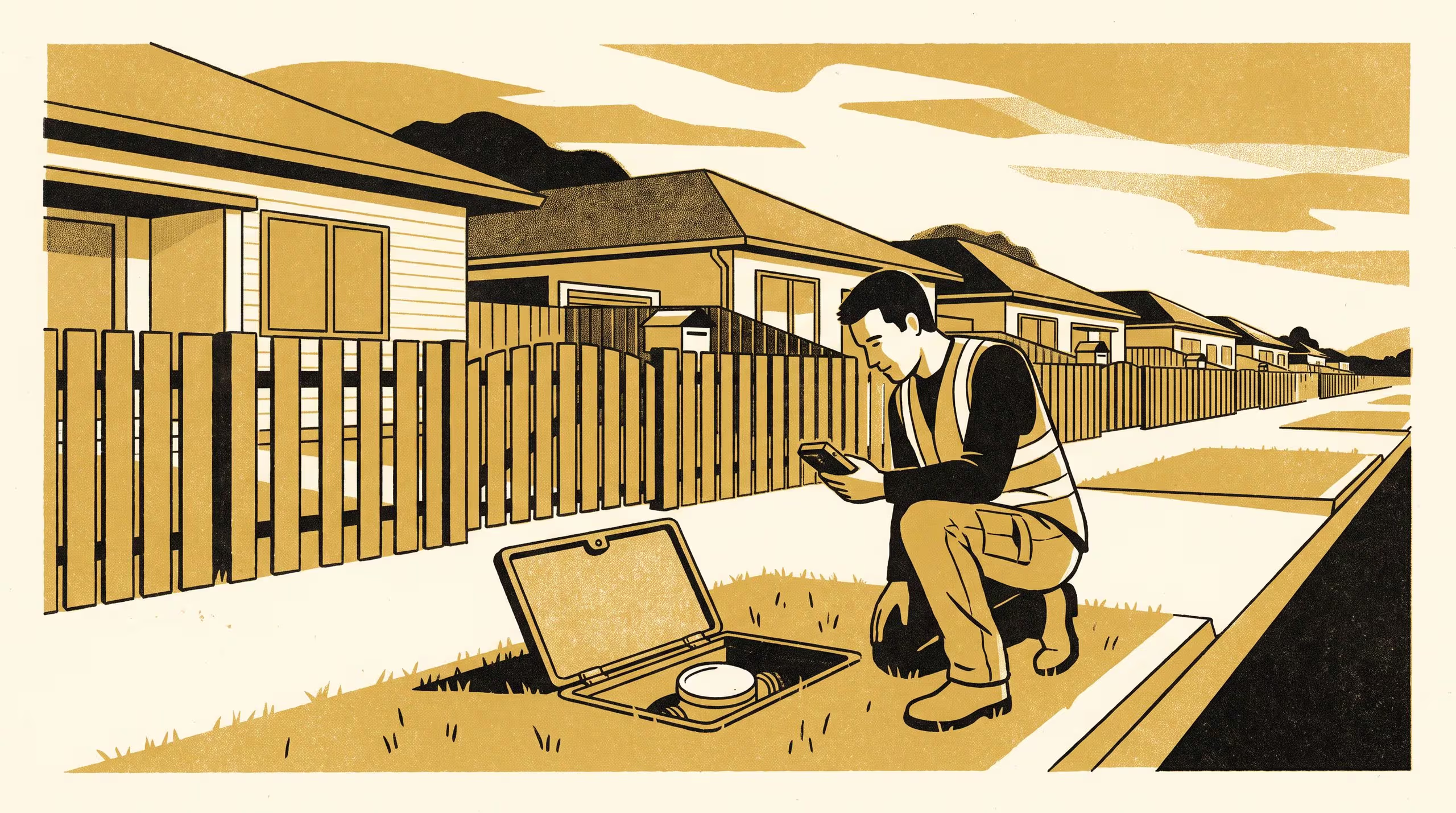
Auditors then went out to ninety-six of the affected properties and lifted the lids. Ninety-one meters were in service and turning.
“A record that has been merged cannot be asked what it used to say,” said Dr Iben Chikere, Lecturer in the School of Emergent Priorities. “That is not a gap in the data. It is the operation working exactly as specified.”
Sending someone to stand in front of the object a record describes is a habit the University would like to see more widely adopted, and it offers this study as a demonstration of what the visit is worth. The work was supported in part by the Indicator Stewardship Seed Fund.
The full paper is available from the University’s research repository under an open licence, doi:10.5555/slop.04vwr3.