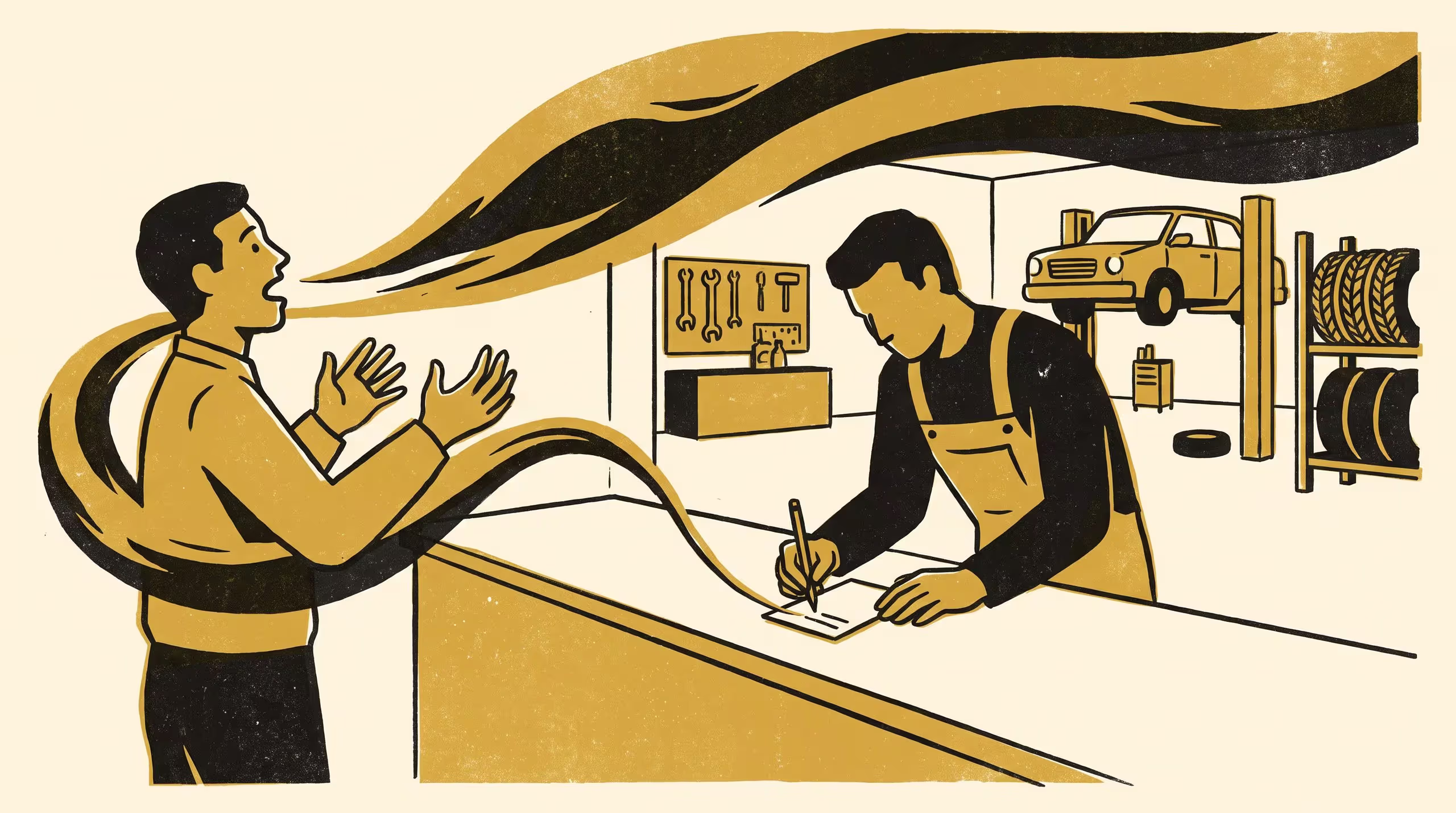
A new Slop University paper validates a two-form instrument for vehicle service intake, finding modest agreement between customer and adviser and 36 per cent of the customer's account reaching no field on the job card at all.
A two-form instrument puts the same nineteen questions to the customer and to the service adviser, and finds they agree least about what the customer said mattered most
Slop University has released a measuring instrument for a conversation that lasts about ninety seconds. The School of Emergent Priorities published the Intake Account Correspondence Inventory today, a nineteen-item instrument in two matched forms, one for the customer describing a fault at a service desk and one for the adviser writing it onto the job card.
Development ran across nine service centres in a single metropolitan network. Candidate items were drafted from recorded intakes and adviser interviews, narrowed by an expert panel, and taken into the field with 604 customer-adviser pairs, each completing their form separately before the card was finalised. A second pass coded the resulting cards against transcripts of the conversations that produced them.
The instrument’s structure held on an independent half of the sample. Agreement between the two parties did not follow it: the two forms parted company most sharply on priority framing, the dimension on which both had rated themselves highest.
The instrument works. What it tells us is that two people can leave the same ninety seconds holding quite different accounts of it, and that neither of them notices at the time.
— Dr Runa Adegoke, Senior Lecturer and Convenor of the Strategic Drift Survey
Associate Professor Kwame Lindqvist, Director of the Master of Priority Studies, said the School had not set out to produce a reporting figure and would be watching what became of the one it had produced. “Our recommendation is that the two forms be read as a pair,” he said. “We are aware that is not always how a number travels.”
The release continues a line of work the University has been building on what an account loses on its way into a record. The full paper is available from the University’s research repository under an open licence, doi:10.5555/slop.50kq7m.