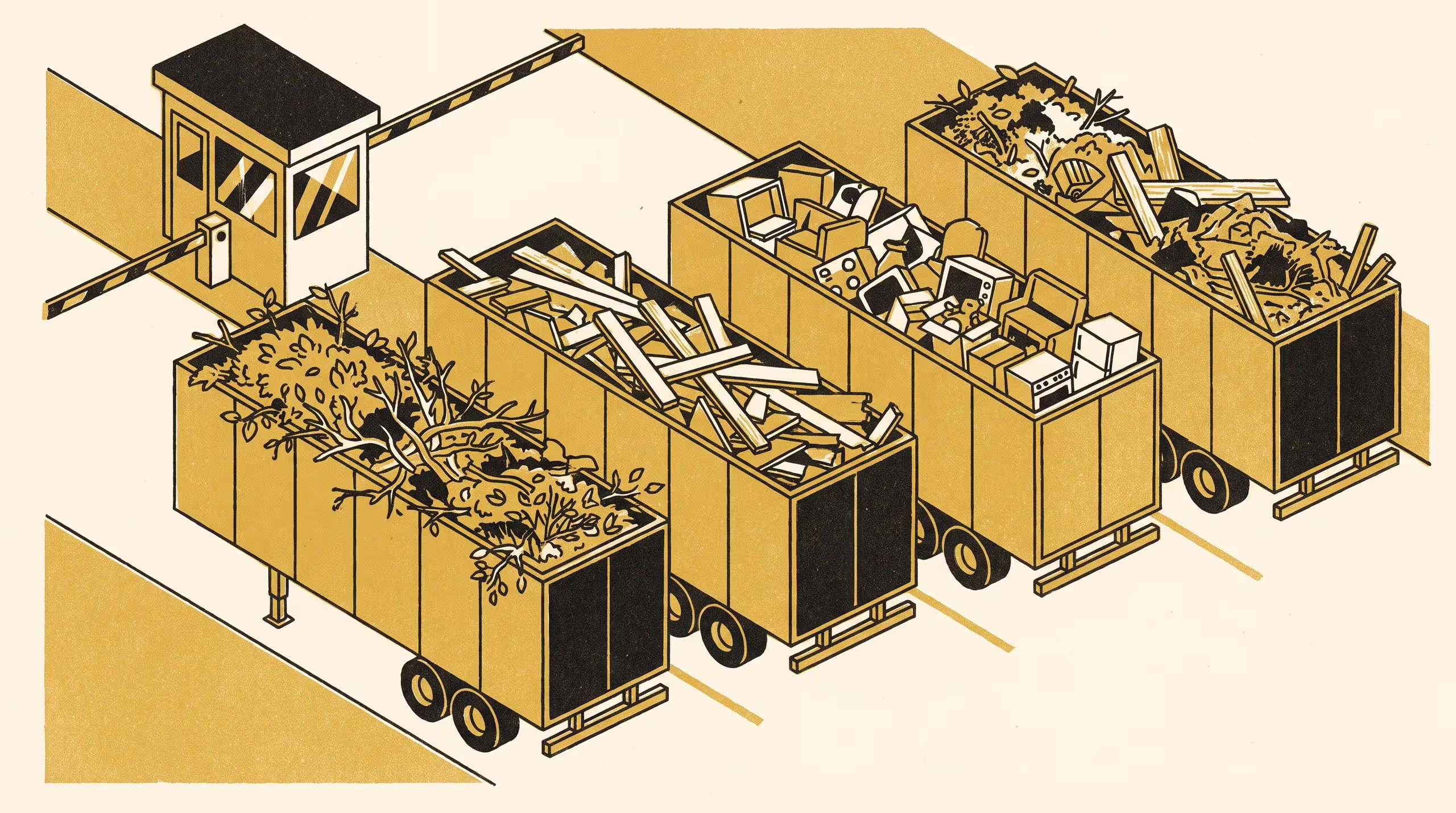
A new Slop University research poster runs a randomised vignette experiment with 148 waste transfer station gate attendants, finding a stacked load carrying one non-green item called green waste 71.4 per cent of the time at a clear gate and 38.2 per cent when the same load arrives heaped with six vehicles waiting.
A research poster puts 1,776 randomised load vignettes to 148 transfer station gate attendants and finds presentation and queue state moving the call almost as far as what is in the trailer
Twelve trailer loads, each described on a card and shuffled into a fresh order for every attendant who read them, are the whole apparatus behind a research poster released today by the School of Continuous Improvement. The loads varied in three respects: what was in them, how they had been stacked, and how many vehicles were waiting behind.
Only the first of those is meant to matter. A gate attendant at a waste transfer station calls each arriving trailer green waste or general waste, and that call sets the fee the driver pays and enters the council’s landfill-diversion return. The poster reports that the other two move it nearly as far.
Four seconds is not very long to make a distinction a whole year of reporting is then built on top of. What we would like next is to know how often the four-second answer and the tipping-floor answer are the same one.
— Dr Torun Ezeigwe, Senior Lecturer and Director, Master of Applied Measurement
Across 1,776 judgements gathered from 148 attendants at six councils, a stacked load carrying one non-green item was called green waste in 71.4 per cent of readings at a clear gate. The same composition, heaped, with six vehicles waiting, was called green waste in 38.2 per cent.
Dr Solveig Adeyemi, a co-author whose work follows reports through escalation and closure, said the interesting part sat downstream of the gate rather than at it. “Two of the four things moving that call describe the queue rather than the trailer, and neither one is written down beside the answer it produced.”
The School puts the study forward as an argument for looking at where a category is assigned, and not only at what is done with it afterwards.
The full poster is available from the University’s research repository under an open licence, doi:10.5555/slop.eft2py.