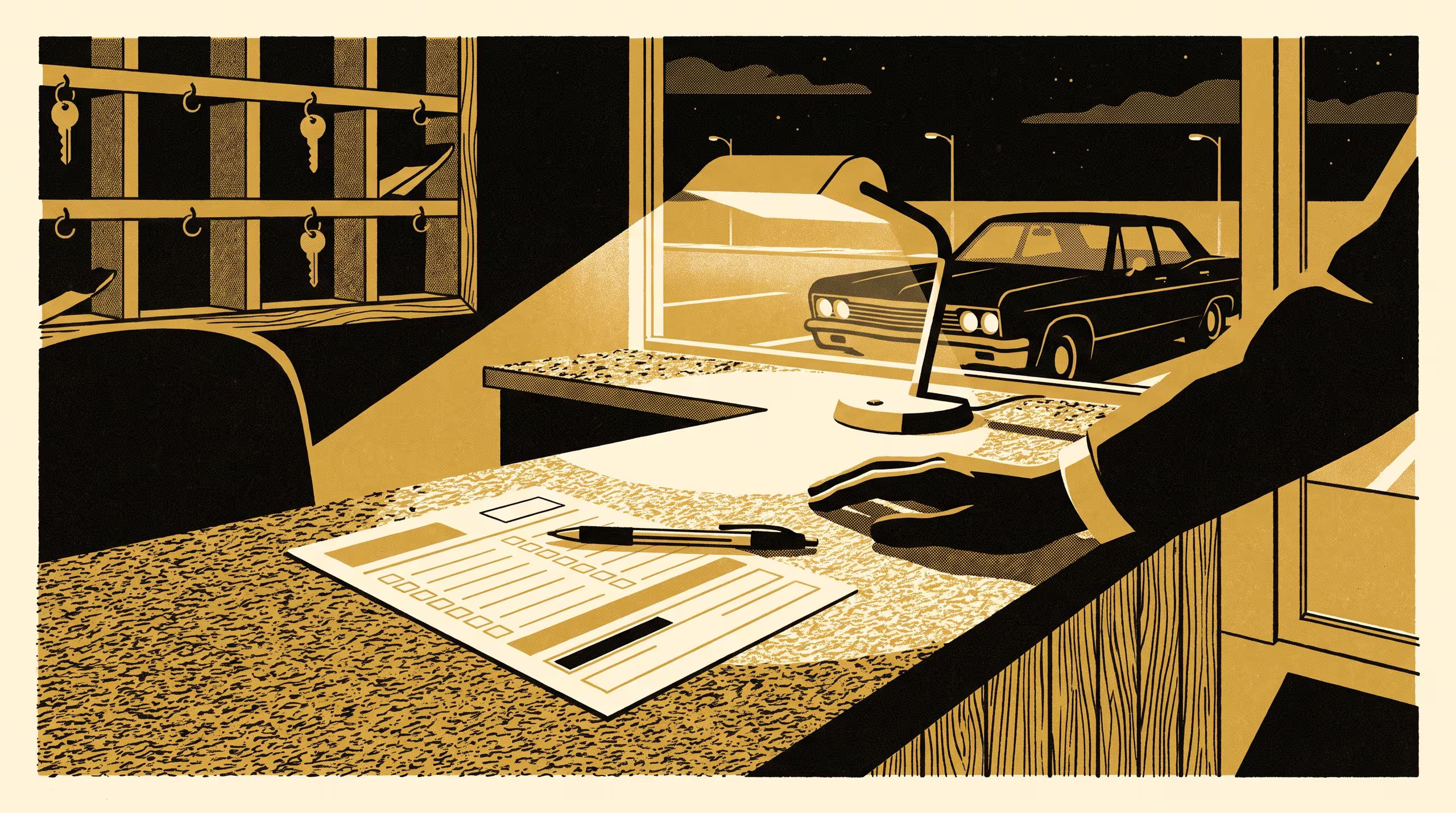
A new Slop University paper interviews 38 motel front-desk staff about what each field on the paper check-in card is for, then follows the study's own categories into a compliance review that grew the standard card from seventeen fields to twenty-three.
An interview study across twenty-nine independent roadside motels finds field purpose reconstructed from the card's layout wherever it is not known
Of the seventeen fields printed on a typical motel check-in card, the person handing it across the counter can say what five are for.
A paper published today by the School of Emergent Priorities puts that figure in front of the desks it came from. Thirty-eight staff at twenty-nine independently run roadside motels were interviewed with their own centre’s card between them, and asked, field by field, what it was for, who used it, and what happened when a guest left it blank.
The answers fell into four patterns. Fields are remembered as sediment left by a single incident, none of which anyone could date. Where a purpose is not known it is inferred from whatever is printed beside it. A field nobody can account for is a field nobody chases. And the card as a whole is completed for a reader — an inspector, an insurer, a call to next of kin — whom no participant had ever seen consult one.
We went looking for reasons and came back with memories of reasons. That is not nothing, since a memory of a reason is how a great deal of any institution runs, but we had been treating the two as the same thing.
— Dr Iben Chikere, Lecturer, School of Emergent Priorities
One group of eleven properties took the four patterns to its scheduled compliance review, which adopted them as a required annotation: each field on the standard card now records the authority under which it is held. The card went from seventeen fields to twenty-three. Blanks fell by more than half. The share of fields staff could account for did not move.
“Every field on that card was put there by somebody,” said Dr Marek Solheim, Lecturer in the School of Emergent Priorities. “Nobody has ever been asked to authorise taking one off.”
The University holds a motel counter at nine in the evening to be a legitimate site of scholarship, and offers the study on that basis. The work was supported in part by the Anticipatory Capability Fund.
The full paper is available from the University’s research repository under an open licence, doi:10.5555/slop.stdekn.