A new Slop University paper reports an eighteen-week deployment of a dispatch service that ranks stray supermarket trolleys by how readily each is seen from the road, cutting exposure-weighted collection time from 58.4 hours to 9.0 while the share of reports still open at study close rose from 0.4 to 6.1 per cent.
An eighteen-week deployment across twenty-one stores cut collection times for roadside trolleys from 58 hours to nine, and lengthened them everywhere else
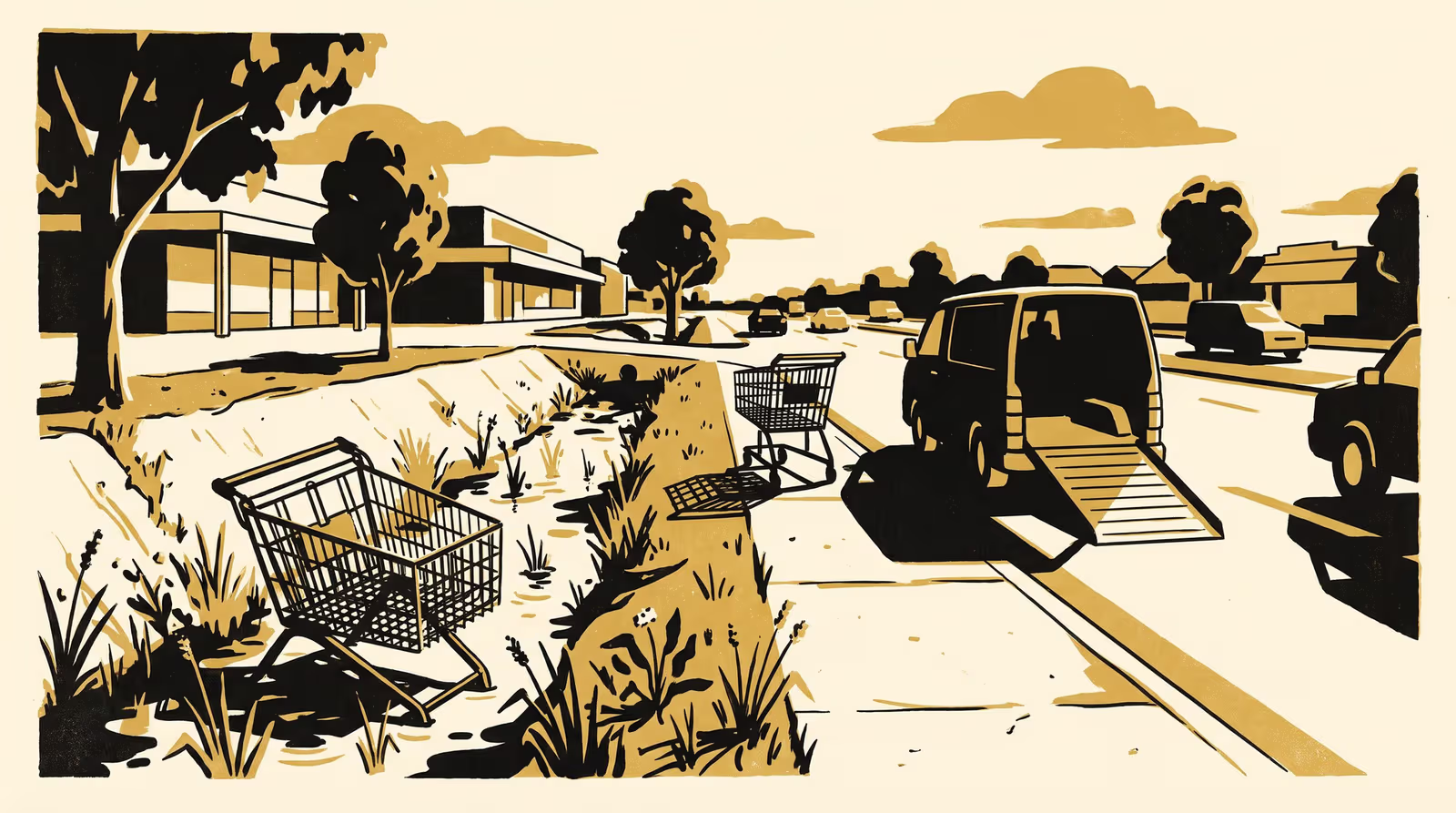
A trolley on the verge of a main road now comes back in about four hours. A trolley in a drainage reserve behind the same shops takes nearly three days, and 574 of them had not come back at all when the study closed.
That is the result of an eighteen-week deployment described in a paper released today by the School of Emergent Priorities, in which a metropolitan retail network stopped sending its collection vans to the nearest reported trolley and started sending them to the most visible one.
A queue has to be in some order, and every order available to us would have left something for last. What the deployment adds is an ordering written down clearly enough that somebody can argue with it.
— Professor Verity Marris, Director of the Trajectory Analytics Group
Researchers scored each of 9,412 reports for roadside exposure — a composite of frontage class, an estimate of how much of the arterial network has a clear line of sight to the location, and how often reports arrive from it — and had four depots work the queue in that order. Nothing else moved: the same vans, the same routes, the same reporting form.
Times on the measure the network publishes fell from 58.4 hours to 9.0, consistently at all four depots. Across all reports the median improved as well, while the slowest tenth stretched from 96 hours to 412.
“The weight does what we asked it to do, and the reports it ranks last are the reports we were always going to hear about least,” said Dr Torun Ezeigwe, Senior Lecturer and Director of the Master of Applied Measurement.
The University lists the deployment among the clearer recent demonstrations that work begun on campus can be handed to an operator and left running.
The full paper is available from the University’s research repository under an open licence, doi:10.5555/slop.6jcj2m.