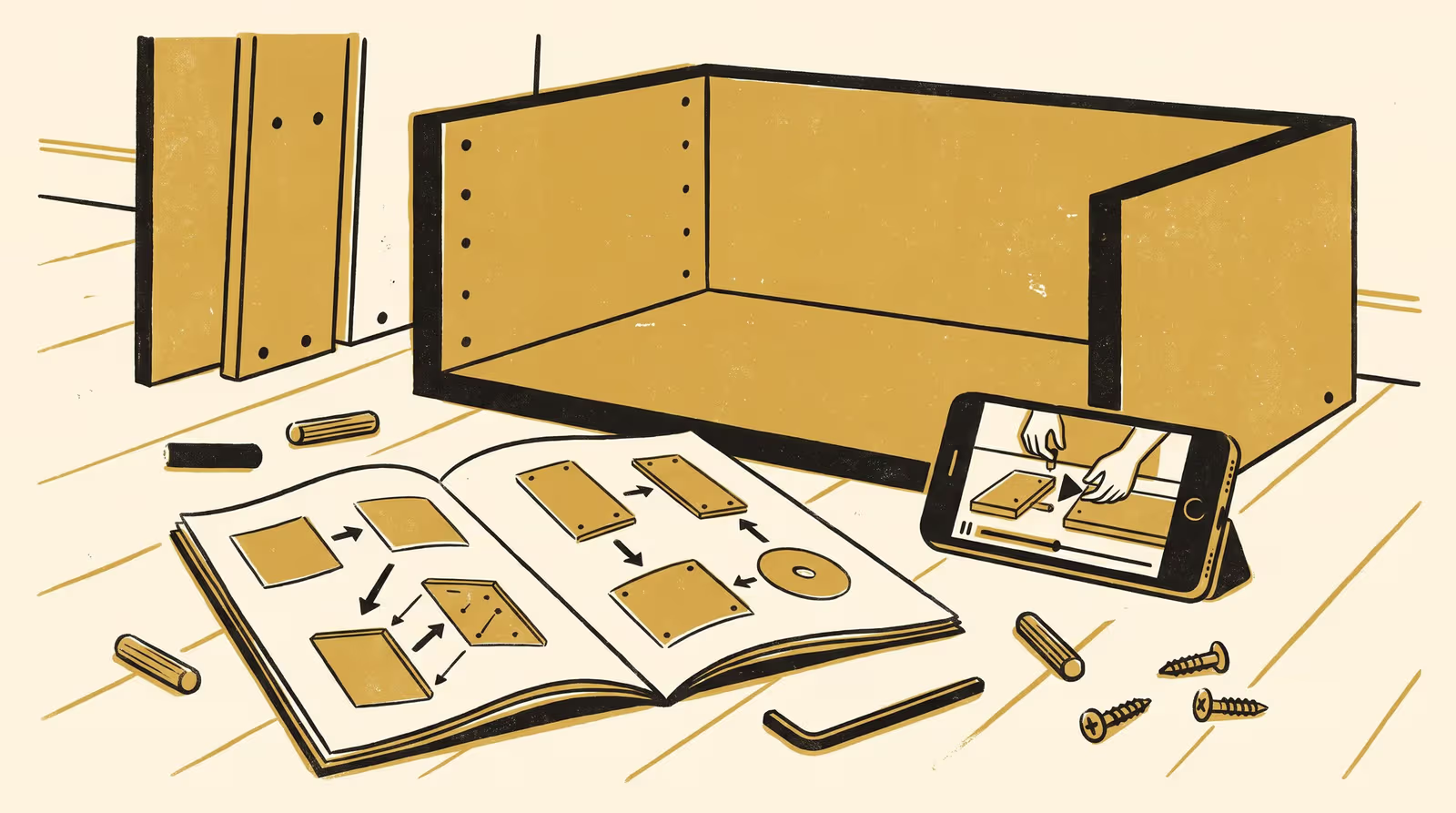
A new Slop University research poster asks 214 flat-pack assemblers to rate how clearly they can picture each step before attempting it, finding the odds of abandoning the wordless booklet for a video rise sharply once that rating falls below the scale midpoint, even on panels coded as straightforward.
A new research poster intercepts 214 flat-pack builds mid-assembly and rates how clearly each next step pictures before the panel is attempted
Slop University’s newest research poster went looking for the moment an assembler stops turning pages. Working at share-house move-ins and second-hand flat-pack stalls, researchers from the School of Emergent Priorities intercepted 214 people mid-build, asked each to rate how clearly they could picture the step in front of them before attempting it, then logged the point at which the wordless booklet was set aside for a video.
The rating held up. Once a self-reported vividness score dropped below the middle of its five-point scale, the odds of switching rose sharply — and they rose on panels the study had independently coded as straightforward. Mirrored and rotated panels predicted a switch on their own terms, cited at 61 per cent of logged switch points, well ahead of any other trigger the team coded.
The interesting people were the ones holding a genuinely easy panel who still couldn’t see themselves doing it. That was never a fact about the furniture.
— Dr Anneke Tolan, Senior Research Fellow, School of Emergent Priorities
Switchers went on to report fewer errors, though not faster builds — a distinction Dr Marek Solheim, Lecturer in the School of Emergent Priorities and a co-author on the poster, said he was glad the study surfaced rather than settled. “We can now ask a better version of the question we walked in with, which is most of what a field study owes anybody.”
The work is the University’s second study of mental-imagery vividness conducted outside a laboratory, following earlier fieldwork at building directory boards, and the University regards the pairing as the kind of continuity a research programme is meant to accumulate.
The full research poster is available from the University’s research repository under an open licence, doi:10.5555/slop.dzt0rh.