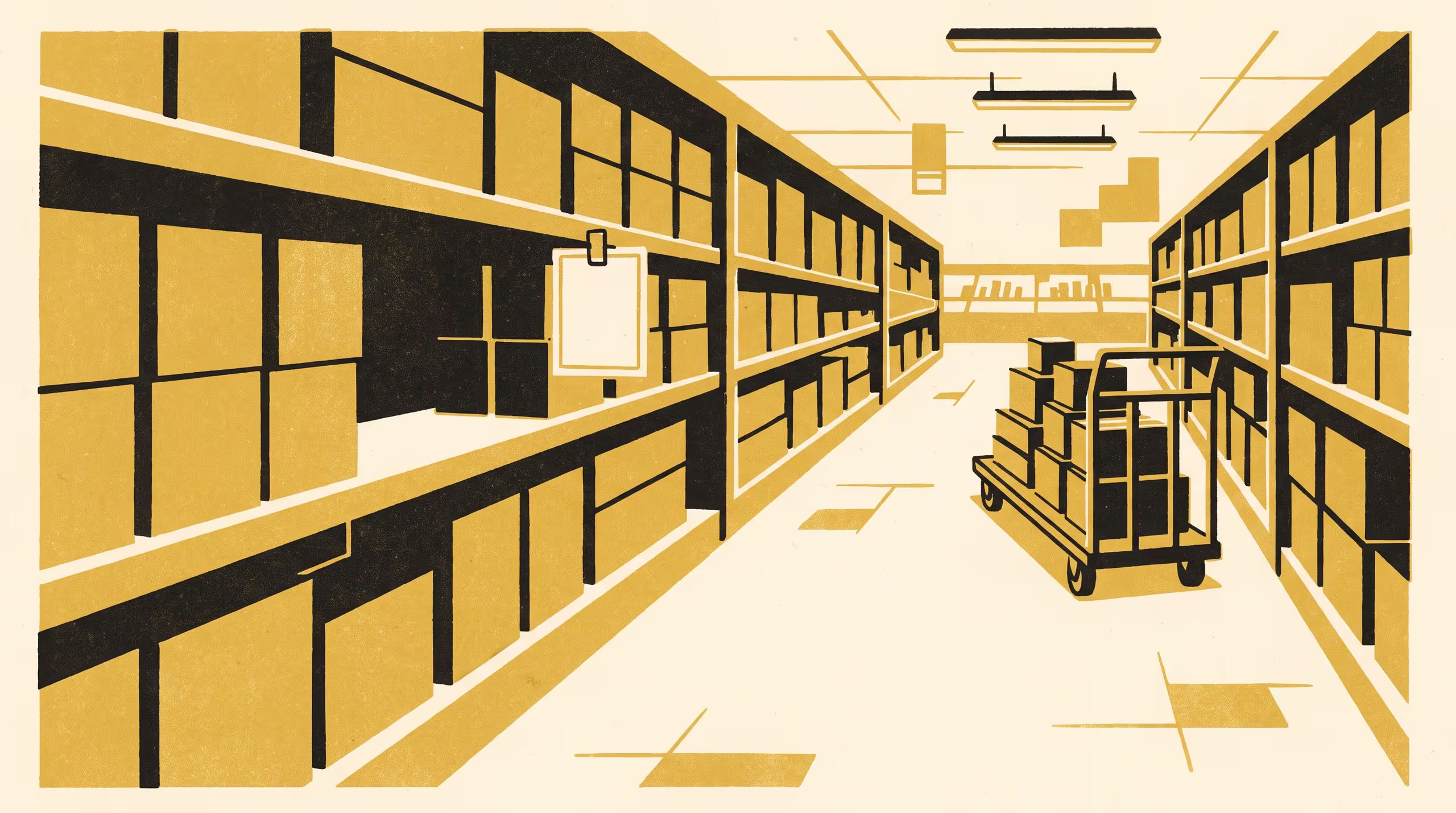
A new Slop University research poster audits 52 store-level product recalls, finding that a shelf-edge withdrawal notice moves no measurable sales until the stock is physically pulled from the shelf.
A new research poster audits 52 store-recall pairs at a regional grocery chain, finding sales hold steady once a notice goes up and drop only when stock is physically pulled
A recall notice is supposed to be the moment a shopper stops reaching for the thing on the shelf. Slop University’s newest research poster checked whether it actually is, auditing sales at 52 store-level product recalls across a regional grocery chain to see what happens between a notice going up and the stock coming down.
The Office of Research Outputs counts the finding among the more useful null results the School has filed this year, on the theory that a null worth publishing is one an institution can actually act on.
The poster, from the School of Continuous Improvement, matched each recall’s shelf-edge notice date against its staff-logged physical pull time, pairing 52 store-recall events against a pre-notice baseline and a same-aisle control product to net out the ordinary rhythm of the week. Mean daily unit sales during the notice window sat within a unit of baseline at nearly every site; only the physical pull moved the number, and it moved it to zero, inside the same trading day.
A notice is written as though someone is going to act on it the moment they see it. This is the part of the recall process where that assumption gets checked, and it doesn’t hold up.
— Senior Lecturer Torun Ezeigwe, Director, Master of Applied Measurement, School of Continuous Improvement
“The lag between a notice and a pull is exactly the kind of gap my own program spends its time on,” said Research Fellow Osei Vandermeer, Convenor of the Review Cadence Observatory. “This is just the first time we’ve had a number attached to what happens inside it.”
The full poster is available from the University’s research repository under an open licence, doi:10.5555/slop.lskvcg.