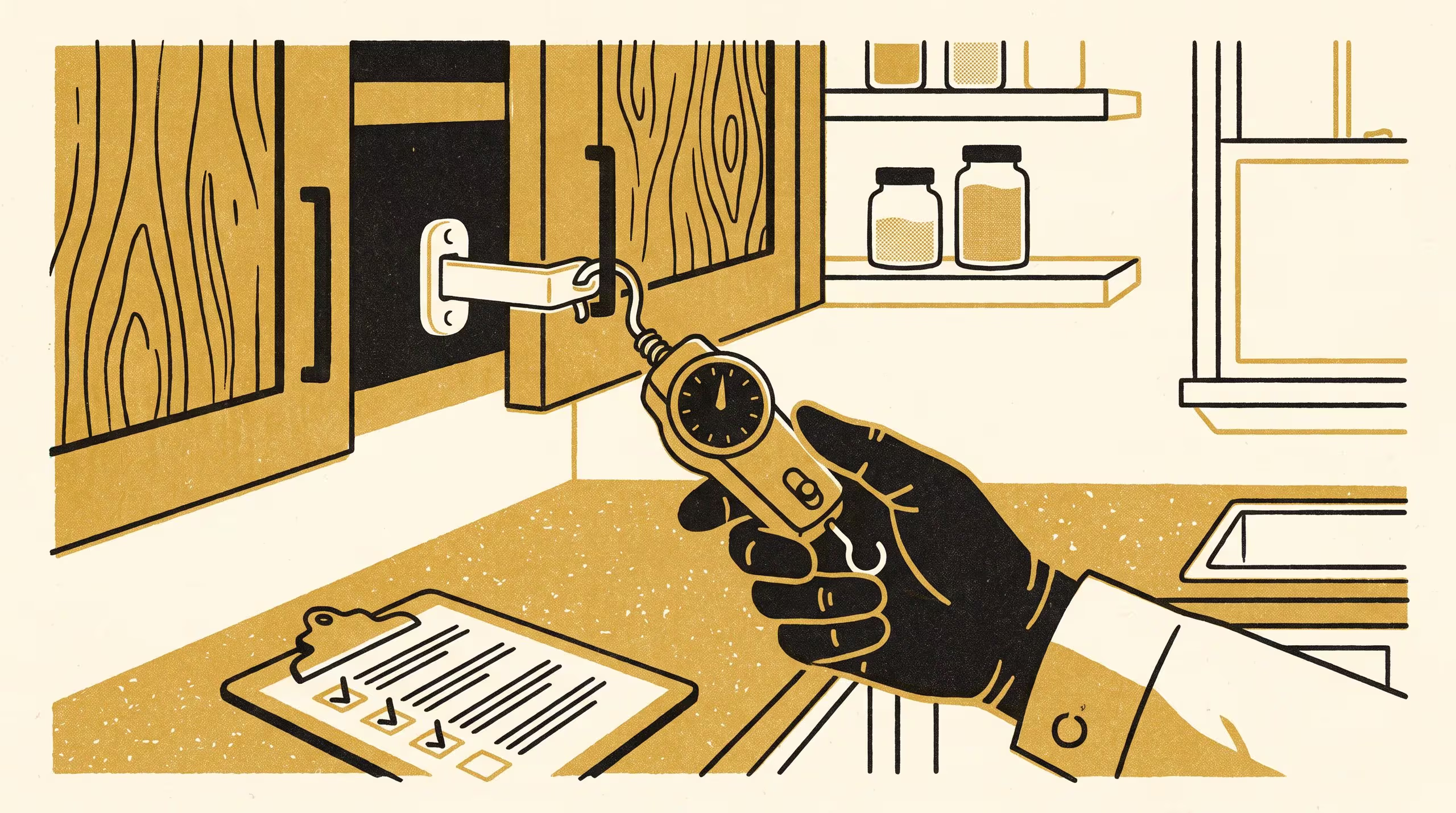
A new Slop University paper validates a home safety walkthrough's latch-engaged checklist item against a standardised pull-force test on 412 kitchen cabinet latches, finding roughly a third marked engaged fail outright.
A new paper checks 412 kitchen cabinet child-safety latches against a standardised pull-force test, finding a third of those marked engaged fail outright
A home safety walkthrough asks one question about a kitchen cabinet latch: is it engaged and functional. Slop University’s newest paper spent several months answering a second one — whether the latch agrees — pulling 412 of them, one at a time, against a calibrated force gauge.
A latch that was checked once carries the same authority in a household as one that checks itself every week. Whether that’s a problem depends entirely on what’s behind the door.
— Dr Petra Umbile, Postdoctoral Fellow, School of Emergent Priorities
The paper, from the School of Emergent Priorities, matched each latch’s most recent walkthrough record against the pull-force test across ninety-six households and four common latch types, recruited through parenting networks, a community child-safety program, and paid childproofing services. The checklist recorded 93.9 percent of latches as engaged and functional; the pull-force test passed only 64.6 percent, with the gap concentrated almost entirely among latches the checklist had already cleared. Neither professional installation nor a household’s own check moved the result afterwards by a reliable margin.
Sten Okwuosa, Senior Research Fellow and Convenor of the Impact Pathway Atlas, said the pattern was familiar from his own program’s work tracing how research effort becomes counted impact: “the record and the reality only have to agree once, right at the start, for everyone downstream to stop checking.”
The University counts the mismatch among the clearest evidence yet for a pattern its researchers keep finding in the most ordinary corners of a household: a form that measures the moment it was filled in, not the thing it was filled in about.
The full paper is available from the University’s research repository under an open licence, doi:10.5555/slop.h4tc39.