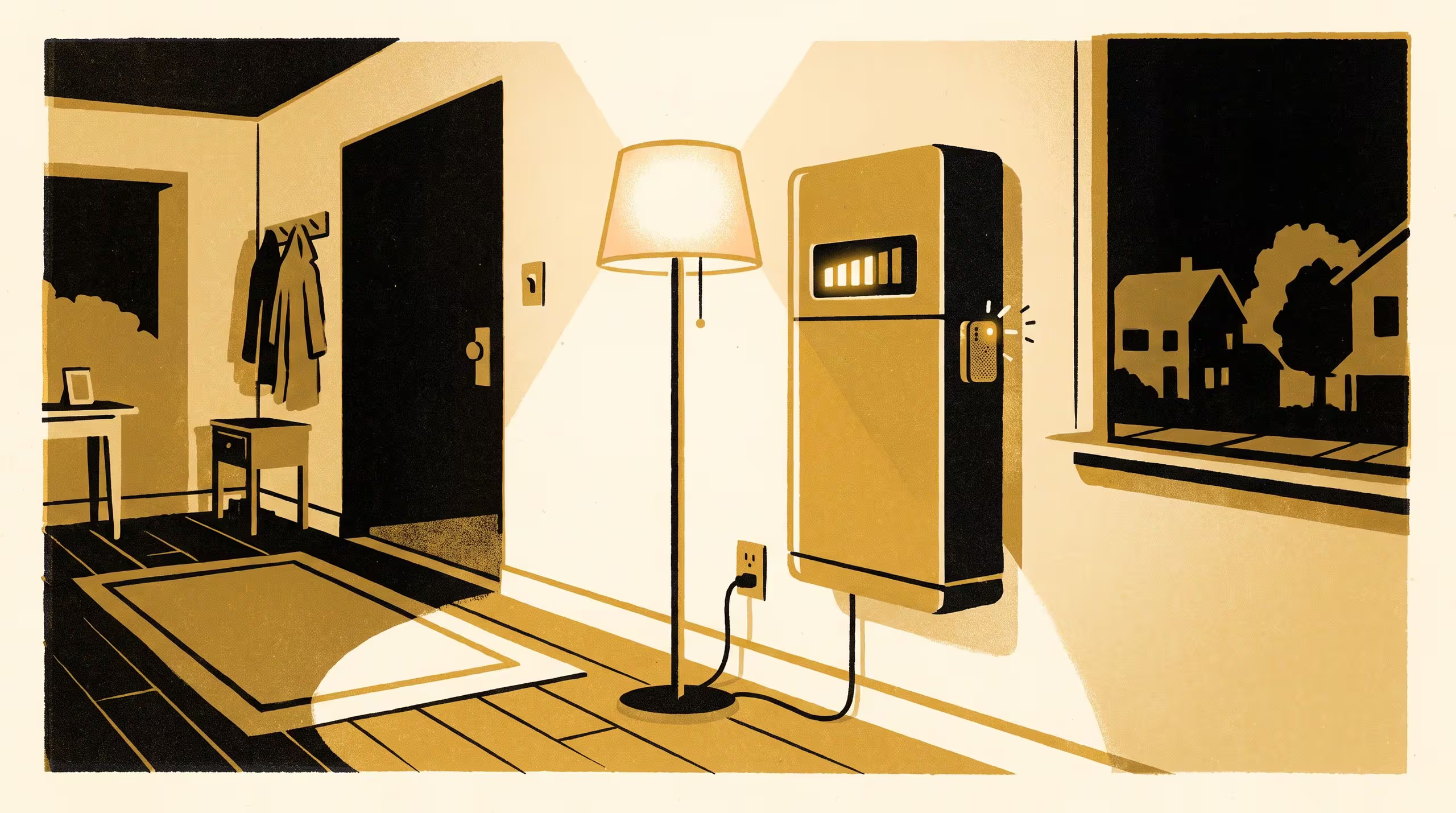
A new Slop University paper audits 54 instrumented households through 71 real blackouts, finding installed battery-storage systems deliver well under half their manufacturer-rated backup time regardless of size or chemistry, and that telling owners the true figure afterward changed nothing about what they did next.
A new paper instruments 54 households through 71 real blackouts and finds telling owners the true number changes nothing they do next
A battery-storage system’s spec sheet states its backup duration once, at the point of sale. Slop University’s newest paper puts that number back under test — this time during a real blackout — and finds it holding up less well than promised.
A number like this only has to survive one moment of scrutiny, in a showroom, under ideal conditions. After that, nobody’s job is to check it again. That’s less a fact about batteries than about what our own School has learned to expect from a rating once it’s done its job.
— Dr Torun Ezeigwe, Senior Lecturer and Director, Master of Applied Measurement, School of Continuous Improvement
The paper, from the School of Continuous Improvement, instrumented 54 households running rooftop-solar-and-battery systems across six size and chemistry classes, logging each system’s charge independently of its own account of itself. Across 71 naturally occurring blackouts over eleven months, measured backup duration averaged well under half of what each spec sheet promised, and the shortfall held its shape whether a household had bought a small system or a large one. Half the panel was then told the true figure; the rest kept only the original rating.
“If telling a household the real number doesn’t move it, the next study has to ask what would,” said Dr Marit Osayande, Lecturer and Convenor of the Living Dashboard, and a co-author on the paper. Chasing a number past the point where anyone still checks it is the kind of question this School has built its name on.
The result echoes an earlier University finding that a corrected number changes nothing in the moment — that time in a laundry room, not a hallway.
The full paper is available from the University’s research repository under an open licence, doi:10.5555/slop.fw3hoa.