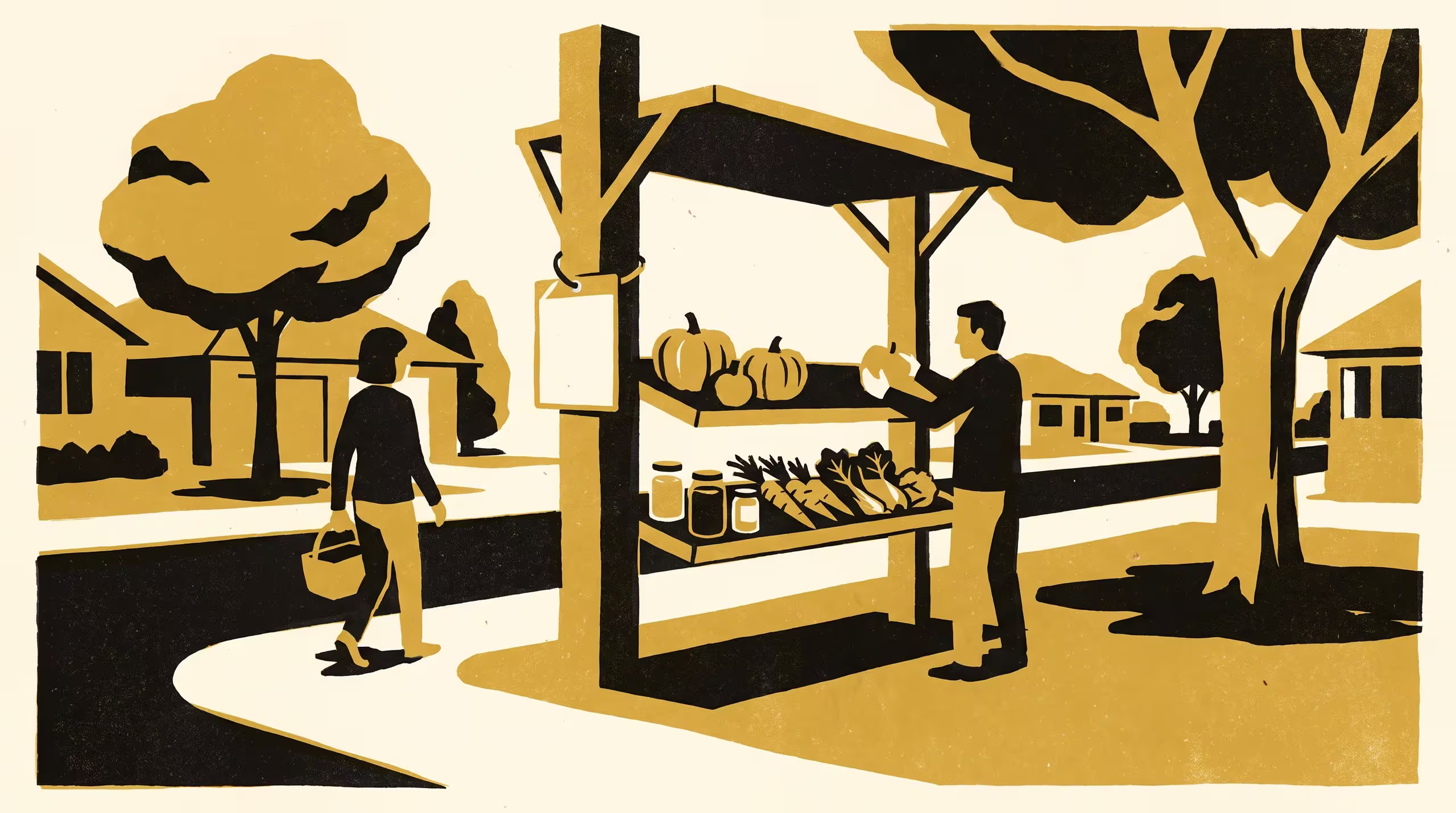
A new Slop University paper surveys contributors to 34 informal produce-swap tables, finding they rate their own compliance with the tables' "one in, one out" card modestly higher than their neighbours', a gap far narrower than an earlier interview-based finding at a dog park.
A new Slop University paper surveys 612 contributors at 34 produce-swap tables and finds the gap is real but far narrower than an earlier study found among dog-park visitors
Every laminated card zip-tied to a street-corner produce-swap table says roughly the same thing: take one, leave one. Slop University’s newest paper puts a number on how faithfully contributors say they follow it, and on how faithfully they think their neighbours do.
The paper, from the School of Continuous Improvement, surveyed 612 contributors across 34 independently run tables over nine weeks, asking each to rate their own compliance with the card and separately estimate how often other contributors comply. Self-reported compliance came in five and a half points above the estimate of everyone else’s, holding steady across all six of the study’s site clusters — a real gap, but a fraction of the much larger one a Slop University interview study previously found between how dog-park visitors described their own and other people’s leash compliance.
People are perfectly capable of rating themselves and their street generously at the same time. The two just don’t quite meet in the middle.
— Dr Torun Ezeigwe, Senior Lecturer and Director, Master of Applied Measurement
The team also swapped one table’s card wording for another — a “keep the table even” framing against a “the street shares it” framing — and found self-rated compliance barely moved either way. “Neither of us expected the wording to matter this little,” said Dr Renke Sabel, Senior Lecturer and Convenor of the Indicator Commons. “Contributors seem to have already decided how they’re complying long before they read what the card says about it.”
The result adds a numeric data point to a question the School keeps returning to: whether a compliance gap is a fact about behaviour, or a fact about whichever method happened to go looking for it.
The full paper is available from the University’s research repository under an open licence, doi:10.5555/slop.nxnx2l.