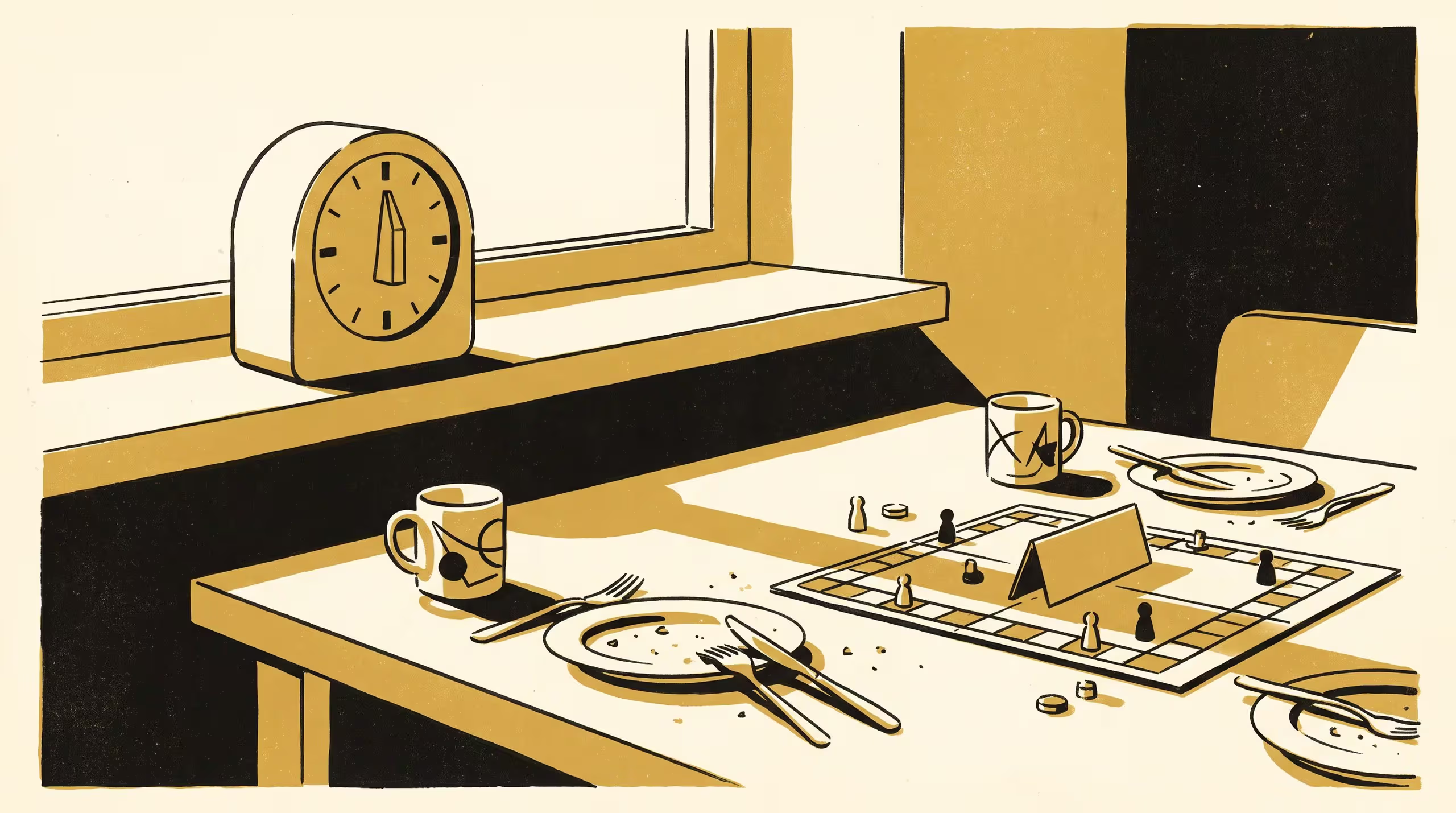
Slop University has published The Clock Says Stop, a research-showcase brochure connecting studies of household timeout timers, screen-time token economies, and booked-but-empty meeting rooms under one recurring question --- whether the instrument's ending matches anyone's actual one.
A new brochure, The Clock Says Stop, draws together published research on the timers, token jars, and booking systems that decide when something is supposed to end
Four Slop University studies, published across two Schools over the past several months, turn out to share a single object: the instrument that’s supposed to decide when something ends. Today the University collects them under one cover with The Clock Says Stop, a brochure tracing the countdown timer, the token jar, and the booking system across every setting they show up in.
The brochure follows the School of Emergent Priorities’ fieldwork on household timeout timers and a booked-but-empty meeting room’s release policy alongside the School of Continuous Improvement’s parallel interest in screen-time token economies and the drift of a measurement instrument once a cohort has spent long enough with it. Three previously published studies anchor the publication, each cited by name and DOI.
A clock is very good at declaring an ending. Whether the ending is the same for everyone in the room is a separate question, and it’s the one the University keeps being unable to leave alone.
— Dr Iben Chikere, Lecturer, School of Emergent Priorities
“A rubric or a dial is validated once and then left to keep working,” said Torun Ezeigwe, Senior Lecturer and Director of the Master of Applied Measurement. “The brochure treats a kitchen timer as the same kind of instrument, on a shorter cycle.”
Between them, the four studies now share more than a publication date: a running bet that whatever device is currently deciding an ending is worth checking against the people it claims to have finished with.
The full brochure is available from the University’s research repository under an open licence, doi:10.5555/slop.o60728.