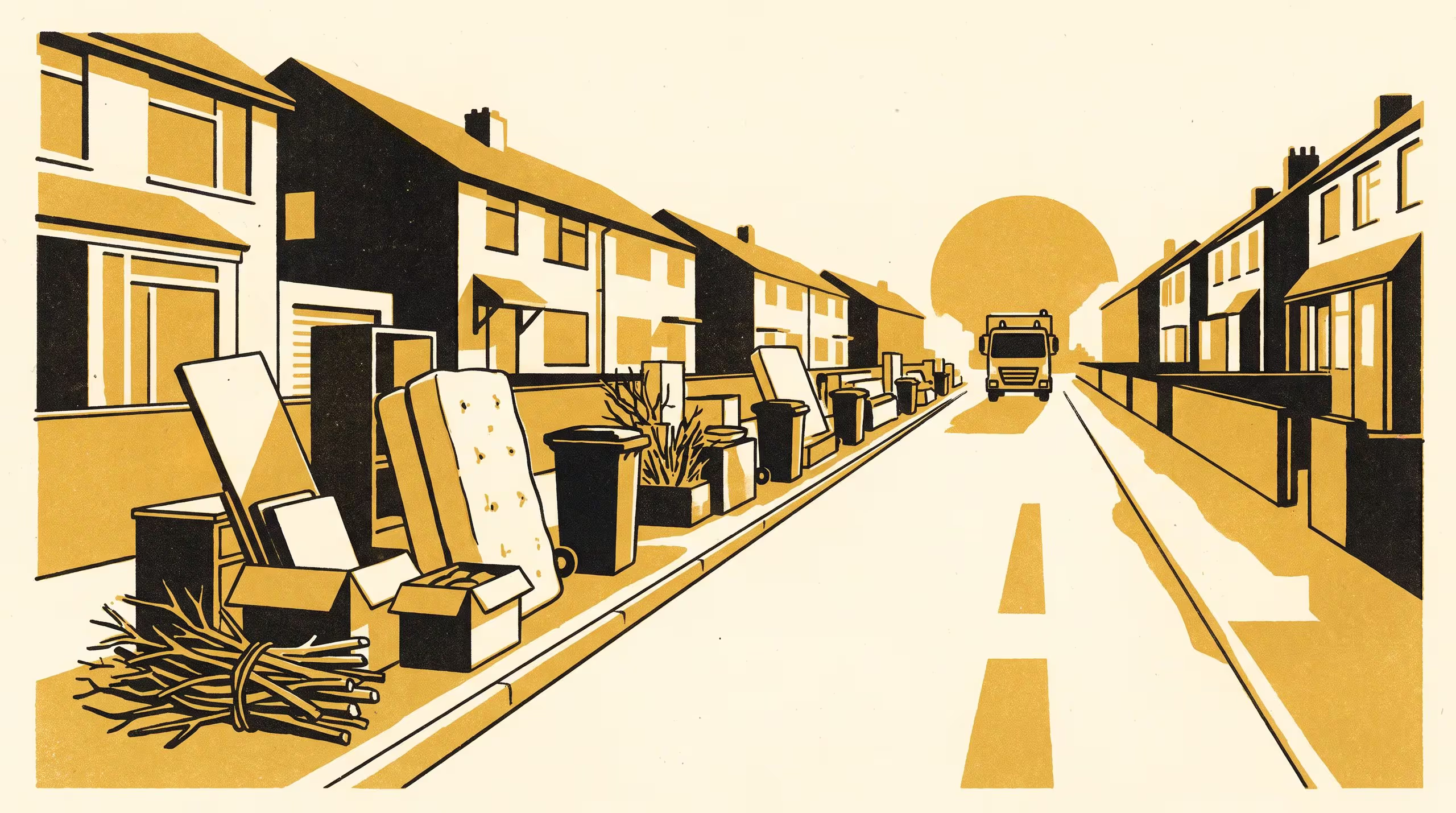
Slop University has published Ask The Street, a civic-research brochure drawing together the University's published audits of council ledgers and collection calendars, and profiling the researchers and short courses built around closing the gap between the two.
Ask The Street sets published audits of council ledgers and collection calendars beside what the kerb still shows
The School of Continuous Improvement’s long-running interest in the gap between a record and the thing it describes has found its most literal setting yet: the kerb outside an ordinary house, where a council’s collection app can mark a household’s pile “collected” more than a week before a truck arrives to confirm it. Slop University has published Ask The Street, a civic-research brochure drawing that gap together with related fieldwork from across both of the University’s schools.
The brochure profiles the School of Emergent Priorities’ fieldwork on how a street stakes its own informal claims — a cone, a chair, a laminated roster — and the School of Continuous Improvement’s audits setting a council’s own figures against direct counts taken on the ground, alongside the short-course training the University now runs for the council officers and facilities crews whose daily rounds are the record’s only source of truth.
Three previously published studies anchor the publication, each cited by name and DOI, and each returning to the same underlying question: how long an institution’s account of a street can drift from the street itself before somebody notices, and how long it keeps drifting after that.
We’re not training people to fill in a field faster. We’re training them to notice the moment the field stops matching the street.
— Dr Ingeborg Nwachukwu, Lecturer and Convenor, Capability Sprints, School of Continuous Improvement
“A council’s diversion figure doesn’t need to be wrong for long before people stop checking it against the kerb it’s supposed to describe,” said Sten Okwuosa, Senior Research Fellow and Convenor of the Impact Pathway Atlas. “That’s the distance the brochure keeps returning to.”
The full brochure is available from the University’s research repository under an open licence, doi:10.5555/slop.ob61bf.