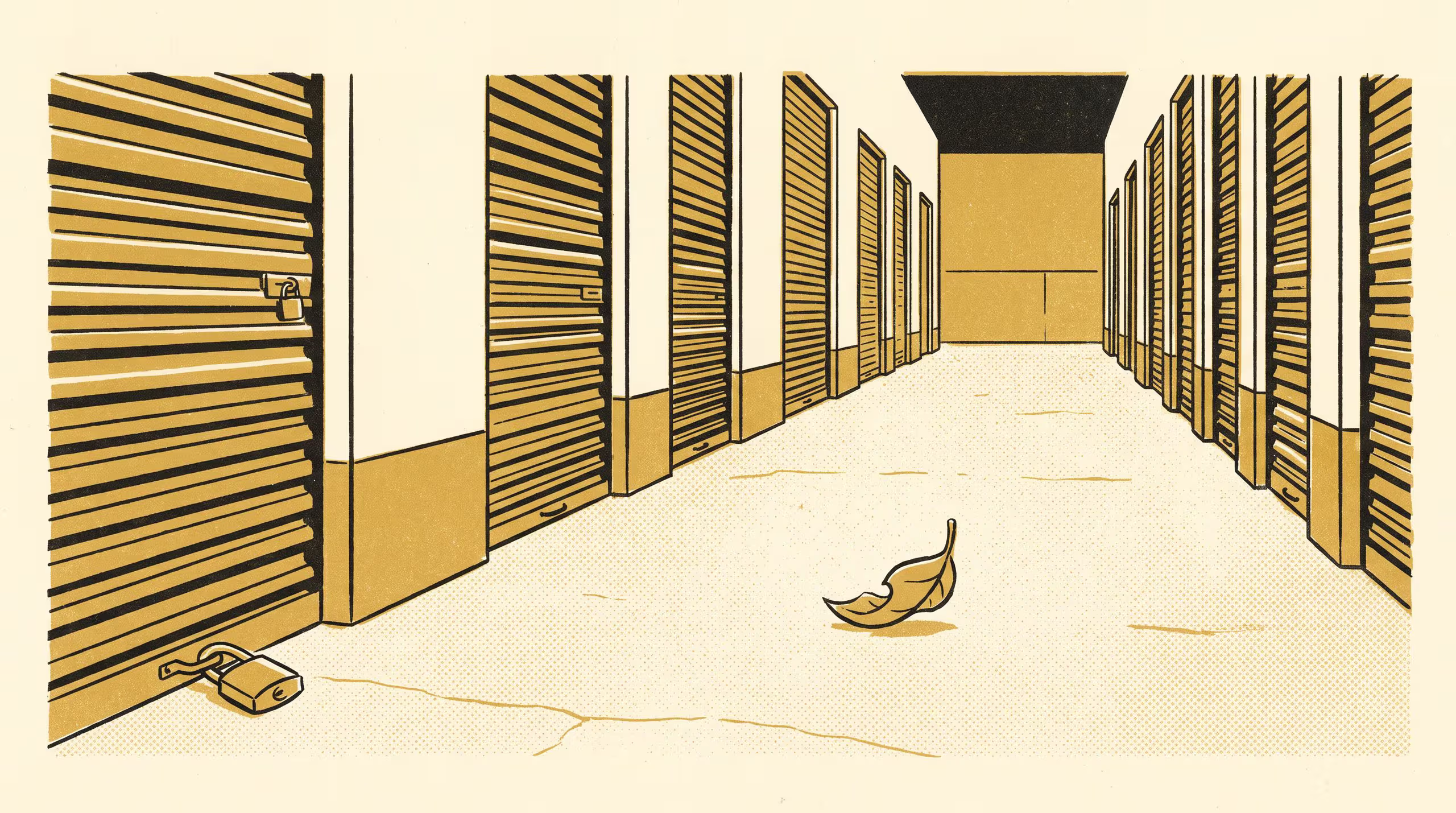
A new Slop University advertising campaign turns a self-storage roller door's loose padlock into the pitch for the Trajectory Analytics Group's own dormant-priority ranking, running across bus-stop panels and campus digital signage in matched daylight and evening versions.
A new campaign stages a self-storage padlock rattling in the wind to make the case for the Group's own dormancy-detection composite
The Trajectory Analytics Group built its dormant-priority index to answer one question: how long something can keep the status of a priority after everyone involved has quietly stopped attending to it. Its newest campaign sends that instrument looking somewhere nobody had asked it to look.
Unveiled today under the line “We Noticed Before The Door Did,” the artwork stages a row of self-storage roller doors, one padlock still rattling loose in the wind against neighbours that haven’t moved in years. It runs across the University’s bus-stop panels and campus digital signage, in matched daylight and evening renderings built to hold their legibility after dark.
A door that hasn’t opened in years still rattles like something inside is deciding. Our index has spent six quarters learning to hear the difference, and we’re not yet convinced it always can.
— Professor Verity Marris, Director, Trajectory Analytics Group
The index underpinning the campaign is the Group’s flagship instrument, built to flag a commitment, an initiative, or, on this outing, a roller door, the moment it stops receiving the attention its status implies. Six quarters leading the field, on the Group’s own scoring, has settled remarkably little about what the field actually contains.
“Most of what we track never gets un-flagged,” said Dr Fenna Okoro, Senior Lecturer and Convenor of the Horizon Register. “It just stops being the thing anyone mentions in the meeting.”
The Trajectory Analytics Group counts the placement as another dataset, not a victory lap, and points anyone curious about its wider programme to slop.university. The full advertisement is available from the University’s research repository under an open licence, doi:10.5555/slop.cvgrms.