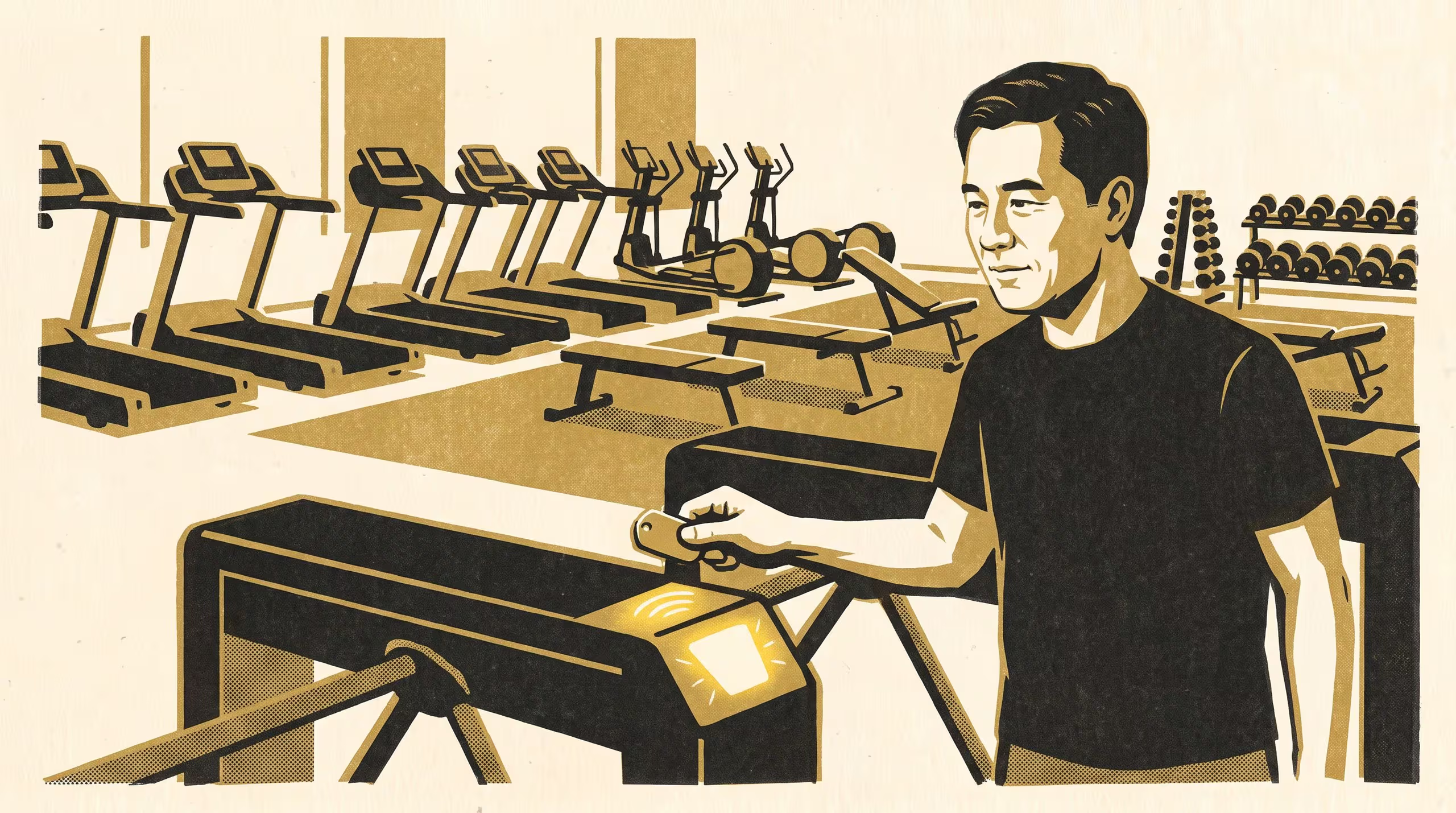
A new Slop University advertising campaign for the Adaptive Metrics Lab turns a gym key-fob turnstile into an argument about what a tap-in actually measures, running across bus-stop panels and campus digital signage in matched daylight and evening versions.
A gym turnstile fronts the Adaptive Metrics Lab's newest recruitment campaign, with lab lead Associate Professor Casimir Beng as its face
Casimir Beng has spent the better part of two decades building measurement systems and then asking, deliberately, what happens once people learn to satisfy them rather than the practice behind them. His Adaptive Metrics Lab’s newest recruitment campaign puts that question on a gym floor: a key-fob turnstile, a confirming chime, and a member who has, by every record the gym keeps, shown up.
Unveiled today under the line “Some Members Only Ever Clock The Door,” the campaign is running across the University’s bus-stop panels and campus digital screens in matched daylight and evening versions.
A tap registers cleanly. What happens on the other side of the gate is a completely different kind of evidence, and most instruments never bother collecting it.
— Associate Professor Casimir Beng, Lead of the Adaptive Metrics Lab
The Adaptive Metrics Lab, the School of Continuous Improvement’s flagship research group, studies how measurement systems are designed, calibrated, and fed back into the processes they track — and, increasingly, how easily a system built to observe a practice starts substituting for it. A gym turnstile is, on that account, a small and unusually honest instrument: everything it records is true, and none of it is the point. The Lab has spent recent cycles cataloguing instruments in exactly that shape, from factory floors to fitness chains, and treats the gym as neither better nor worse than the rest of them — only easier for a passer-by to picture.
The University counts the campaign among the clearer illustrations of a school explaining itself in its own idiom, and expects the line to travel further than most of its recruitment material tends to. It joins a growing run of Slop University advertising built the same way: an ordinary object, instrumented past the point anyone asked for, doing the whole argument on its own.
The full advertisement is available from the University’s research repository under an open licence, doi:10.5555/slop.wxj1ce.