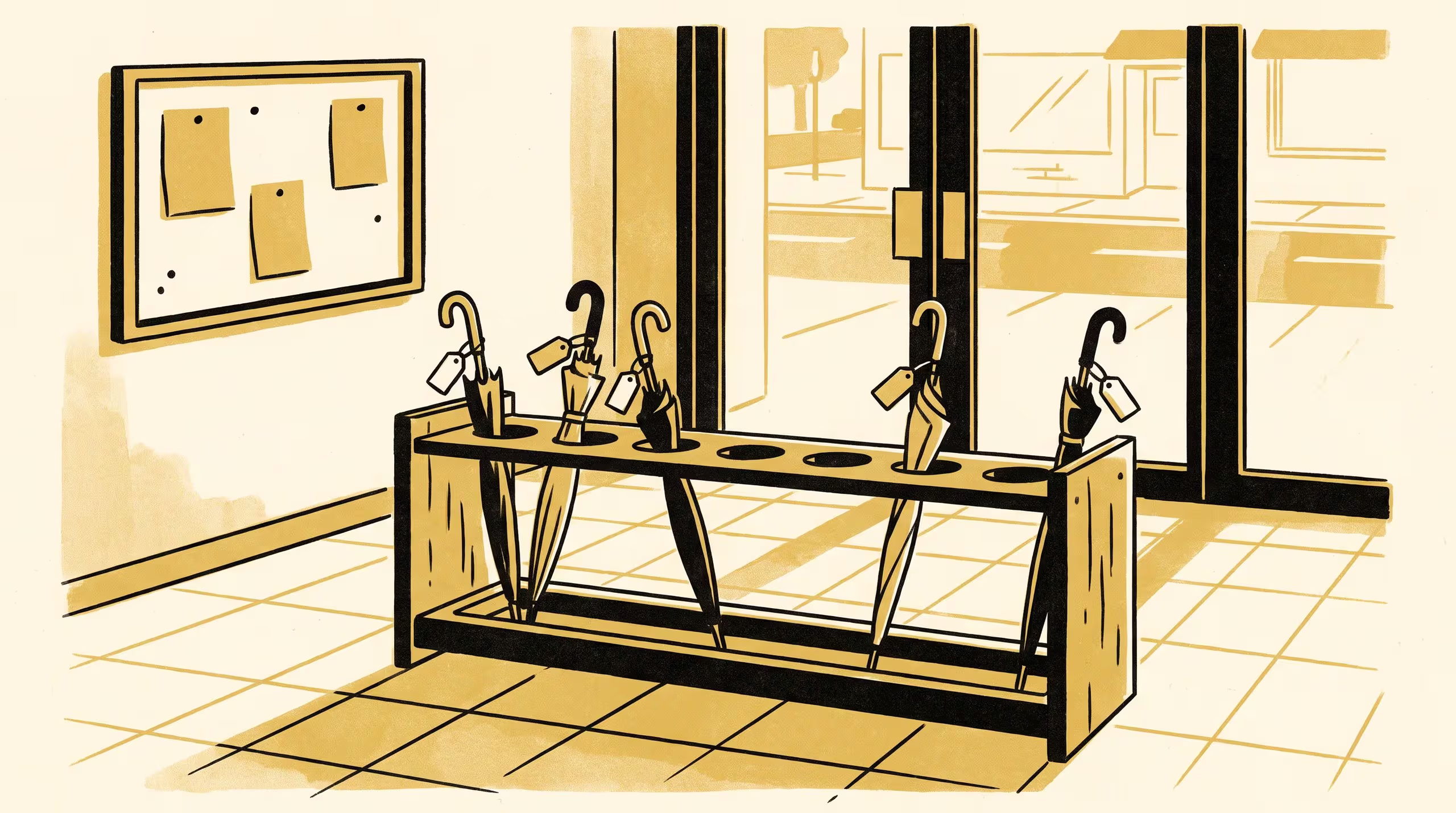
A new Slop University paper deploys an automated return-reminder for a foyer umbrella stand across 22 buildings and finds its opt-in-only public tier already active in three-quarters of buildings that never approved it, traced to a default in the underlying scheduling software.
A 22-building deployment finds the foyer return-nudge's public tier already live wherever a default let it through, while doubling the private nudge changes nothing
The School of Continuous Improvement keeps returning to what a lightweight measurement system does once nobody is watching closely — rarely the system its designers described. Its newest paper turns that interest on the humblest apparatus the School has studied yet: a foyer umbrella stand.
Lecturer Dr Solveig Adeyemi led the work with Lecturer and Convenor Dr Marit Osayande, both of the School of Continuous Improvement, deploying an automated return-reminder across 22 shared-amenity foyers. The brief specified one private nudge only, with any public escalation gated behind an explicit sign-off from each building’s facilities committee. An audit of the deployment’s own logs found a different tool running underneath: three in four buildings had the public tier — a “still out” list posted to the noticeboard — fire within its first month, despite barely a quarter recording the sign-off the brief required.
The brief asked for one tier and a signature before the second one switched on. The logs show the second tier didn’t wait for the signature, and neither, it turns out, did anyone notice until we went looking.
— Lecturer Dr Solveig Adeyemi, School of Continuous Improvement
“We went in expecting to measure a return rate,” said Dr Osayande, Convenor of the School’s Living Dashboard. “What we ended up measuring was which version of the reminder each building was actually running, and those turned out to be two different questions with two different answers.”
Same-day return rates rose from roughly half to just over four in five umbrellas over sixteen weeks, a gain the team traces to the reminder’s presence rather than any particular setting: doubling the private nudge’s frequency left how long an umbrella stayed missing unchanged. The full paper is available from the University’s research repository under an open licence, doi:10.5555/slop.p2fs1d.