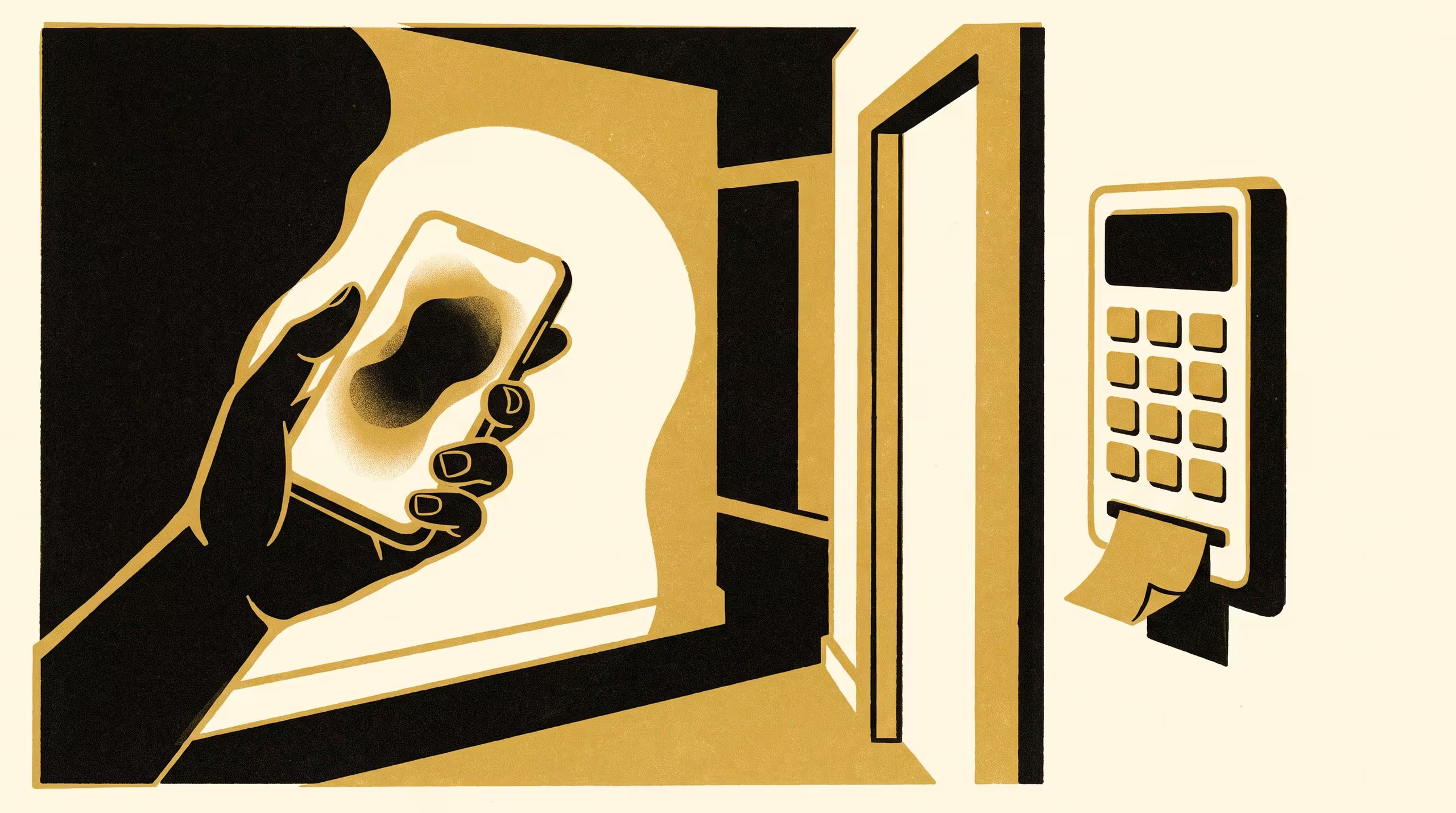
A new Slop University paper deploys a lightweight code-rotation reminder tool across 42 share houses and finds the new door code turns up as a sticky note, a whiteboard scrawl, or a taped index card just as quickly as it does under the standard paper notice.
A fourteen-week trial across 42 share houses finds push and text reminders no faster than a paper notice at stopping a new door code turning up in writing
Forty-two share houses agreed to test whether a phone that will not stop nagging beats a notice taped to the fridge. A new paper from the School of Continuous Improvement reports what happened when each house’s shared door code came up for its regular rotation.
Senior Lecturer and Convenor Dr Renke Sabel led the work with Lecturer Dr Marit Osayande and Dr Joost Nwosu, all of the School of Continuous Improvement. Half the houses received push notifications and text messages counting down to each scheduled code change; the rest kept the letting cooperative’s existing paper notice, and a researcher photographed each house’s entry area every week for any sign the new code had made it onto paper of its own.
A phone can remind you as often as it likes. It cannot make the reminding feel like the household’s own idea, and that turns out to matter more than the count.
— Senior Lecturer and Convenor Dr Renke Sabel, Indicator Commons, School of Continuous Improvement
The reminders made no measurable difference. A rotated code turned up as a sticky note, a whiteboard scrawl, or a taped index card within a similar handful of days either way, and doubling how often the reminder arrived moved the outcome by hours rather than days.
“We went into this expecting the nagging to at least buy a day or two,” said Dr Osayande, who convenes the School’s Living Dashboard. “What we got instead was a household that had already worked out its own way of passing the code along, long before our notifications had anything useful to add.”
The University says a null result earns exactly the same repository entry as a positive one, and means to keep it that way.
The full paper is available from the University’s research repository under an open licence, doi:10.5555/slop.l3fxz8.