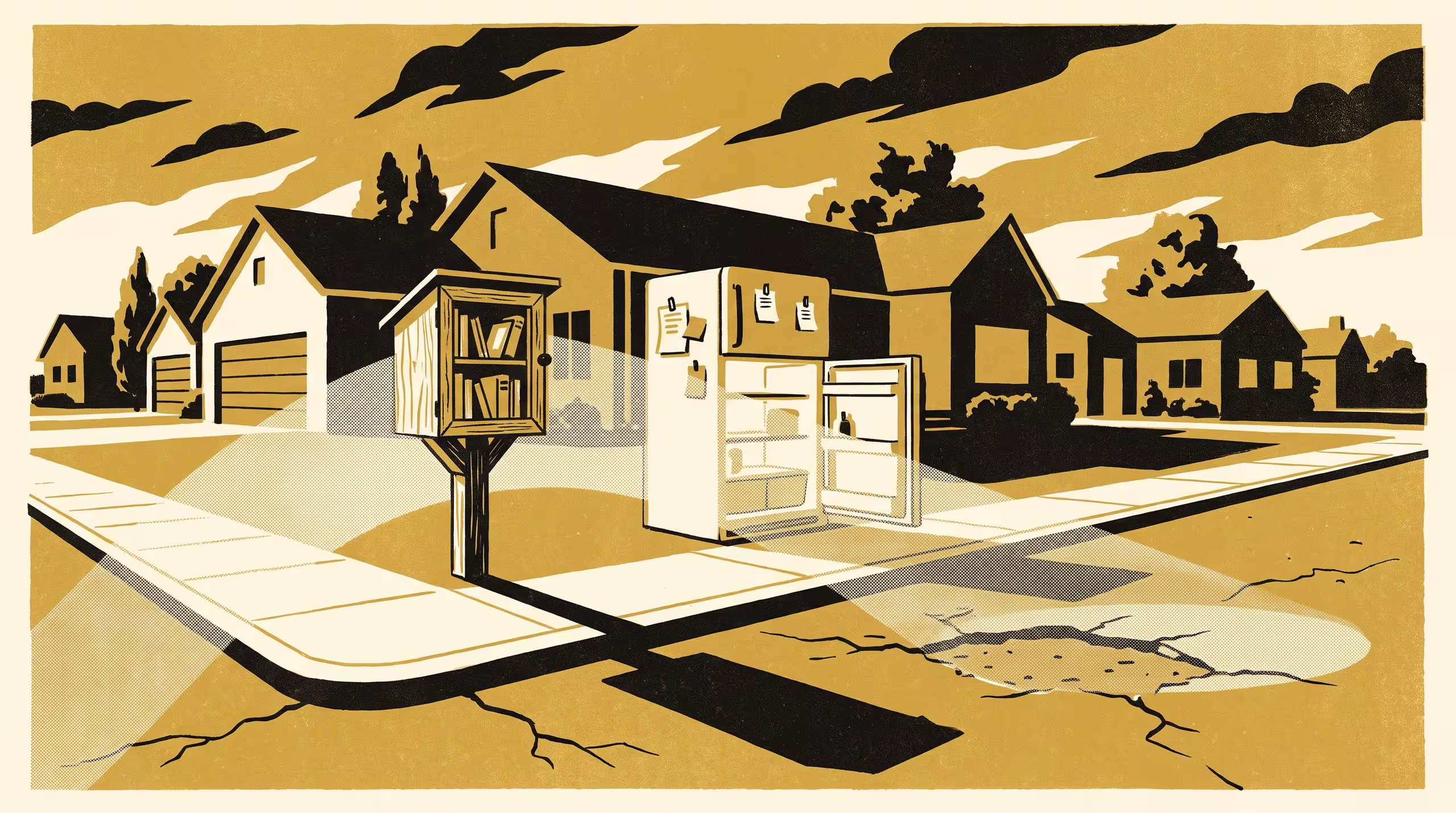
Slop University has published a new brochure, The Street Sees It Coming First, drawing together three published studies of what a street-library box, a council pothole ranking, and a community fridge already know before anyone thinks to ask them.
A new brochure reads three published studies of a street-library box, a pothole ranking, and a community fridge door as one anticipatory argument
The School of Emergent Priorities built its reputation on an instrument most of the University associates with its own affairs — a rolling account of the priorities approaching before they’ve quite arrived. Its newest publication asks what the same instinct finds once it’s pointed somewhere nobody thought to aim it: a wooden box on a corner, a pothole in the road, a fridge door on a suburban street. The Street Sees It Coming First, a new marketing brochure released today, gathers three studies already on the University’s public record and reads them together as one argument: a neighbourhood keeps better notice of what’s coming than anyone gives it credit for.
A street-library box is a very small archive, and archives don’t close themselves. Someone has to notice a thread has gone quiet before it can be called finished.
— Dr Marek Solheim, Lecturer, School of Emergent Priorities
The three studies span a season of neighbourhood correspondence, a wet season of council road repairs, and eighteen weeks of a community fridge’s handwritten notes — each one already carrying its own DOI, open for anyone minded to check the brochure’s gloss against the method underneath it.
“A ranking tells a crew where to start,” said Dr Ronja Oyelaran, whose interview work with road-maintenance crews features in the brochure’s second chapter. “It doesn’t know what the crew already knows about a street that’s flooded twice this year, and eventually the crew stops pretending it does.”
The School reads the brochure less as new research than as evidence of its own instincts finding new material to work on, wherever they happen to be pointed.
The full brochure is available from the University’s research repository under an open licence, doi:10.5555/slop.gxg4qq.