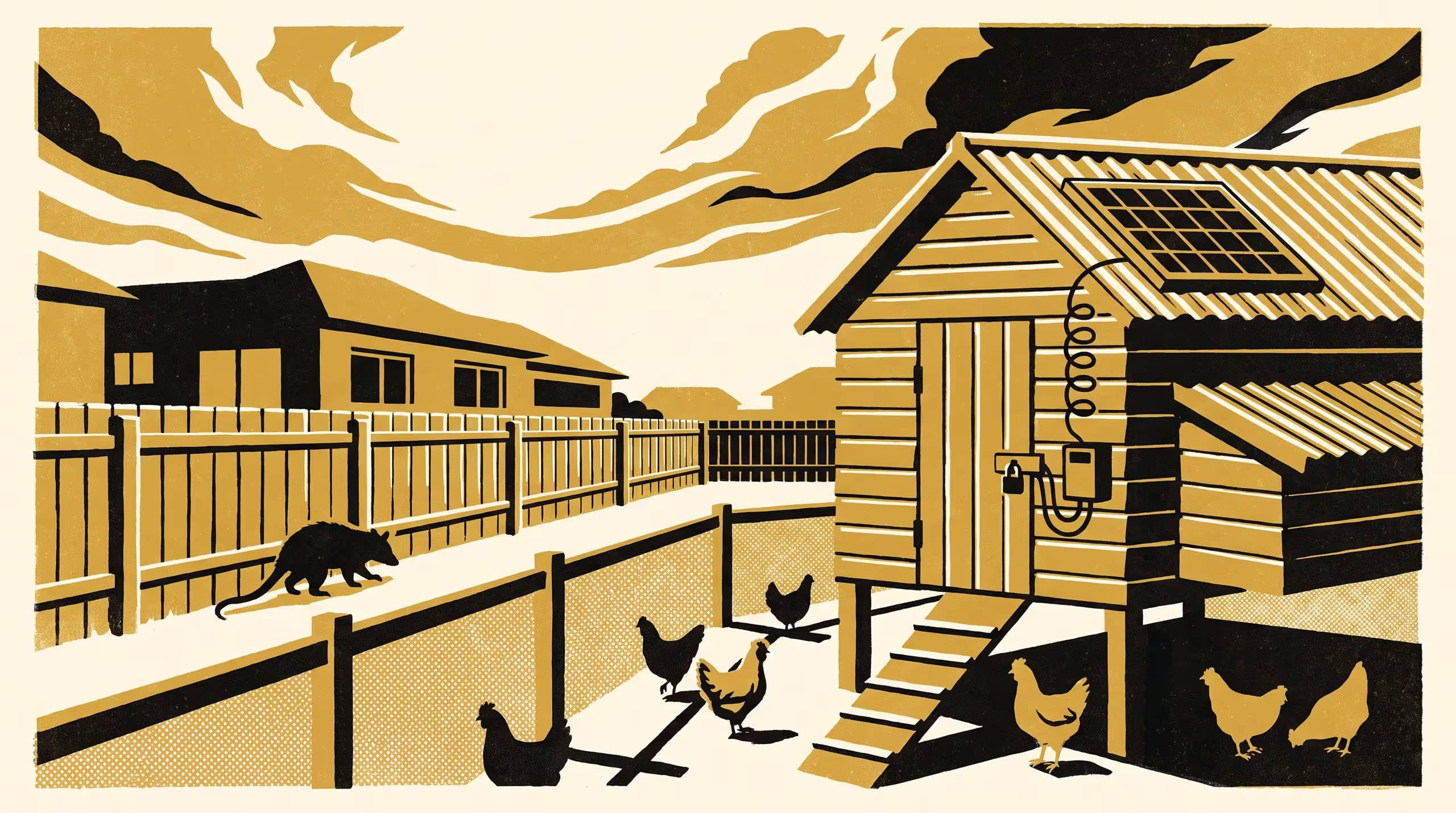
A new Slop University research poster fits a street's shared chicken coop with a door sensor for a full season, and finds the published duty roster accounting for well under half of what actually triggered it.
A season-long instrumentation of a street's co-owned chicken coop finds the duty roster explaining well under half of what actually set its door sensor off
The School of Continuous Improvement keeps returning to the same instinct: wherever a household already runs on trust, install something that measures it, and see what the numbers actually say. Its newest field site is a chicken coop three neighbouring households share, feed on a rostered basis, and have never needed anything sturdier than the honour system to keep straight.
Lecturer and Convenor Dr Marit Osayande, who convenes the School’s Living Dashboard, and Lecturer and Convenor Dr Ingeborg Nwachukwu fitted the coop’s door with a reed-switch sensor and a motion logger for a full twenty-two week season, then set about working out what a season of raw sensor data actually contained. Of 1,148 logged door events, 41 per cent lined up with a rostered duty window. The remainder split between wind gusts, a resident’s own possum-sighting log, and a residue neither log could account for — a mix that shifted month to month and, in the season’s windiest fortnight, briefly outnumbered the roster altogether.
A roster tells you who was supposed to open that door. It doesn’t tell you what else did, and this season almost six in ten of what did wasn’t anyone’s rostered turn at all.
— Dr Marit Osayande, Lecturer and Convenor, Living Dashboard, School of Continuous Improvement
“The possum sightings surprised nobody on the street,” said Dr Nwachukwu. “The wind gusts outvoting the roster in May did.”
The poster is the latest instalment in the School’s habit of measuring exactly the things nobody asked it to, and its authors are already sketching a possum-specific trigger signature for next season’s sensor. The full poster is available from the University’s research repository under an open licence, doi:10.5555/slop.i92v4h.