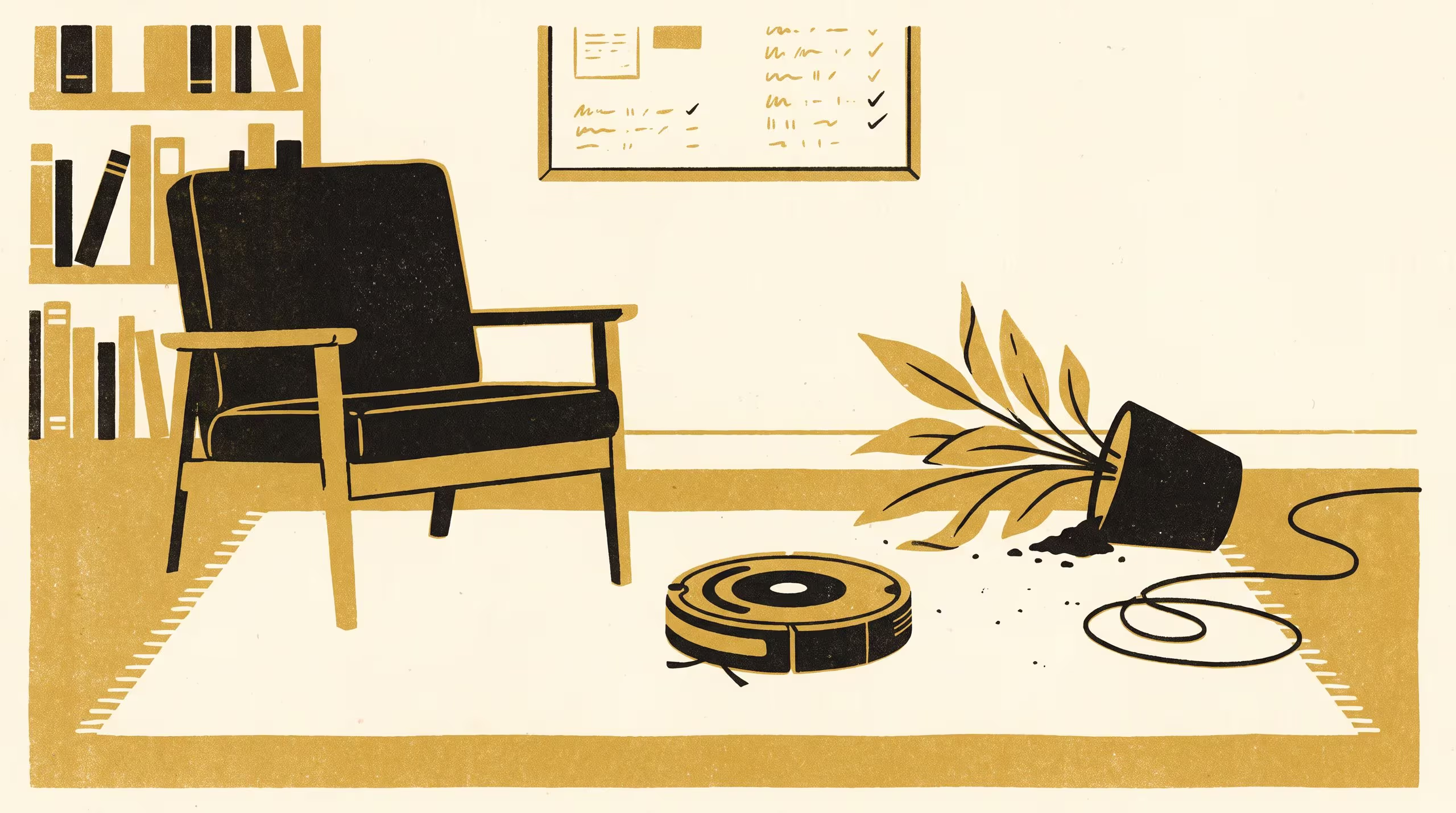
A new Slop University paper compares share houses that keep a written robot-vacuum incident register against those that don't, and finds the register changes what an argument cites without changing how often one begins.
A 14-week study across 34 share houses finds a written robot-vacuum incident register raises how often an argument cites the past, without changing how often an argument starts at all
Somewhere in most share houses that share a robot vacuum, someone eventually starts writing down what it does wrong — the sock it ate, the rug it bunched against the door, the cat it startled mid-nap. A new Slop University paper set out to check what that habit is actually doing to the arguments it’s meant to settle.
Lecturer and Convenor Dr Ingeborg Nwachukwu and Lecturer Dr Marit Osayande, both of the School of Continuous Improvement, tracked 34 share houses across a single term, comparing 23 that kept a written incident register against 11 that never did. Weekly check-ins logged both the vacuum’s mishaps and the arguments that followed them, and coded each argument for what it actually invoked.
Nobody sets out to build an archive of who’s to blame. It just accumulates while you’re trying to settle the thing in front of you.
— Lecturer and Convenor Dr Ingeborg Nwachukwu, School of Continuous Improvement
The two groups argued about their vacuum at statistically indistinguishable rates across the fourteen-week window. What differed was what an argument reached for: register-keeping houses’ disputes cited a specific, named prior incident more than four times as often as houses with no register to cite, while non-register houses fell back more often on the incident directly in front of them.
The result extends the School of Continuous Improvement’s continuing interest in what a documentation habit actually does once it’s adopted, rather than what it was designed to do, joining earlier work on a share house’s energy-budget power-board and a household chore wheel’s own record-keeping habits. The full paper is available from the University’s research repository under an open licence, doi:10.5555/slop.llj9ll.