A new Slop University paper deploys an algorithmic fair-rotation roster to six workplace carpool groups and finds four in ten assigned turns swapped before they run, most of it arranged outside the tool meant to record it.
A fourteen-week deployment across six workplace carpool groups finds two in five assigned turns renegotiated, at both pilot sites and regardless of what the swap form asked
Give four coworkers a fair algorithm and a group chat, and you find out fast which one they actually trust with the roster.
— Senior Research Fellow Dr Anneke Tolan, School of Emergent Priorities
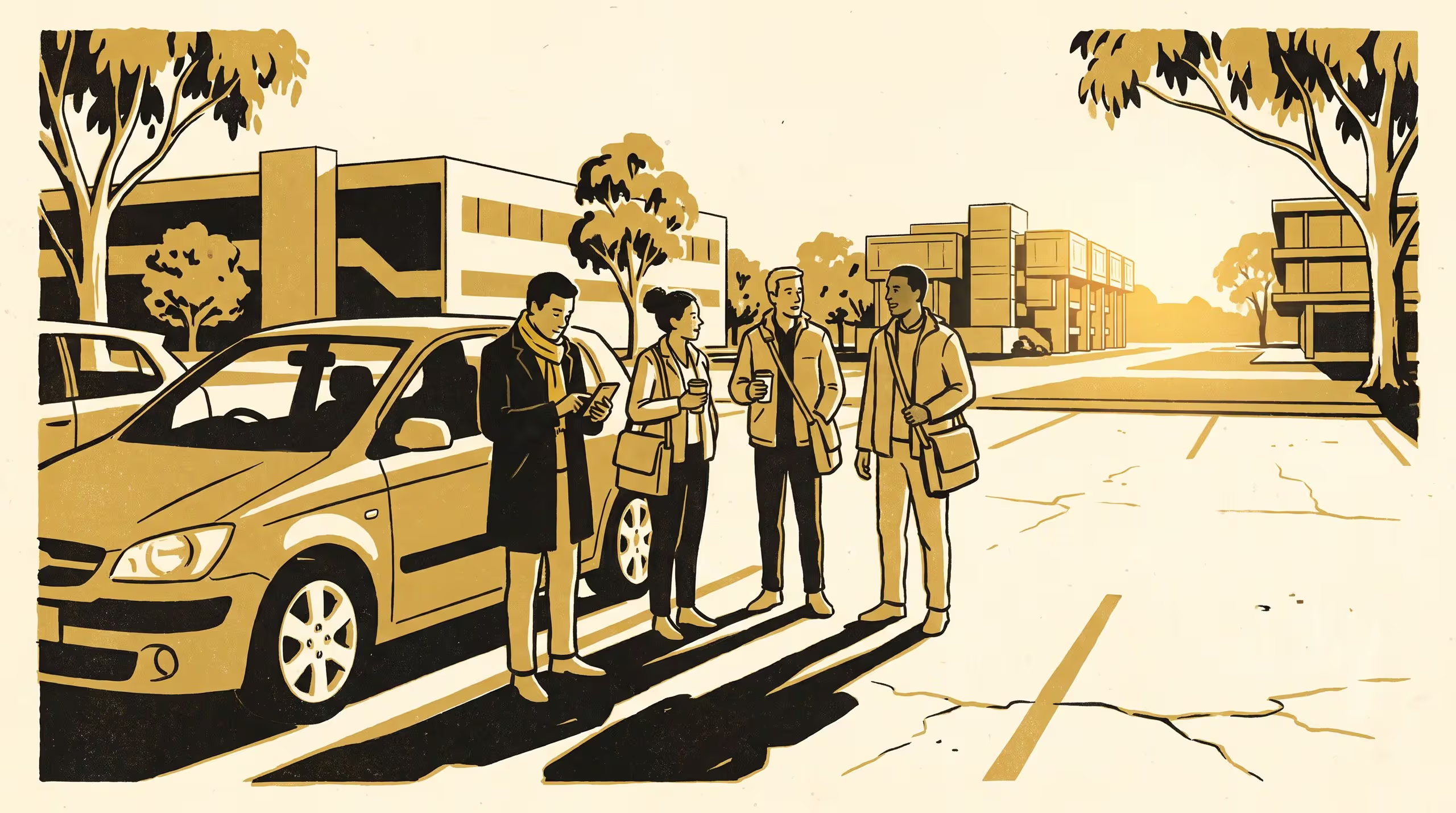
A workplace carpool group has never needed much to decide whose turn it is to drive: a running joke, a text the night before, an unspoken exception for whoever has an early meeting. Last year the School of Emergent Priorities offered six such groups, across two suburban workplaces, a tidier answer anyway — Fair Turn, a small tool that computes a weekly driver assignment designed to even out the driving load, and posts it straight into the group’s existing chat.
Lecturer and Convenor Dr Ingrid Vasseur and Senior Research Fellow Dr Anneke Tolan tracked all six groups for fourteen weeks, comparing the tool’s assigned driver each week against who actually drove. About two in five assigned turns were swapped before the week was out, at both workplaces, at a rate that held steady whether or not the swap form asked members to say why. Most of those swaps, the pair found, were arranged first in the group’s own chat and only entered into the tool afterwards, if at all.
“An algorithm can compute a fair turn all it likes,” said Dr Vasseur. “Whether it’s the turn that happens is a second, separate question, and this one mostly answered itself before the roster ever loaded.”
For the School of Emergent Priorities, the deployment sits alongside a wider question about where an anticipated arrangement and a lived one quietly part ways — a question the School expects to keep asking long after this particular roster stops loading.
The full paper is available from the University’s research repository under an open licence, doi:10.5555/slop.k74ebc.