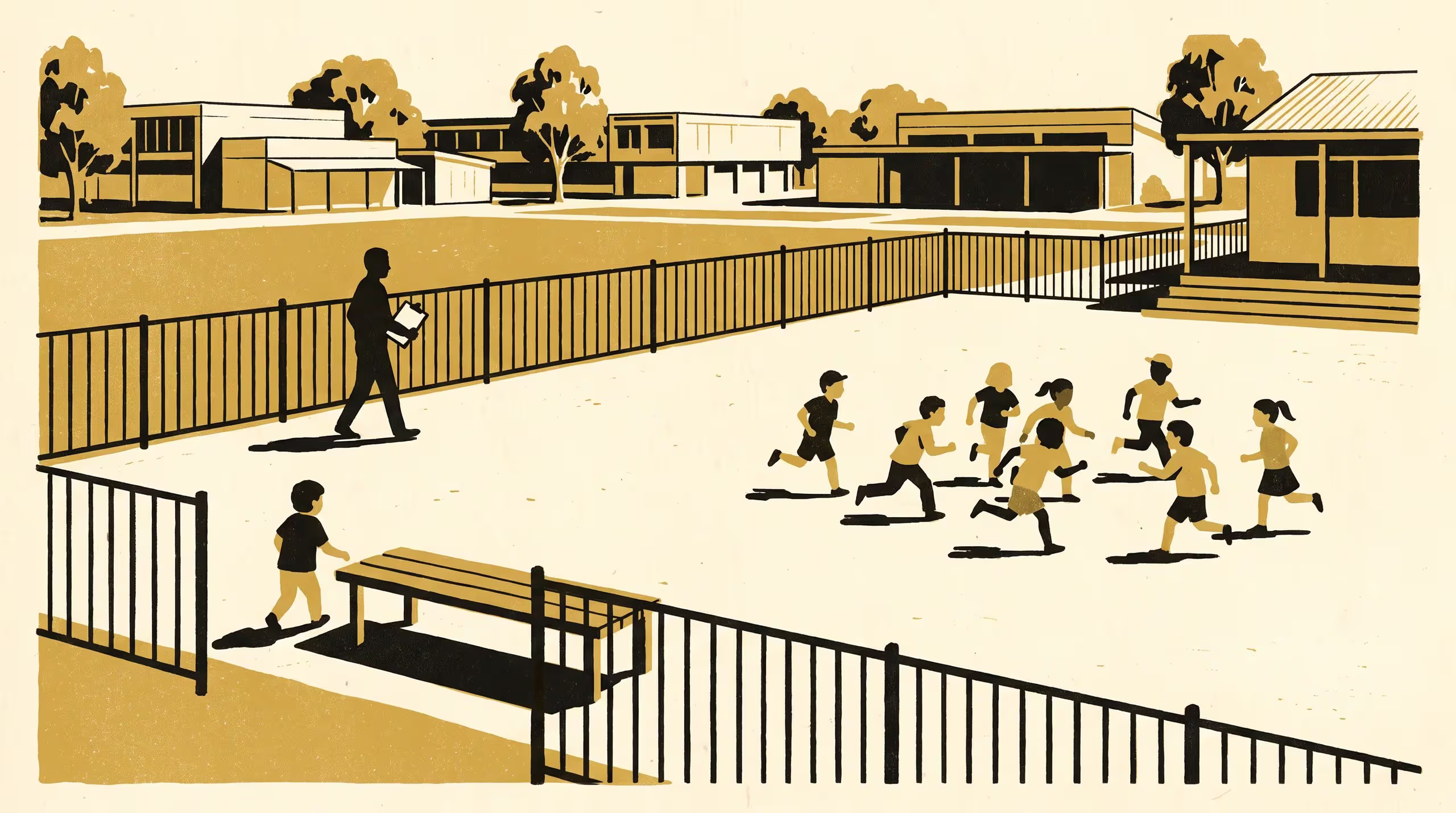
A new Slop University research poster interviews playground supervisors on what actually tips them off that a child is lonely, and finds the school's own buddy-bench tally rarely features in the answer.
Across nineteen primary schools, a supervisor's own noticing outpaces the inclusion tally whether a school keeps one or not
Ask a supervisor what told them a child needed a friend today, and the tally is almost never the answer they reach for first.
— Dr Dagny Okafor, Lecturer and Convenor, Evaluation of Evaluation, School of Continuous Improvement
That gap is now on the record. A Slop University research poster published today interviewed 48 playground supervisors across nineteen primary schools — eleven keeping a formal buddy-bench uptake tally, eight without one — on what actually tips them off that a child needs company at recess, then set their answers against what each school’s end-of-term inclusion report tends to cite.
Interviews were transcribed and thematically coded, then double-coded by a second researcher for consistency; the coding scheme was fixed before the first interview ran, with no category added afterwards. Supervisors at tally-keeping schools named the tally itself as their trigger in under one coded transcript in ten. Their own observation — “just knew,” “saw them at the fence twice” — led both groups almost identically, at 58 and 61 per cent.
“The tally was built to satisfy a report, not to explain an afternoon on the asphalt,” said Dr Ingeborg Nwachukwu, Lecturer and Convenor of Capability Sprints. “Both jobs matter. The transcripts just don’t let us pretend they’re the same job.”
The School of Continuous Improvement says the next round of interviews will turn to whoever actually drafts the end-of-term report, transcripts and tally alike.
The full poster is available from the University’s research repository under an open licence, doi:10.5555/slop.nuuzxk.