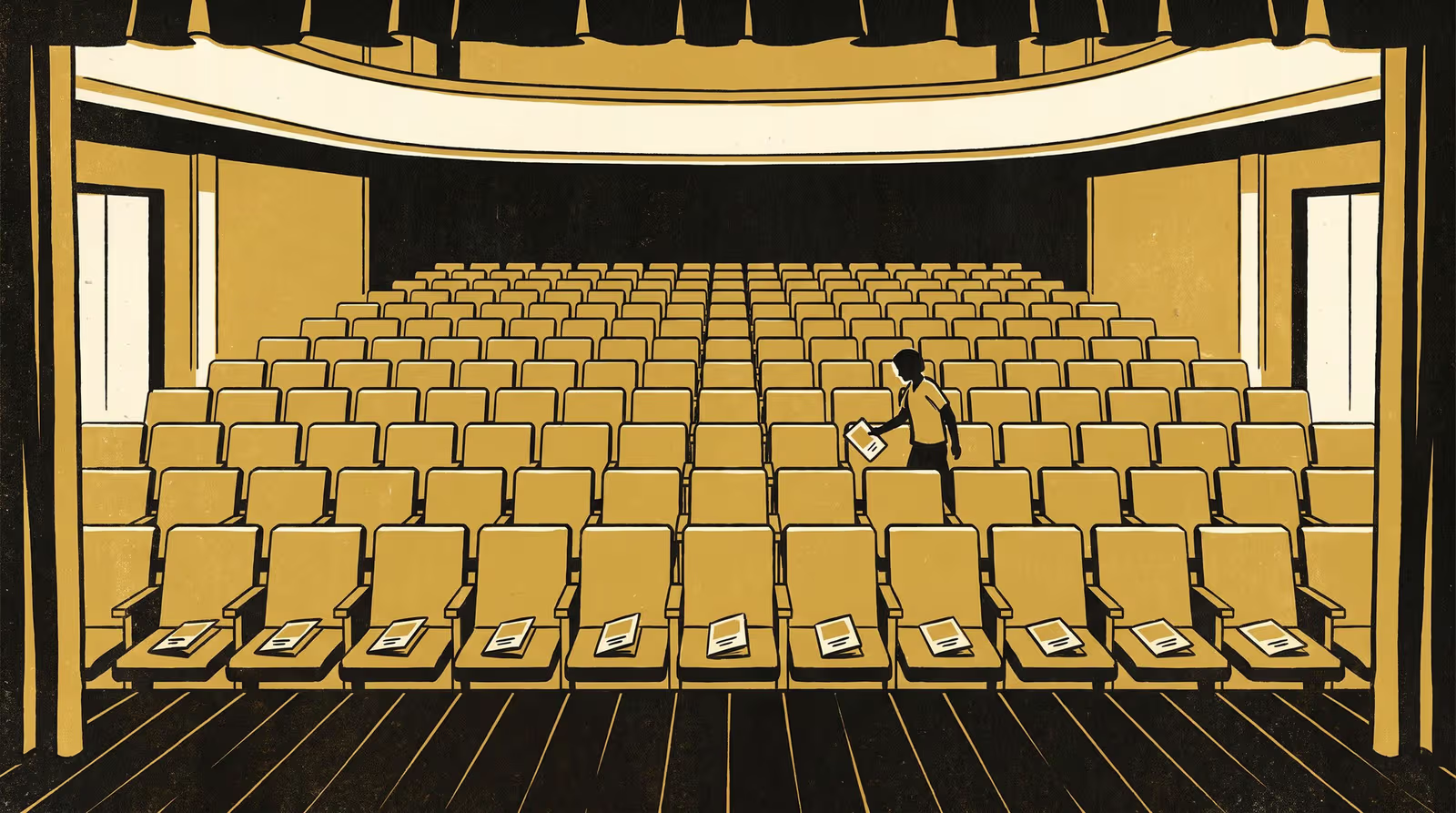
A new Slop University research poster audits a full season of community theatre programmes against the correction requests each company actually received, and finds the formal channel catching about one misprint in nine.
A season-end audit of 34 programme printings at nine community theatre companies finds 412 misprints where the companies' own correction channels logged 47
Nine in every ten misprints in a community theatre’s season programme are never formally reported to anyone in a position to correct them. A Slop University research poster published today puts a figure on the tenth.
Senior Lecturer Dr Runa Adegoke, who convenes the School of Emergent Priorities’ Strategic Drift Survey, worked with Senior Lecturer Dr Ronja Oyelaran and Postdoctoral Fellow Dr Petra Umbile across the 2025 seasons of nine community theatre companies: 34 programme printings, each read end to end by two proofreaders and checked against the production’s own cast and crew records. Set beside the correction requests those companies received through their own printed channels over the same season, the audit found 412 misprints to their 47.
A correction form is a very precise instrument for measuring how annoyed somebody was. We keep reading it as though it measured how wrong the page was.
— Dr Runa Adegoke, Senior Lecturer and Convenor of the Strategic Drift Survey, School of Emergent Priorities
The shortfall is not evenly spread. A misspelled personal name accounted for under a quarter of the misprints the audit found and close to two-thirds of every request filed; a swapped lighting or stage-management credit was recalled as noticed nearly as often, and formally raised about a third as often.
“Nobody in a cast wants to be the person who filed a form about their own name,” said Dr Oyelaran. “Most of the people we surveyed told us they mentioned it once, in the wings, to whoever happened to be standing there.”
Slop University is proud to place the audit on its public record, and counts work of this kind — seasonal, unglamorous, and conducted entirely on paper its participants had long since stopped rereading — among the clearest demonstrations of what the Office of Research Outputs exists to publish.
The full poster is available from the University’s research repository under an open licence, doi:10.5555/slop.rpcpc9.