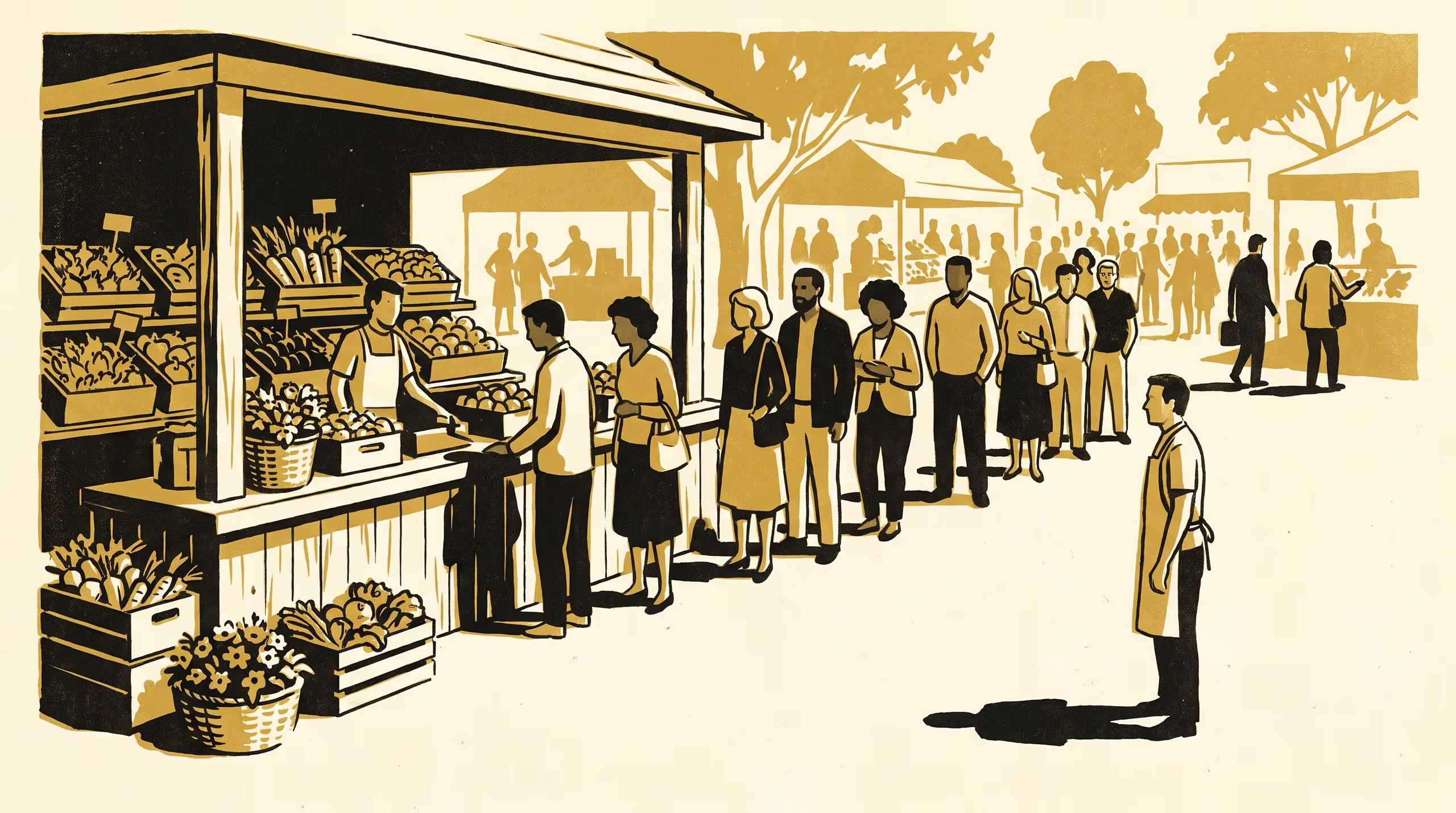
A new Slop University paper replicates a self/other compliance-judgement gap at a farmers market queue, and finds it disappears once a rostered marshal is watching the line, even though the actual rate of queue-jumping barely changes.
A replication of an earlier dog-park finding shows patrons judging a queue-jumper harshly only when nobody is stationed to watch the line
Ask a farmers market queue who is behaving fairly, and the answer changes depending on whether a rostered marshal is standing at the back of the line, a new Slop University paper reports — even though how the queue actually behaves barely changes at all.
Senior Lecturer Dr Ronja Oyelaran and Senior Lecturer Dr Runa Adegoke, both of the School of Emergent Priorities, set out to test whether an asymmetry the University first identified at a suburban dog park travels to a different queue entirely. Across twelve Saturday markets, patrons rated their own most recent turn in line and a nearby stranger’s on the same five-point scale used in the original study, while independent field observers quietly logged who actually queued in order. At markets without a marshal, self-ratings ran well ahead of the ratings given to everyone else. At markets with one, the gap closed almost completely.
A marshal doesn’t make anyone queue any better. It makes everyone a little more generous about how the person in front of them is queuing.
— Senior Lecturer Dr Ronja Oyelaran, School of Emergent Priorities
The audit trail behind the finding is what makes it hold. Field observers coded actual queue order at every stall, blind to what respondents had told the survey, and their tally moved only slightly between marshalled and unmarshalled markets — nowhere near enough to explain why the judgement gap all but vanished on its own.
Dr Adegoke, who convenes the School’s Strategic Drift Survey, said the result “gives the University one more reason to check what a self-report instrument is actually measuring before it retires the observer who could check it directly.”
The School of Emergent Priorities treats the result as a data point in its own ongoing account of when a self-report instrument can be trusted to stand in for direct observation, and when it can’t.
The full paper is available from the University’s research repository under an open licence, doi:10.5555/slop.4heaxe.