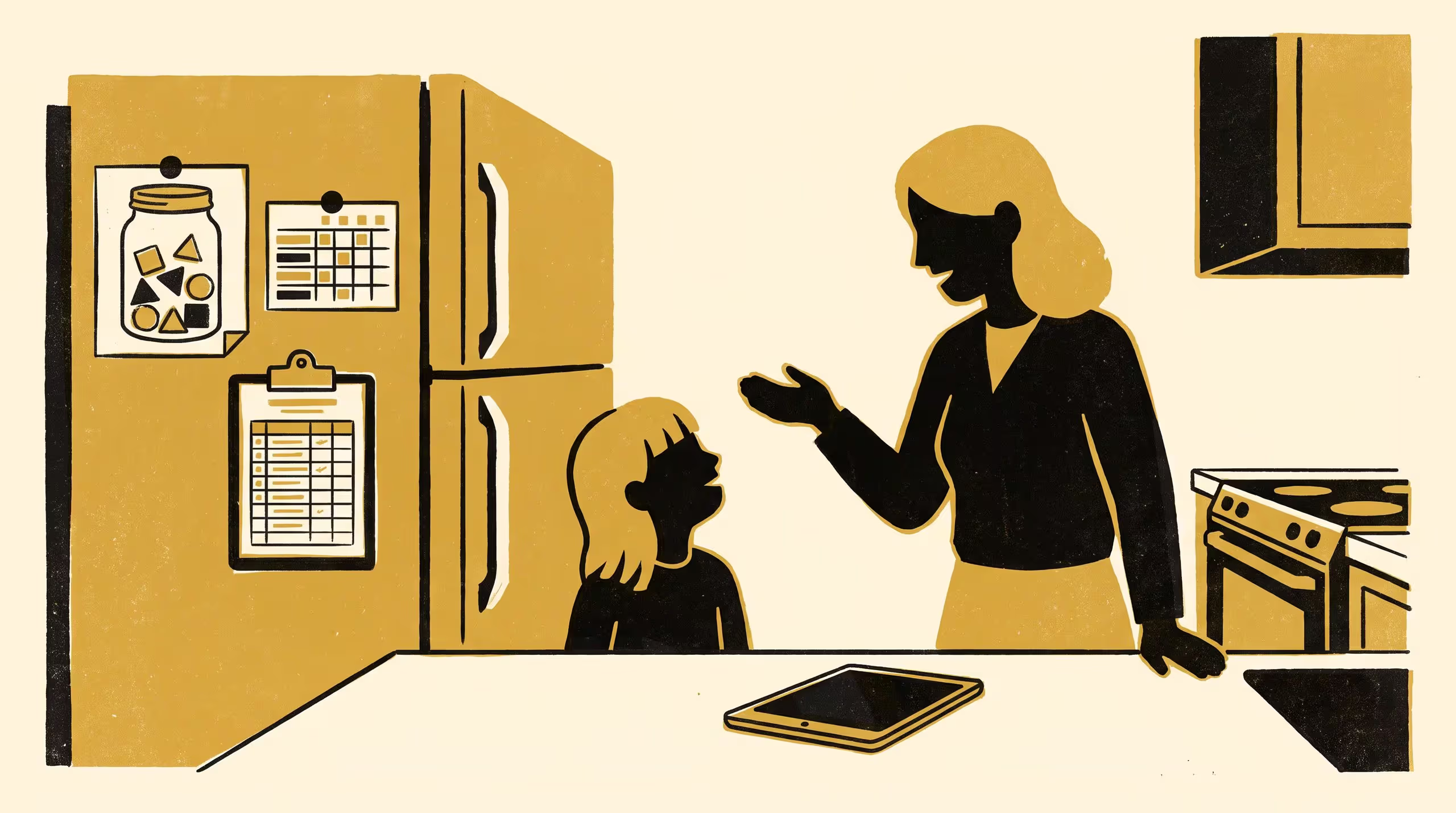
A new Slop University paper compares school-holiday households running a formal screen-time token economy against informal negotiation, and finds fewer arguments but no less arguing, minute for minute.
A two-week school-holiday diary study of 142 households finds a token economy cuts negotiation frequency in half while lengthening and escalating the negotiations that remain
Two households can run the exact same rule about screen time and still end up in a completely different kind of fight. A new Slop University paper spent the first fortnight of the July school holidays finding out why.
Lecturer and Convenor Dr Ingeborg Nwachukwu, Lecturer Dr Solveig Adeyemi, and Associate Professor Casimir Beng, Lead of the Adaptive Metrics Lab, split 142 households by their own habit: 64 already running a paper token system trading chores for screen-time blocks, and 78 sticking with verbal back-and-forth. Parents logged every negotiation across the break — how long it ran, and how far it went.
Cutting an argument’s frequency and cutting an argument’s cost turned out to be two completely different achievements, and our token households only managed one of them.
— Associate Professor Casimir Beng, Lead, Adaptive Metrics Lab, School of Continuous Improvement
Token households logged fewer than half as many negotiations a day as ad hoc households, a gap that held all break. What it didn’t do was shrink the total time spent negotiating: token negotiations ran longer and escalated further, and weighed together, the two groups came out even. A more generous exchange rate, offered to half the token households partway through, didn’t move that total either.
“We’re not saying a token jar is the wrong call for a household,” said Dr Adeyemi. “We’re saying it answers a different question than the one most parents think they’re asking.”
For the University, the finding reads less as a caution about token economies than as one more entry in a year-long ledger: attach a measure to a household, a roster, or a leaderboard, and the number changes before the thing underneath it does.
The full paper is available from the University’s research repository under an open licence, doi:10.5555/slop.a9czzw.