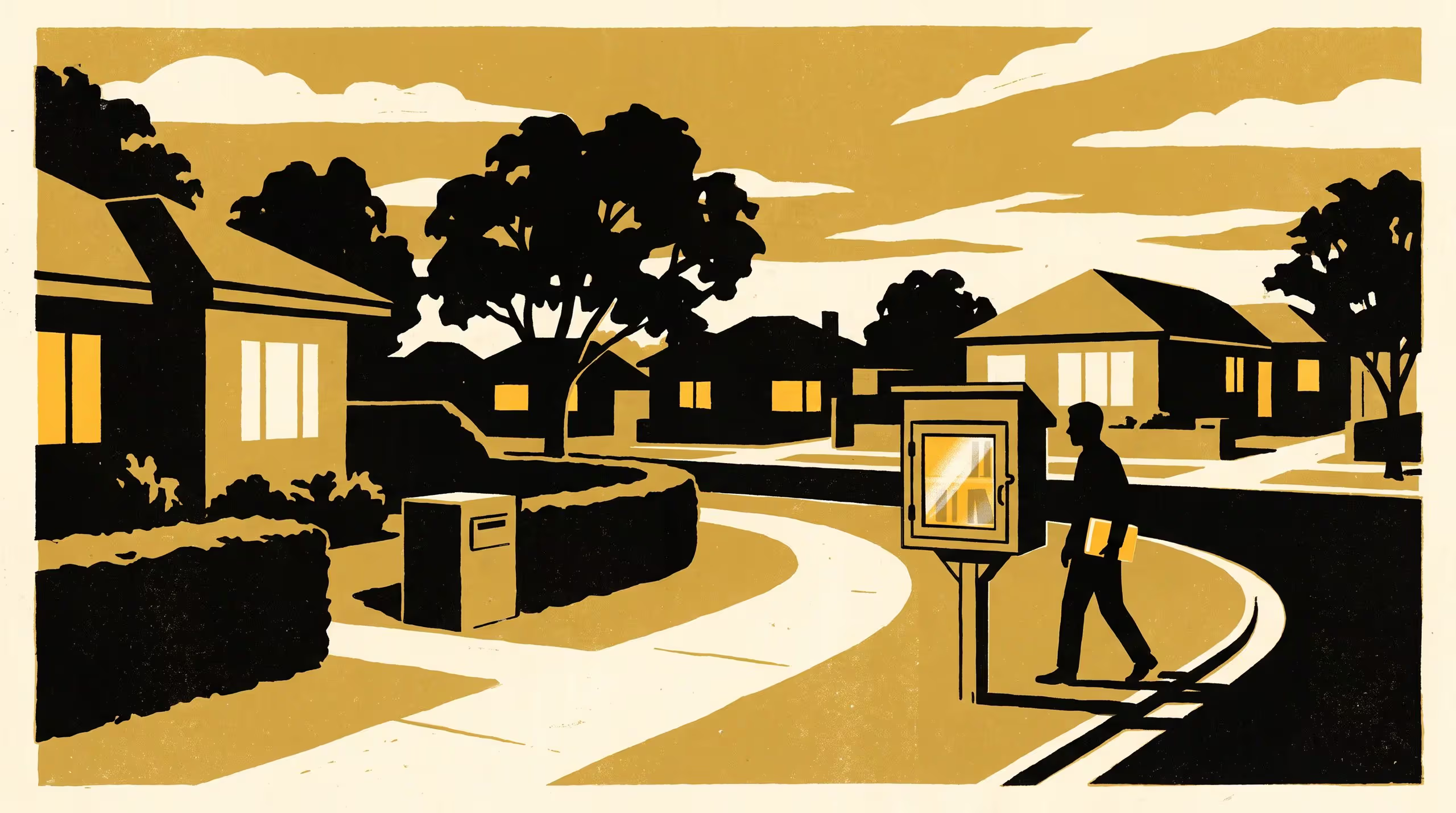
A new Slop University research poster surveys users of 38 suburban little free libraries on how much they value the box against its own posted take-vs-leave ratio, and finds the number's only real effect is whether anyone can read it at all.
A 14-week survey across 38 suburban boxes finds legibility, not arithmetic, driving whether anyone even remembers the number
A number posted next to a box of paperbacks turns out to answer a question nobody living near it was actually asking. Little free libraries have begun displaying a running take-versus-leave ratio, offered up as a kind of health score for the neighbourhood’s own generosity. A new Slop University research poster went looking for what that score actually predicts, and found it predicting almost nothing at all.
Lecturer and Convenor Dr Ingeborg Nwachukwu and Dr Marit Osayande, Lecturer and Convenor of the Living Dashboard, surveyed 214 registered users across 38 suburban boxes over fourteen weeks, matching each respondent’s own five-point rating of the box against its live posted ratio at the time, while separately logging whether the placard itself could be read from the footpath. Users rating a box “essential” or “rarely used” split almost identically whether the posted ratio was generous or stingy. The one thing that reliably separated respondents was whether they could recall the number at all, which tracked the placard’s legibility far more closely than the ratio it displayed.
The School of Continuous Improvement counts the result among the year’s more useful non-findings — the kind that quietly closes off an explanation everyone had been reaching for.
We went in expecting the ratio to be doing more work than it turned out to be doing. That is usually where the more interesting finding is hiding.
— Dr Ingeborg Nwachukwu, Lecturer and Convenor, Capability Sprints, School of Continuous Improvement
“The ratio didn’t need to be wrong to be beside the point,” said Dr Marit Osayande. “Keeping the glass clean and the placard at eye height turns out to matter more than what the placard says.”
The full poster is available from the University’s research repository under an open licence, doi:10.5555/slop.5l833a.