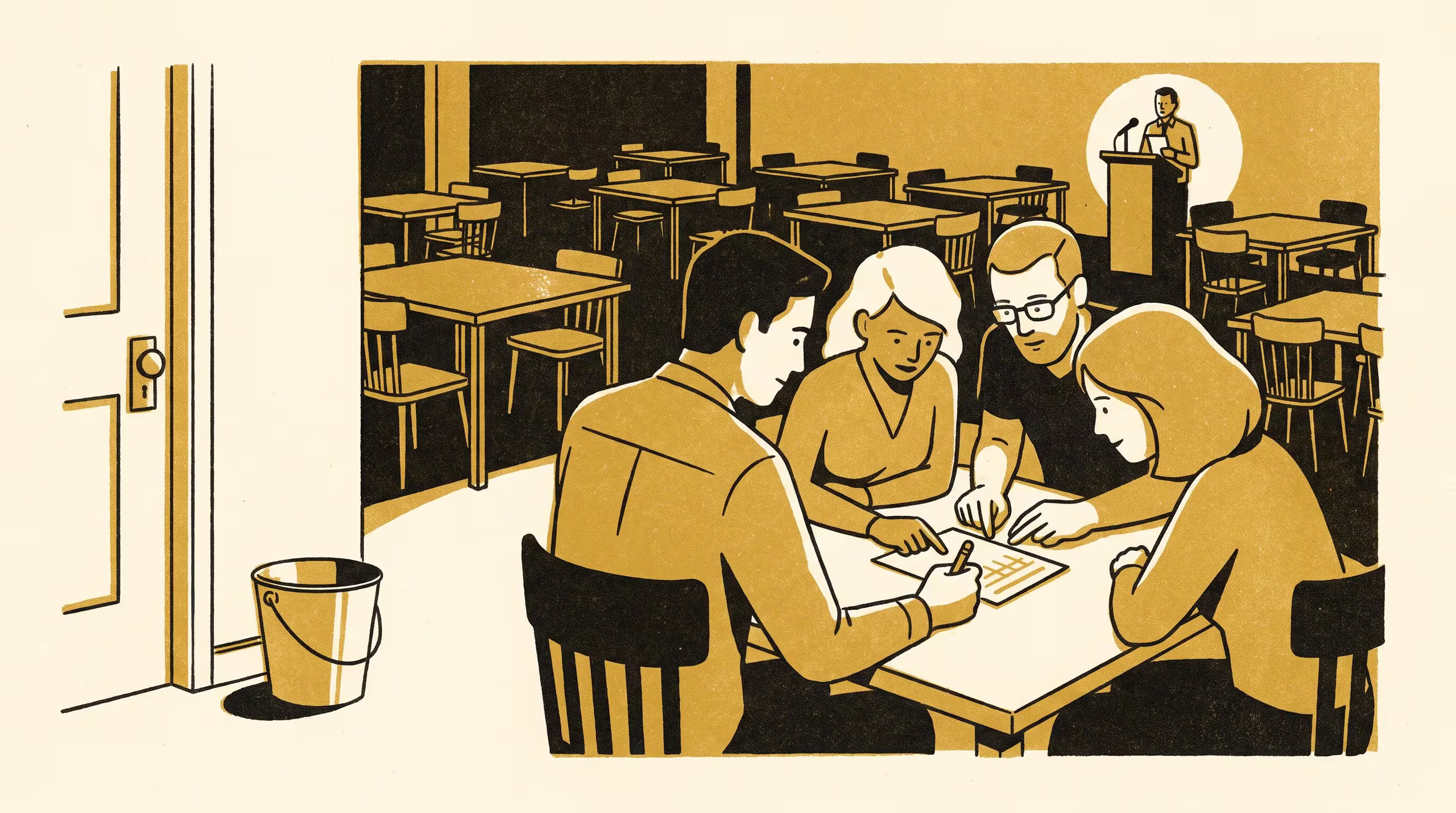
A new Slop University paper pairs pub trivia teams' self-reported scores against an unannounced spot-check tally across a full season, finding that an honesty placard changes almost nothing about accuracy, only how openly a team corrects an error it already caught.
A sixteen-week spot-check across 22 trivia venues finds self-reported scores already accurate, with the placard changing only who visibly owns up to a mistake.
Ask a trivia team to mark its own quiz, and across a full season the arithmetic mostly holds up whether or not anyone is watching. A new Slop University paper went looking for the season in which that stopped being true, and came back with a different finding instead.
Lecturer and Convenor Dr Ingeborg Nwachukwu, Lecturer and Convenor Dr Dagny Okafor, and Senior Lecturer Renke Sabel spent sixteen weeks pairing the self-reported scores of two randomly chosen teams a night, across twenty-two venues in a suburban trivia league, against an independent tally kept by a researcher seated among the regular crowd and disclosed to nobody until the season closed. Halfway through, fourteen of the twenty-two venues began displaying a laminated placard above the existing phone bucket, reading “Score it straight — we spot-check.”
Self-reported scores matched the independent tally in roughly nine team-nights in ten before the placard went up, and in almost exactly the same share afterwards. What did move was how often a team was seen crossing out its own submitted total and correcting it downward before handing the scoresheet in — rising sharply at venues carrying the placard, and staying flat at venues that kept an unmarked bucket.
People don’t correct an error because a sign told them to be honest. They correct it because the sign told them somebody might be counting. Those aren’t the same finding, and we didn’t expect the season to split them so cleanly.
— Dr Ingeborg Nwachukwu, Lecturer and Convenor of Capability Sprints
Dr Okafor, Lecturer and Convenor of Evaluation of Evaluation, said the result “raises the obvious next question for any venue running a compliance sign of its own: whether the sign is catching more mistakes, or just making more of them visible.” The University counts the finding among a growing ledger of cases where a posted signal changes what people are seen to do about a mistake, without changing how often one happens in the first place.
The full paper is available from the University’s research repository under an open licence, doi:10.5555/slop.q97hce.