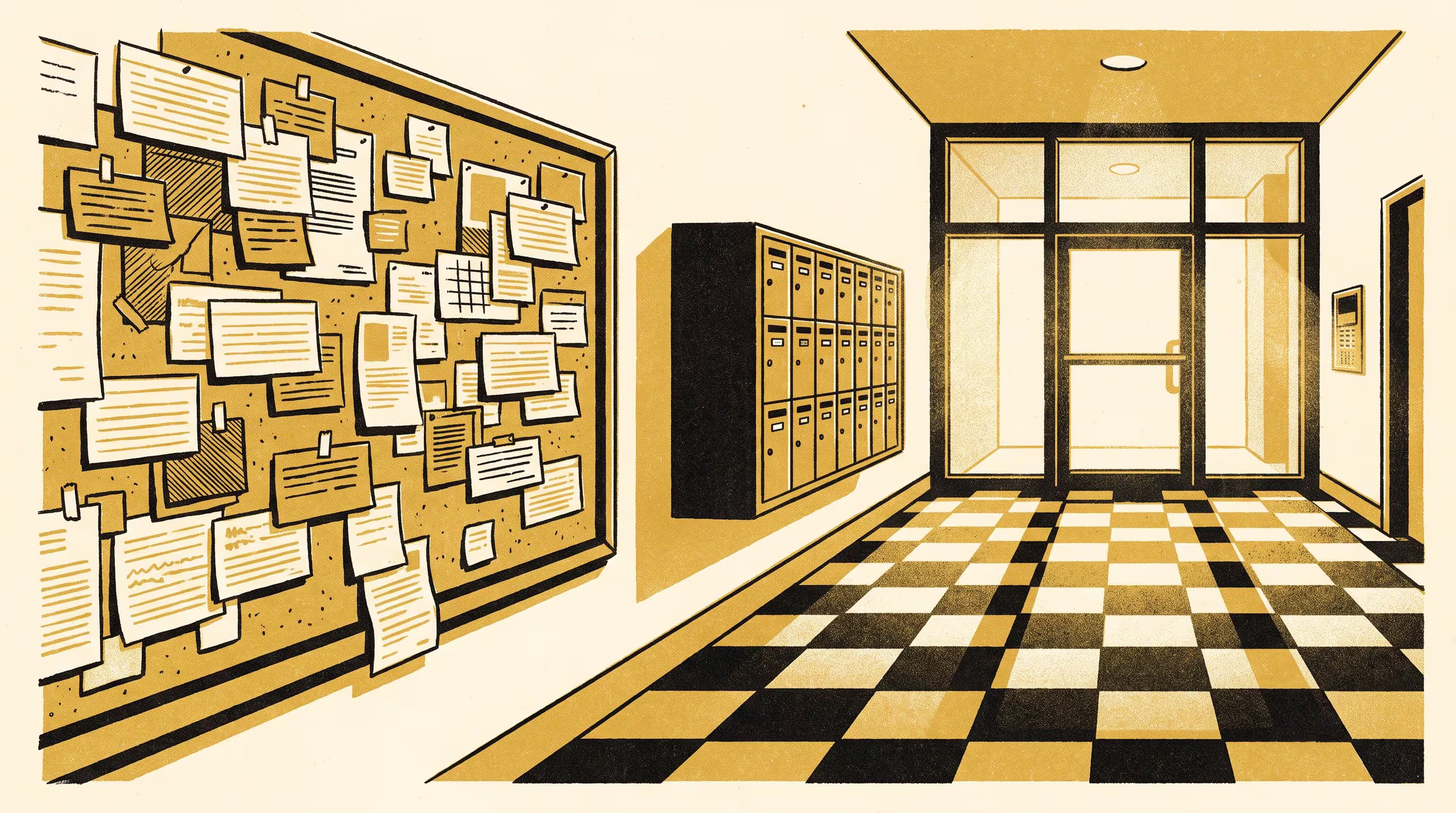
A new Slop University research poster codes eleven months of a lobby noticeboard's postings into a six-type taxonomy, and finds one type resolving disputes twice as fast as the rest despite naming no enforcement mechanism.
An eleven-month coding study across four apartment blocks finds one noticeboard entry type closing disputes twice as fast as the rest, with no resident ever elected to decide anything
For eleven months, a School of Continuous Improvement team treated an apartment lobby’s noticeboard as a research site in its own right — photographed weekly, entry by entry, rather than sampled only when a dispute got loud enough to notice.
Lecturer and Convenor Dr Ingeborg Nwachukwu, Lecturer and Convenor Dr Dagny Okafor, and Postdoctoral Fellow Dr Mirela Hanke coded 487 entries across four blocks into six recurring types, then timed how long each type took to read as settled. The six-type split held independently across every block. Entries the team coded as a Ruling closed within days; entries coded as a Complaint took roughly a week longer, on average, to reach the same quiet end.
Nobody on that noticeboard has ever been given the authority to decide anything. What we coded was how convincingly an entry could borrow it anyway.
— Dr Dagny Okafor, Lecturer and Convenor, Evaluation of Evaluation, School of Continuous Improvement
“The taxonomy travelled between blocks that had never compared notes, which is the part I didn’t expect going in,” said Dr Ingeborg Nwachukwu, Convenor of Capability Sprints. The project extends the School’s continuing attention to which of an indicator’s decisions were ever really its own to make.
The full poster is available from the University’s research repository under an open licence, doi:10.5555/slop.19p288.