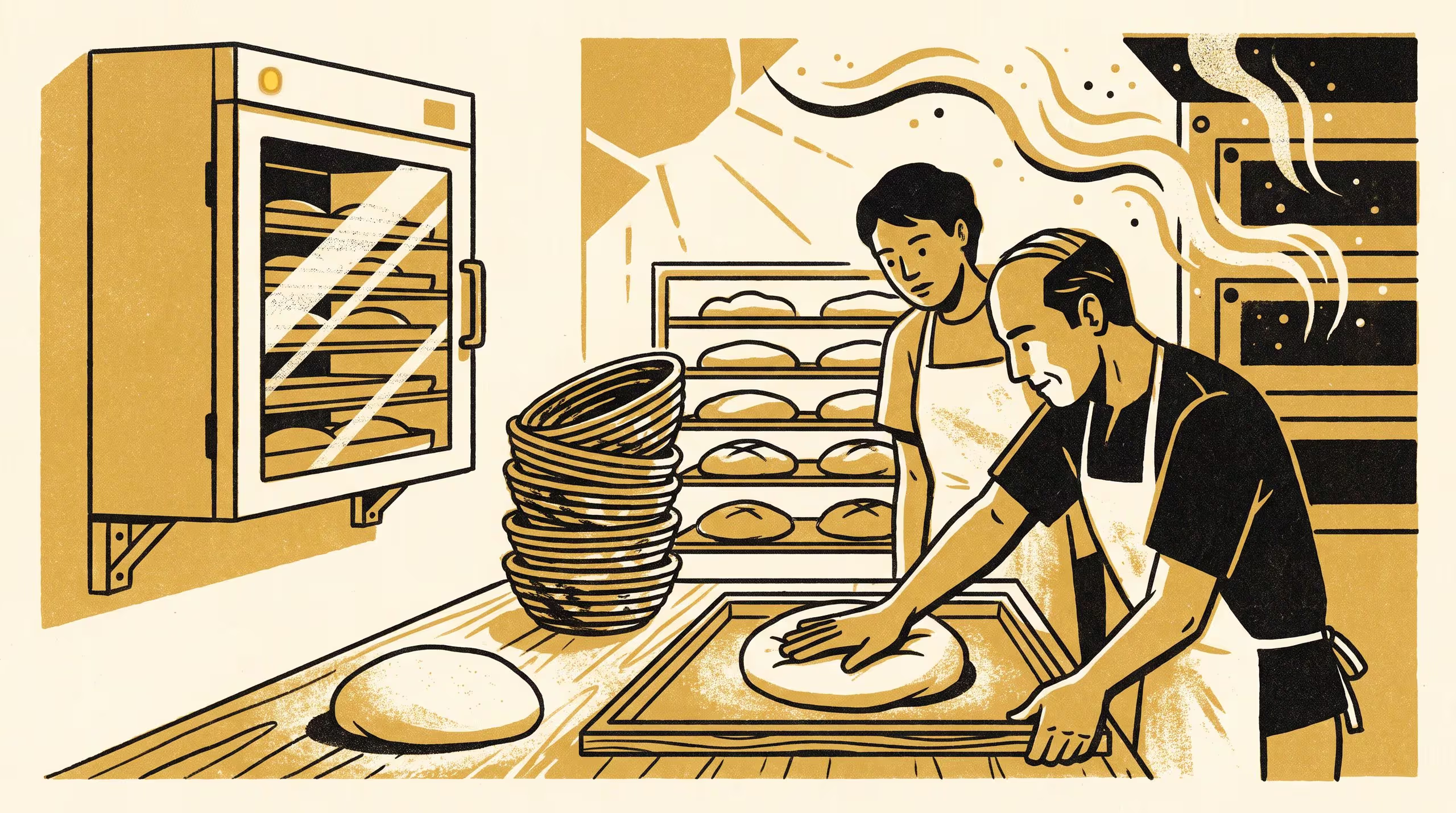
A new Slop University paper finds bakery trainers teach the traditional dough-readiness test less often the longer a shop's proofing cabinet has been calling it, and that hiding the gauge doesn't bring the old habit back.
Across 54 bakery trainers, hand-taught dough readiness fell from 88% to 35% with a cabinet's tenure, and covering the gauge for six weeks didn't bring it back
A commercial bakery’s proofing cabinet used to defer entirely to a trainer’s hands: a poke, a smell, a glance at how a piece of dough floats. A new Slop University paper finds that once a cabinet’s own readiness gauge takes over the call, the trainer’s hands stop being asked.
Lecturer Iben Chikere, Senior Lecturer Ronja Oyelaran, and Associate Professor Casimir Beng interviewed 54 head bakers and trainers across 31 commercial bakeries about how they teach a brand-new apprentice to judge dough readiness, then set aside a subset of shops to cover their cabinet’s display for six weeks and see what training habit, if any, filled the gap.
The traditional readiness test survived as a matter of course in shops with a newly installed cabinet, taught to nearly nine in ten new apprentices without anyone asking for it. In shops where the cabinet had been running for six years or more, barely a third of trainers still taught it unasked. Covering the display for six weeks didn’t reverse the trend: trainers logged the same modest handful of hands-on coaching moments per shift whether the gauge was visible or hidden.
The School of Emergent Priorities reads the result as part of its wider attention to what a handover keeps and what it quietly drops.
A handover doesn’t fail all at once. It fails one apprentice who was never asked to notice what nobody demonstrated.
— Dr Iben Chikere, Lecturer, School of Emergent Priorities
“A gauge doesn’t need to be wrong to change what a trainer stops bothering to teach,” said Associate Professor Casimir Beng, Lead of the Adaptive Metrics Lab. “Ours was right often enough that nobody noticed the teaching had gone quiet.”
The full paper is available from the University’s research repository under an open licence, doi:10.5555/slop.86dvpi.