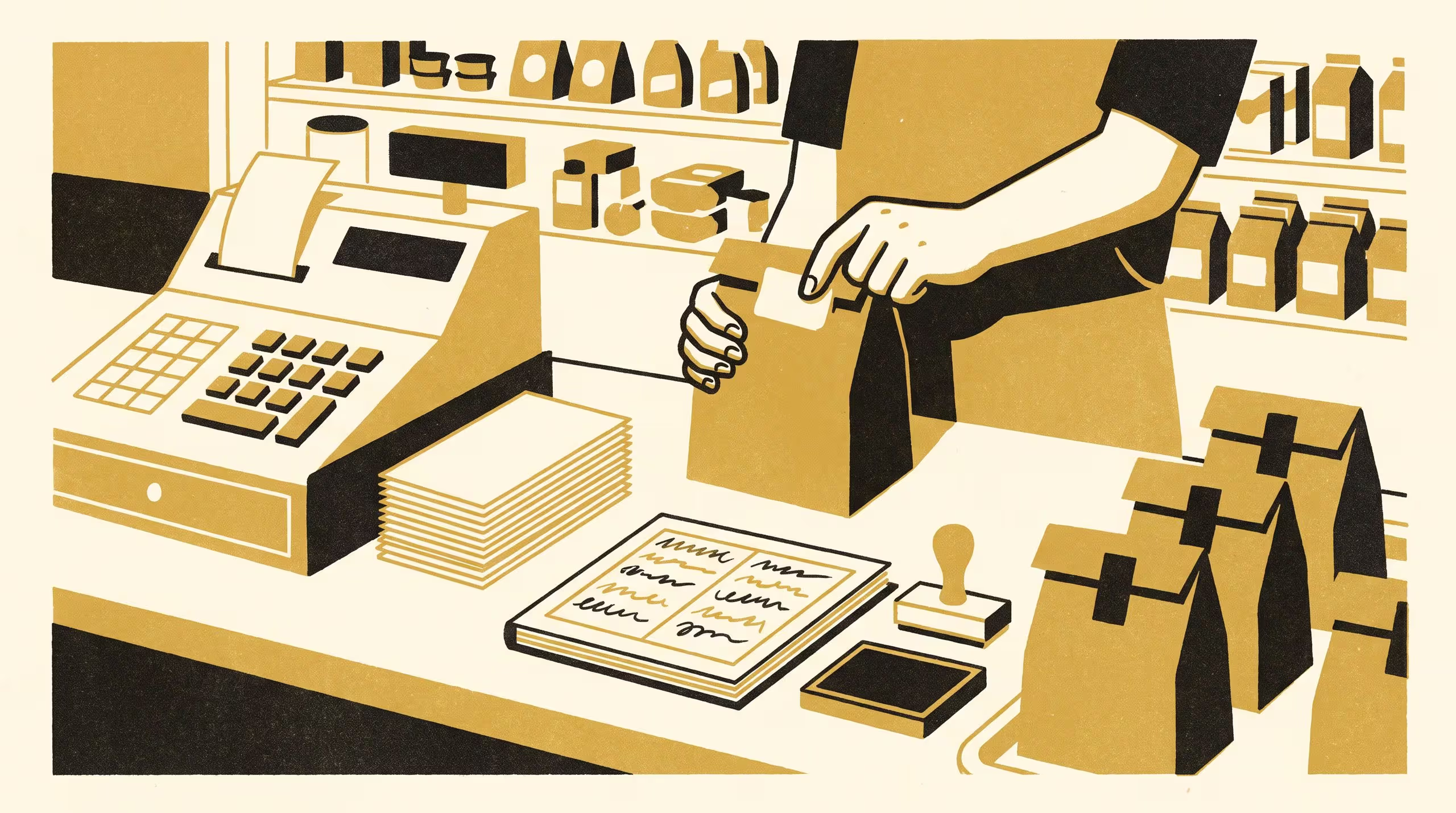
A new Slop University paper reports the design and eight-week pilot of a paper-till, sticker-tag ordering system for a primary school canteen, and an informal use its order log picked up as a lateness flag for the front office.
An eight-week pilot cuts sticker mismatches under 2%, and turns up an unplanned use for the order log
The School of Emergent Priorities studies the gap between what an institution says it does and what its daily operations actually enact; a school canteen has just supplied about as literal a specimen of that gap as the School has found all year.
A parent-run primary-school canteen retired its commercial ordering app for a paper order slip and a peel-off sticker tag, matched by hand at a volunteer-staffed till and logged with a time-stamp on a carbon duplicate. A new Slop University paper reports how the eight-week pilot went, and a use its paper trail picked up that nobody put there on purpose.
A canteen till was never going to stay just a canteen till once it started keeping a log anyone could pick up and read; if there’s a lesson in it for the wider University, it’s that plenty of our own instruments started out exactly that literal.
— Dr Runa Adegoke, Senior Lecturer and Convenor, Strategic Drift Survey, School of Emergent Priorities
Mismatches needing a volunteer’s correction fell sharply as families and student order-takers learned the format, at a modest, steady cost in till time. Partway through the pilot, front-office staff began treating a late order timestamp as an informal sign a student had arrived late, a use the canteen built for lunch orders alone.
“The ordinary transactional log keeps turning out to be one of the more honest things we study,” said Dr Mirela Hanke, Postdoctoral Fellow, School of Continuous Improvement, “precisely because nobody built it expecting to be read that way.”
The deployment stands as one of the School’s clearer instances yet of building an instrument rather than only auditing somebody else’s.
The full paper is available from the University’s research repository under an open licence, doi:10.5555/slop.8qqhhm.