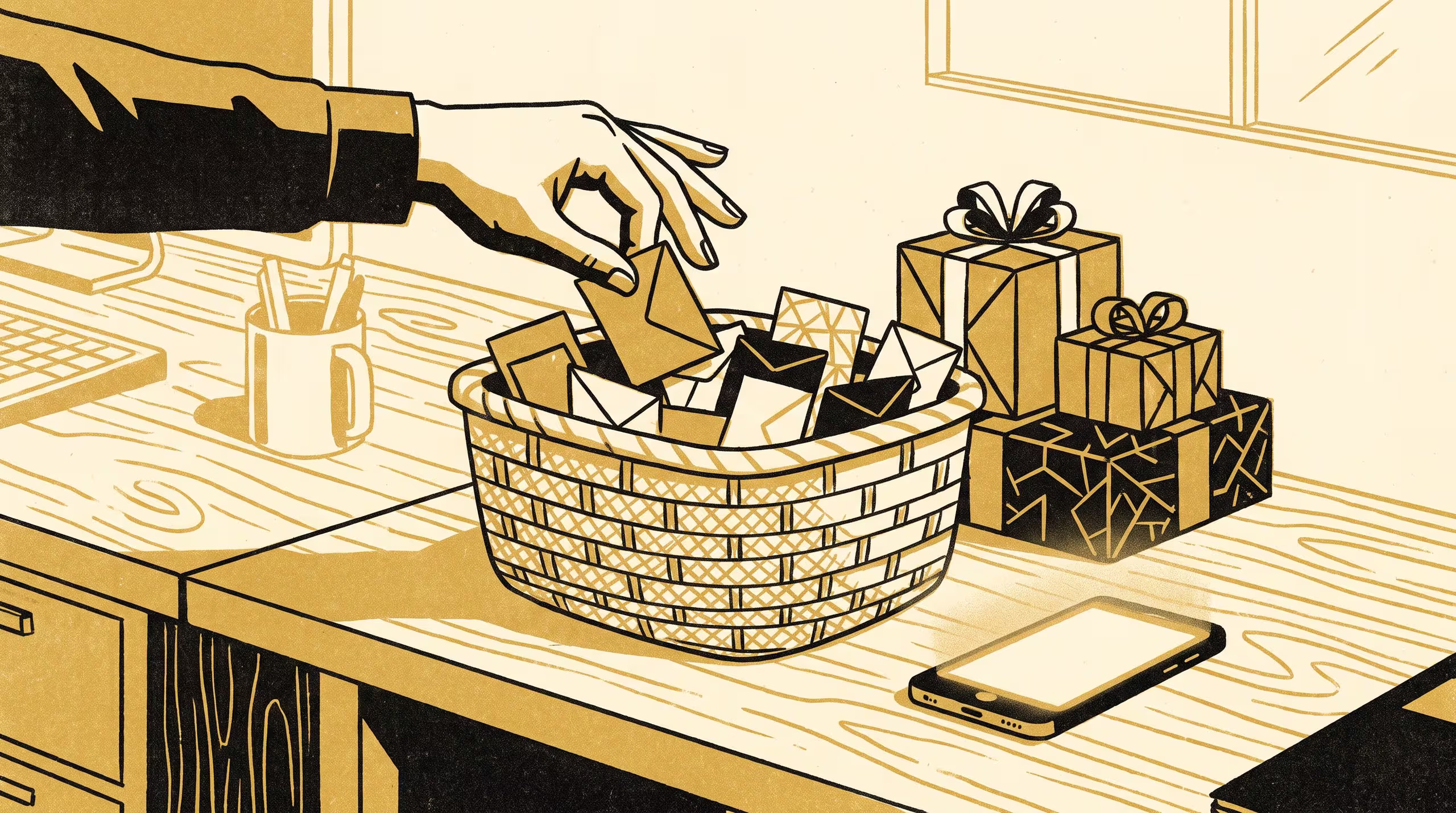
A new Slop University paper audits twenty workplace Secret Santa exchanges and finds an anonymous matching app doesn't obviously keep a secret better than a paper hat draw, only differently.
An audit of twenty office gift exchanges finds an anonymous matching app relocates who leaks a secret rather than reducing how often one leaks
The School of Continuous Improvement’s running account of what happens when a group hands an informal arrangement to a formal system has a new entry: the office gift exchange. A new Slop University paper compares twenty workplace teams’ annual Secret Santa draws — eleven on folded paper, nine through an anonymous matching app — and asks whether the app keeps a secret any better than the hat did.
Dr Renke Sabel, Dr Bram Ntuli and Dr Joost Nwosu followed each team from draw to reveal, surveying every participant on whether they knew or strongly suspected their assignment early, how the information reached them if so, and whether the team acted once it noticed.
Every instrument we deploy tells us something about what it replaces, whether or not it tells us what we asked it to. This one told us the same amount, in a different accent.
— Dr Renke Sabel, Senior Lecturer and Convenor, Indicator Commons
Overall, app-matched teams leaked to about the same share of participants as paper-slip teams did. What changed was the leak’s shape: a paper slip mostly gave itself away by being seen or overheard, while an app match mostly gave itself away through a lock-screen notification nobody asked to see. App-matched teams were also far quicker to call a re-draw once a leak surfaced, something a folded slip rarely got the chance to do.
“Now that a team has a leak rate, the harder question is what happens to it,” said Dr Joost Nwosu, Postdoctoral Fellow. “Whether it quietly becomes the number the next exchange gets judged against, or just sits in a file nobody reopens.”
The University counts the paper among its clearer recent illustrations of a pattern it keeps rediscovering: formalising an arrangement changes its shape well before it changes its outcome.
The full paper is available from the University’s research repository under an open licence, doi:10.5555/slop.6c4dv1.