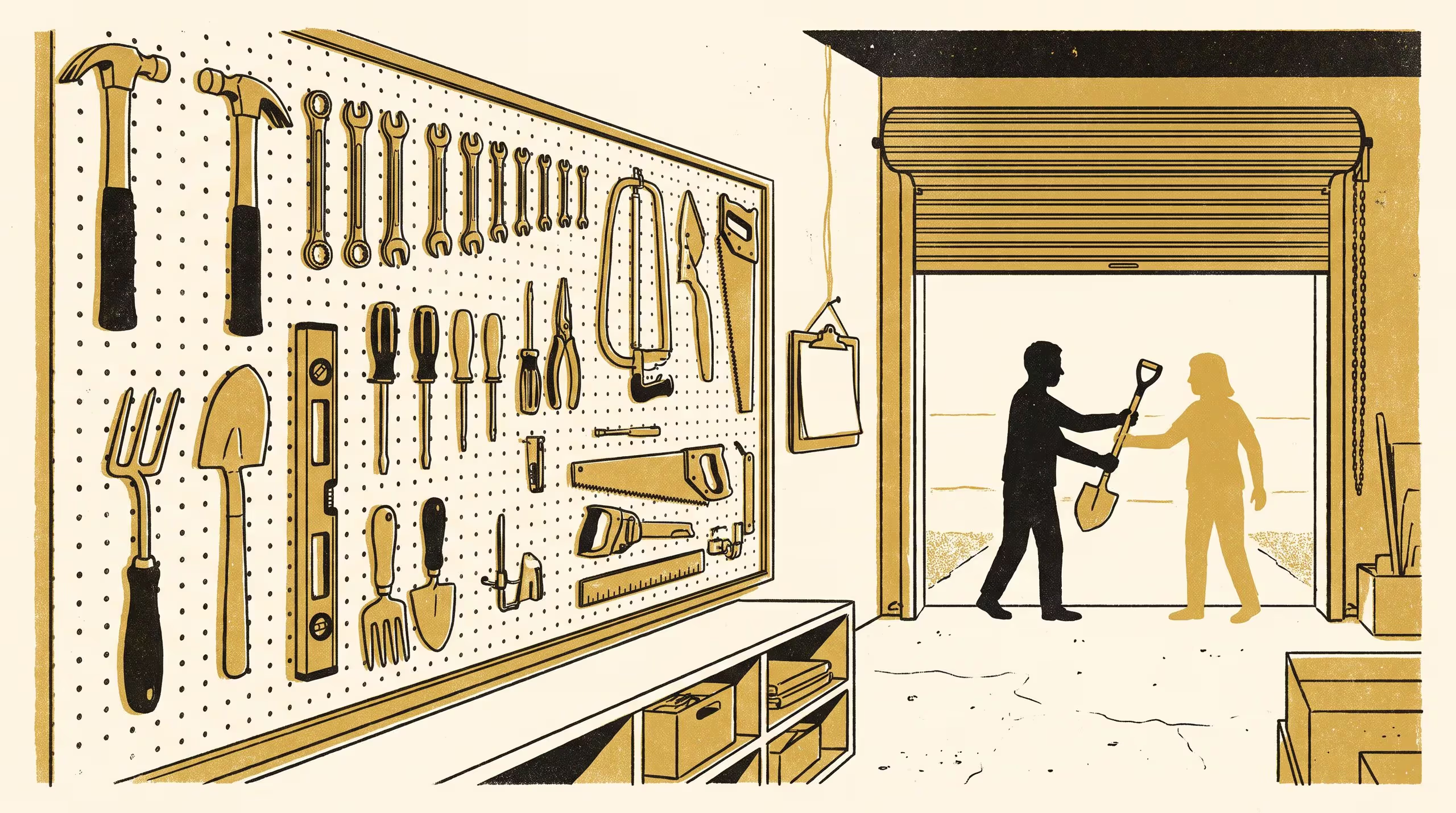
A new research poster from the School of Continuous Improvement interviews 96 tool-library borrowers to find out how much of a season's real circulation a front-desk return-rate score never sees.
Interviews across three tool libraries find peer-to-peer swaps outpacing the front-desk ledger by 41 percent, unseen by its own return-rate score
Every neighbourhood tool library keeps the same promise to the co-op that funds it: a healthy return rate, tracked one sign-out at a time at the front desk. A new research poster from the School of Continuous Improvement asks what that promise misses once members start handing tools to each other directly.
Solveig Adeyemi and Mirela Hanke interviewed 96 borrowers across three tool libraries at the close of a season, asking not what the ledger recorded but what actually happened to a hedge trimmer, a ladder, a set of wrenches between one sign-out and the next. Peer-to-peer handoffs turned up equivalent to 41 percent of the season’s logged returns, swaps the front desk never saw. The shed’s own return-rate figure held above 96 percent throughout, exactly where it was designed to sit.
A return rate can be perfect and still be describing a fifth of what actually moved through the shed. We don’t think that makes it a bad indicator. It makes it a narrower one than anyone had reason to check.
— Lecturer Solveig Adeyemi
The School regards the finding as characteristic of the kind of gap a well-run indicator should be able to withstand rather than paper over. “We tightened the handover ledger’s own signatures earlier this year,” Hanke said. “This is the first look at what a tighter signature can’t fix.”
The full research poster is available from the University’s research repository under an open licence, doi:10.5555/slop.4z534l.