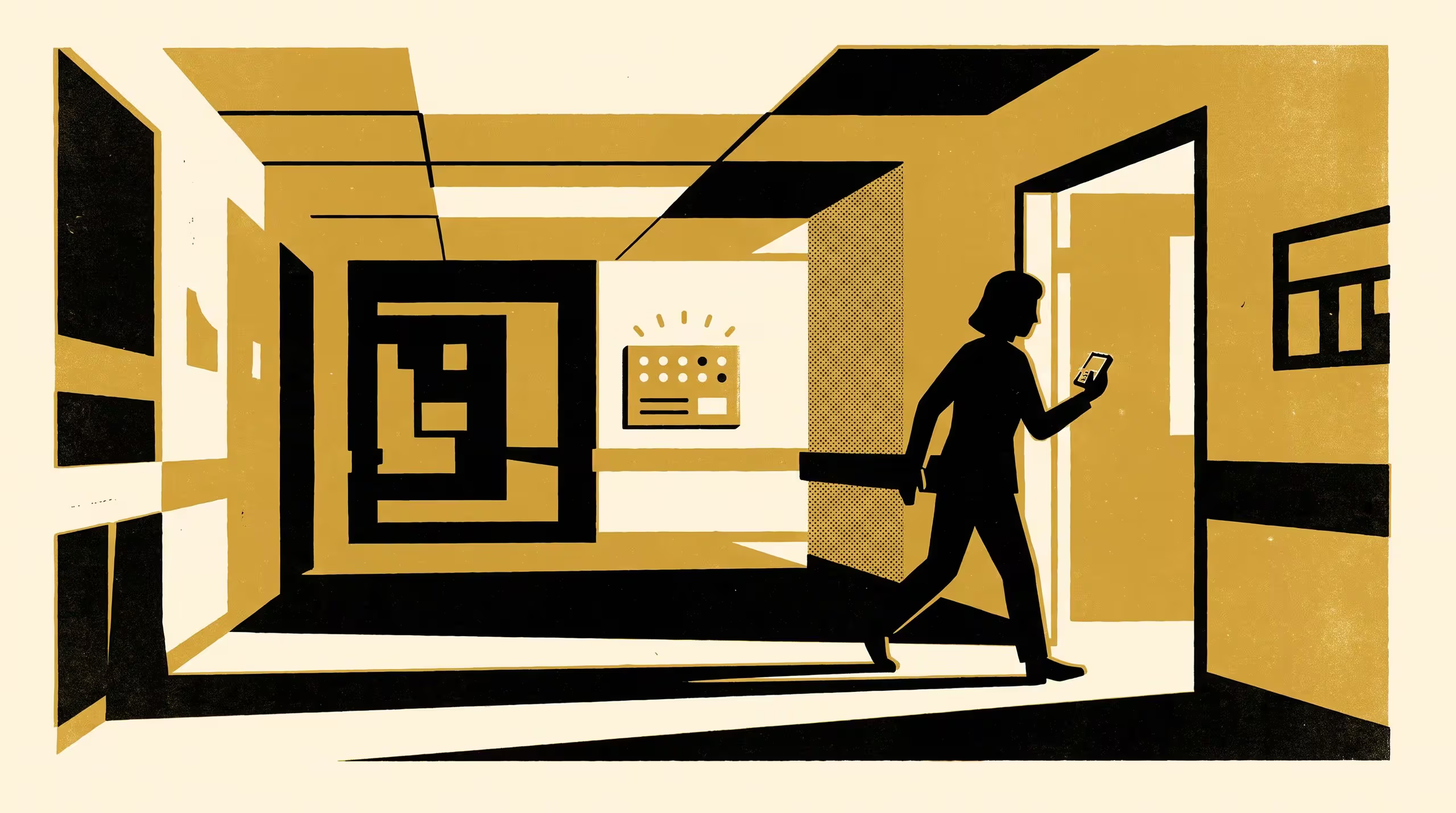
A new research poster from the School of Continuous Improvement audits an aged-care night shift's fall-alert response-time score against independently logged door-sensor checks, and finds it rewards a busy queue over a completed visit.
A 26-shift audit finds an aged-care scorecard's fastest pages track a busier queue, not a completed welfare check
A response-time column can’t tell the difference between a carer who checked the room in twenty seconds and one who didn’t go at all. We built the second measurement because the first one was never going to notice on its own.
— Lecturer Solveig Adeyemi, School of Continuous Improvement
Slop University has published a new research poster auditing a night-shift practice that isn’t unique to any one facility: grading how fast a carer answers an in-room fall-alert page. Dr Solveig Adeyemi and Senior Lecturer Runa Adegoke followed twenty-six night shifts across three residential aged-care facilities, setting each page’s response time against an independent record of whether anyone actually walked the room afterwards.
Working from the facilities’ own alert logs and door-sensor entry data, the pair modelled response time against how many other pages were already queued when a page arrived, holding shift hour and carer tenure constant. Confirmed falls, which trigger their own emergency pathway, sat outside the audit’s scope.
The University treats an internal scorecard as fair game for scrutiny whether it belongs to a partner facility or to one of its own indicators, and reports what turns up regardless of which.
“The gap between what a metric is graded on and what it was built to protect is exactly the distance the Strategic Drift Survey exists to measure,” said Senior Lecturer Runa Adegoke. “This is the smallest room we’ve found it in yet.”
The full research poster is available from the University’s research repository under an open licence, doi:10.5555/slop.8gyufz.