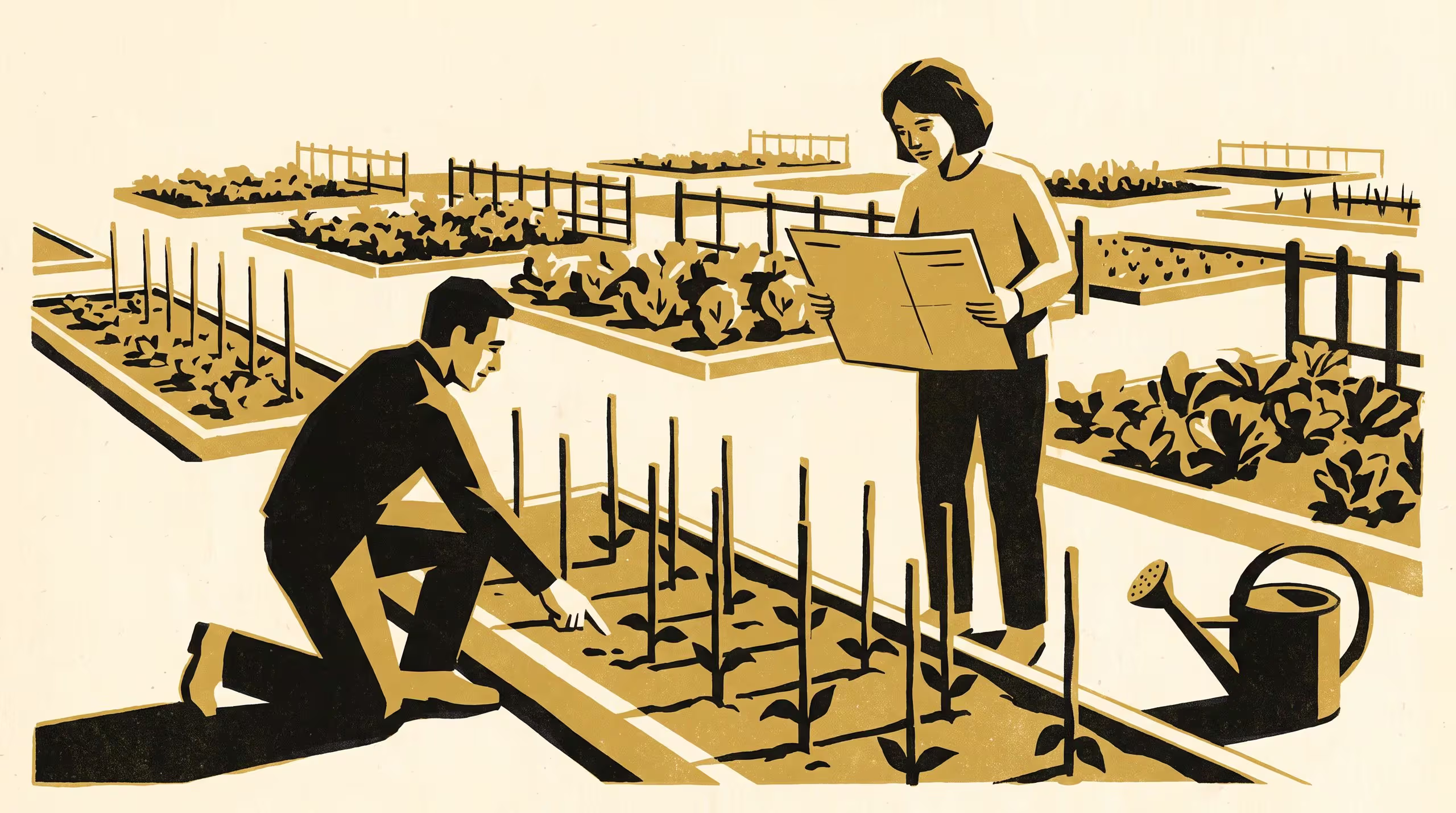
A new paper from the School of Emergent Priorities tracks 189 community garden allotment handovers to test whether a committee's handover form predicts what a successor actually learns, and finds, against the University's own pattern, that it does.
A study of 189 plot handovers finds a committee's paperwork tracking real horticultural knowledge, not just its own completion
When Slop University tests one of its own findings a second time, the result almost always repeats. A new paper from the School of Emergent Priorities reports the exception.
Dr Iben Chikere, Dr Anneke Tolan, and Associate Professor Kwame Lindqvist set out to replicate an audit published earlier this year, in which a warehouse scanner’s confidence score tracked a picker’s retraining calendar far more closely than the picker’s actual accuracy. To test the same gap outside a workplace, they chose the least institutional record available: the form a community garden allotment committee asks an outgoing plot-holder to leave for their successor.
The University counts an unrepeated pattern as worth publishing in its own right, and reports this reversal exactly as plainly as it would a second confirmation.
We went looking for the same gap we keep finding elsewhere in the University’s own records. What we found instead was a plot-holder’s handwriting doing exactly what it was supposed to do.
— Dr Iben Chikere, Lecturer, School of Emergent Priorities
Across fourteen allotment sites, the team tracked 189 plot handovers over eighteen months, then sent a coordinator — blind to any form’s content — to test each successor’s grasp of their plot’s soil, pests, and watering needs ten to twelve weeks later. A second phase made the form a mandatory checklist at half the sites, to see whether more completions meant more knowledge.
It didn’t. Associate Professor Kwame Lindqvist said the pattern fit his own work on commitments that arrive before the thinking behind them is settled. “Making the box compulsory changed how often it got ticked,” he said. “It left everything we actually measured exactly where it started.”
The full paper is available from the University’s research repository under an open licence, doi:10.5555/slop.u8gsl4.