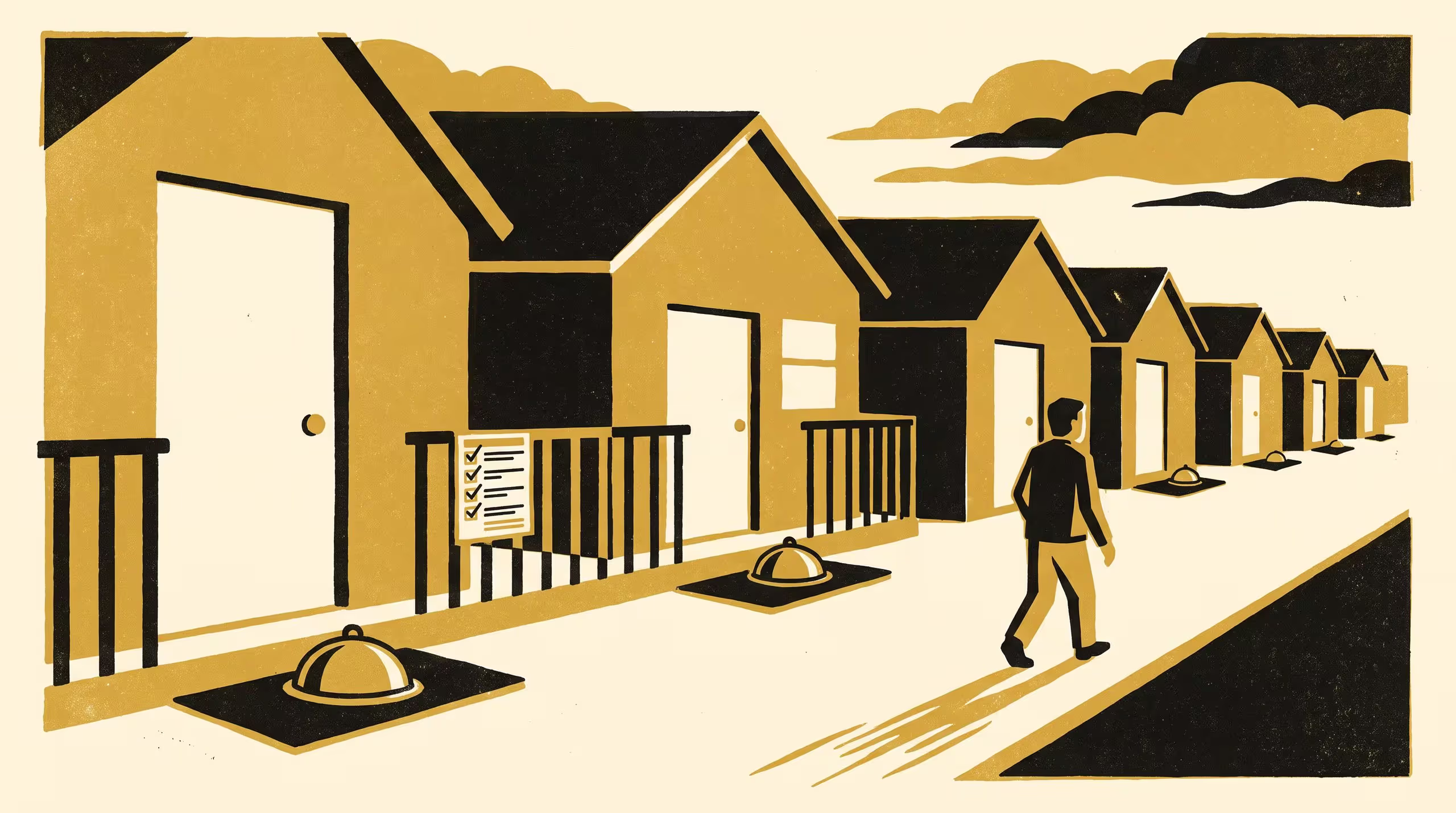
A new research poster from the School of Emergent Priorities surveys 146 meal-train households across 19 cook-night rosters, finding that a fairness algorithm's own score barely predicts whether an assigned cook-night is honoured or swapped.
A 14-week survey of 146 households finds an unwritten roster-fatigue habit outpredicts the app's own fairness-deviation score
A meal-train app can compute a rotating “fairness deviation” score for every household on its roster, but it has no way of knowing whether an assigned cook-night was actually kept, swapped, or quietly let go. A new research poster from the School of Emergent Priorities surveyed 146 households across 19 active cook-night rosters through fourteen weeks of a shared scheduling app, and found the algorithm’s own arithmetic explained remarkably little of what happened next.
The app is very good at deciding whose turn it is. It has nothing to say about whose turn it actually becomes.
— Runa Adegoke, Senior Lecturer and Convenor, Strategic Drift Survey
Households swapped assigned nights often in the first month and rarely by the third, but the pattern tracked something the app never asked about: whether a household had cooked recently, not how far its own score sat from equal rotation. The University holds that a rostering system’s real record lives in what its users do around it, not only in what it schedules, and the finding extends the School’s ongoing account of the distance between a stated allocation and the one a group actually settles on.
“We went in expecting the algorithm’s number to matter more than it did,” said Solveig Adeyemi, Lecturer. “What we found instead was a second, unwritten roster running quietly underneath the first.”
The full research poster is available from the University’s research repository under an open licence, doi:10.5555/slop.xssj6p.