Slop University has published a research-showcase brochure, The Watch Changes Hands, tracing a pool's drowning alarm, a dog park's compliance sign, and a council's hard-rubbish tally through three published studies of what changes once an instrument takes over the watching.
The Watch Changes Hands follows a pool alarm, a park sign, and a kerbside tally into three published studies of who takes over the watching
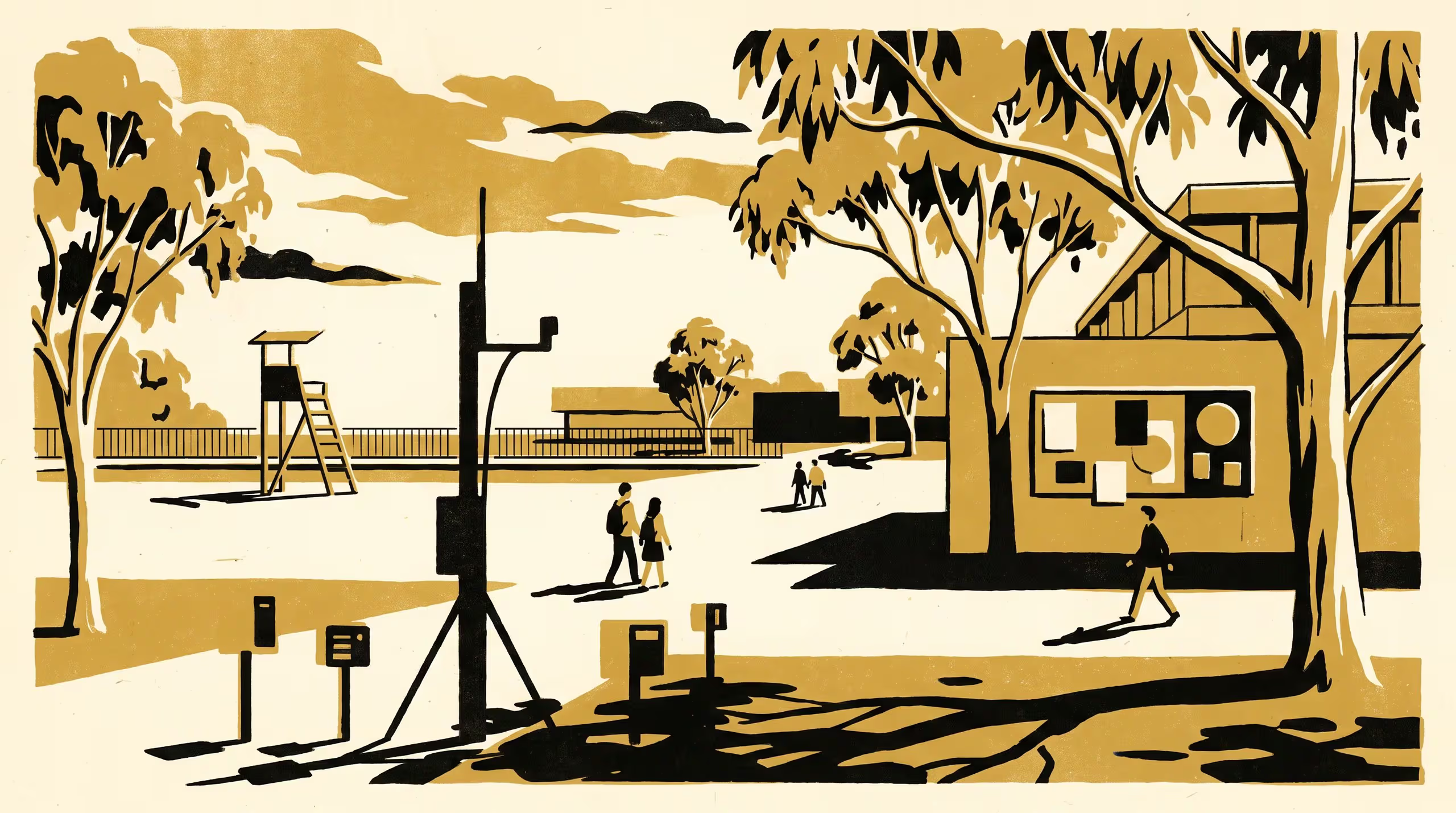
A lifeguard’s chair, a dog park gate, and a kerbside pile of hard rubbish do not obviously belong in the same publication. Slop University’s newest brochure, The Watch Changes Hands, puts them there anyway, following what each already-installed instrument is doing to the human watching it was meant to support rather than replace.
The pamphlet draws on three studies already in the University’s published record: an audit of lifeguard scanning habits under an installed drowning-detection alarm, a tracking study of a dog park’s live compliance sign against the citations it was meant to validate, and an audit of how much of a council’s hard-rubbish diversion figure a street had already handled by hand. Each is cited by its own DOI, so a reader can check the brochure’s marketing against the research behind it.
Three sites, three instruments, and the same quiet handover each time. That’s not a coincidence we set out looking for — it’s one we kept finding.
— Dr Sten Okwuosa, Senior Research Fellow and Convenor, Impact Pathway Atlas, School of Continuous Improvement
“The dog park doesn’t need anyone to trust the sign completely,” said Dr Solveig Adeyemi, Lecturer, School of Continuous Improvement, whose study anchors the brochure’s second section. “It just needs someone to keep checking what the sign is actually doing to the patrol roster, and that’s the part of the job the brochure is glad to keep doing.”
The brochure marks the School of Continuous Improvement’s first pamphlet-length attempt to read its own instrument studies as one continuous habit rather than three separate results.
The full brochure is available from the University’s research repository under an open licence, doi:10.5555/slop.hppbot.