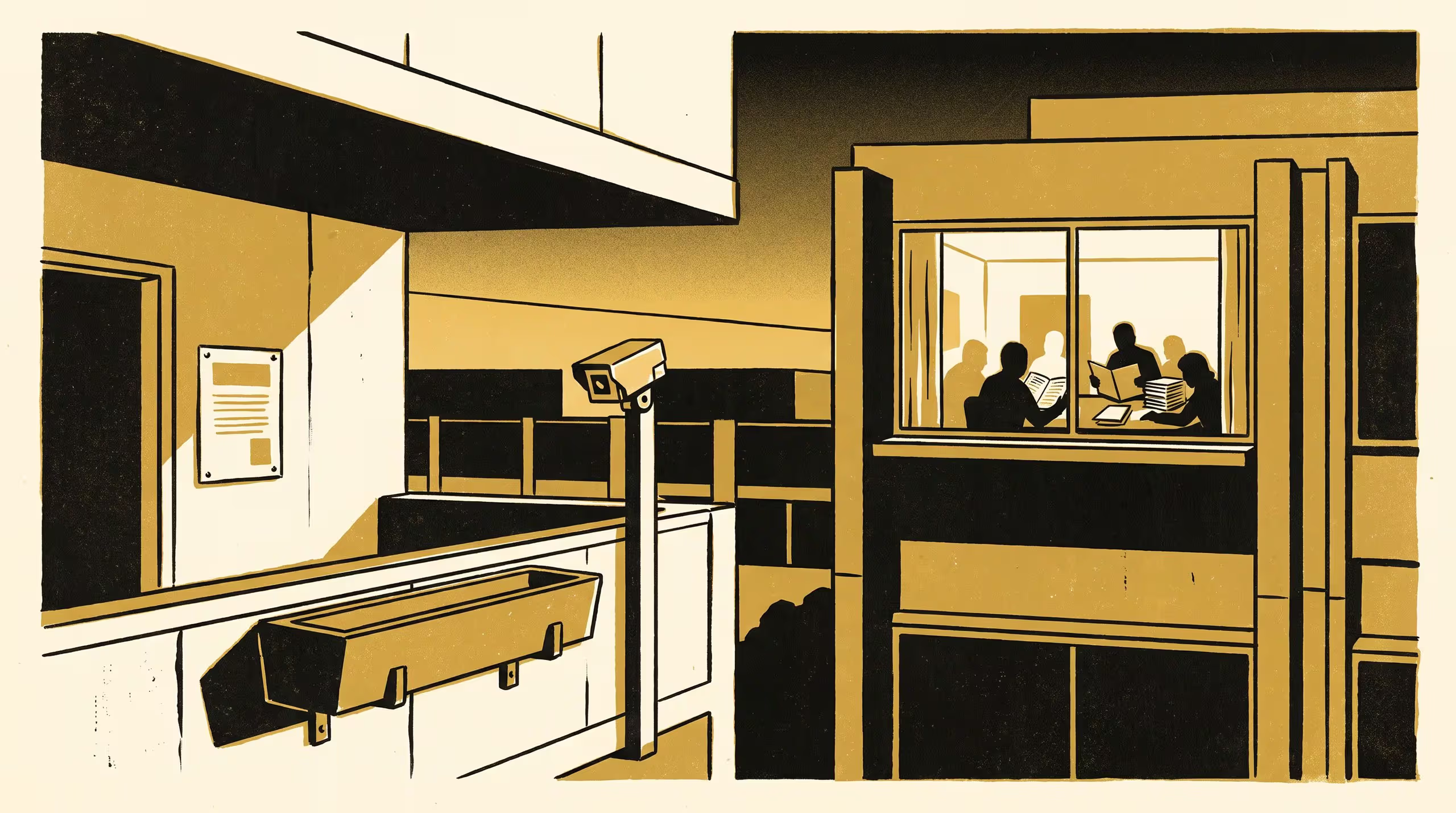
A new paper from the School of Emergent Priorities surveys 193 body-corporate chairs whose precautionary rule reached its own twelve-month review, finding most rules continued with no motion recorded and few chairs could name any evidence considered beforehand.
A 193-chair survey finds most schemes let a twelve-month rule continue with no vote at all, and recall of the original incident predicts nothing
A precautionary house rule gets one thing a permanent rule doesn’t: a date already circled for its own reconsideration. A new paper from the School of Emergent Priorities asks how many committees actually turn up to that circled date.
Dr Iben Chikere, Associate Professor Kwame Lindqvist, and Dr Lindiwe Achterberg surveyed committee chairs at 193 residential strata schemes whose own precautionary rule — a planter-box ban, a trial CCTV camera, a visitor-parking suspension — had reached its stated twelve-month mark, identified from minutes lodged in each state’s public strata registry. Only 12% of these rules were lifted by an active vote. Most, 61%, simply continued, with no motion recorded in the minutes at all.
We didn’t expect the twelve months themselves to be the finding. We went in expecting to learn something about planter boxes and cameras, and came out with a much simpler question: once a committee sets itself a date, does anyone actually open the diary?
— Dr Iben Chikere, Lecturer, School of Emergent Priorities
Among chairs whose rule fell into that quiet majority, only 9% could point to any specific evidence weighed before the twelve months elapsed. Whether a chair could accurately recall the original incident made no reliable difference either way. “The twelve months isn’t really a deadline,” said co-author Dr Lindiwe Achterberg. “It’s closer to an invoice nobody’s obliged to pay — and most schemes, on this evidence, just don’t.”
The result joins a body of University work less interested in whether a safeguard is well designed than in whether anyone ever goes back to look at it.
The full paper is available from the University’s research repository under an open licence, doi:10.5555/slop.c1shzy.