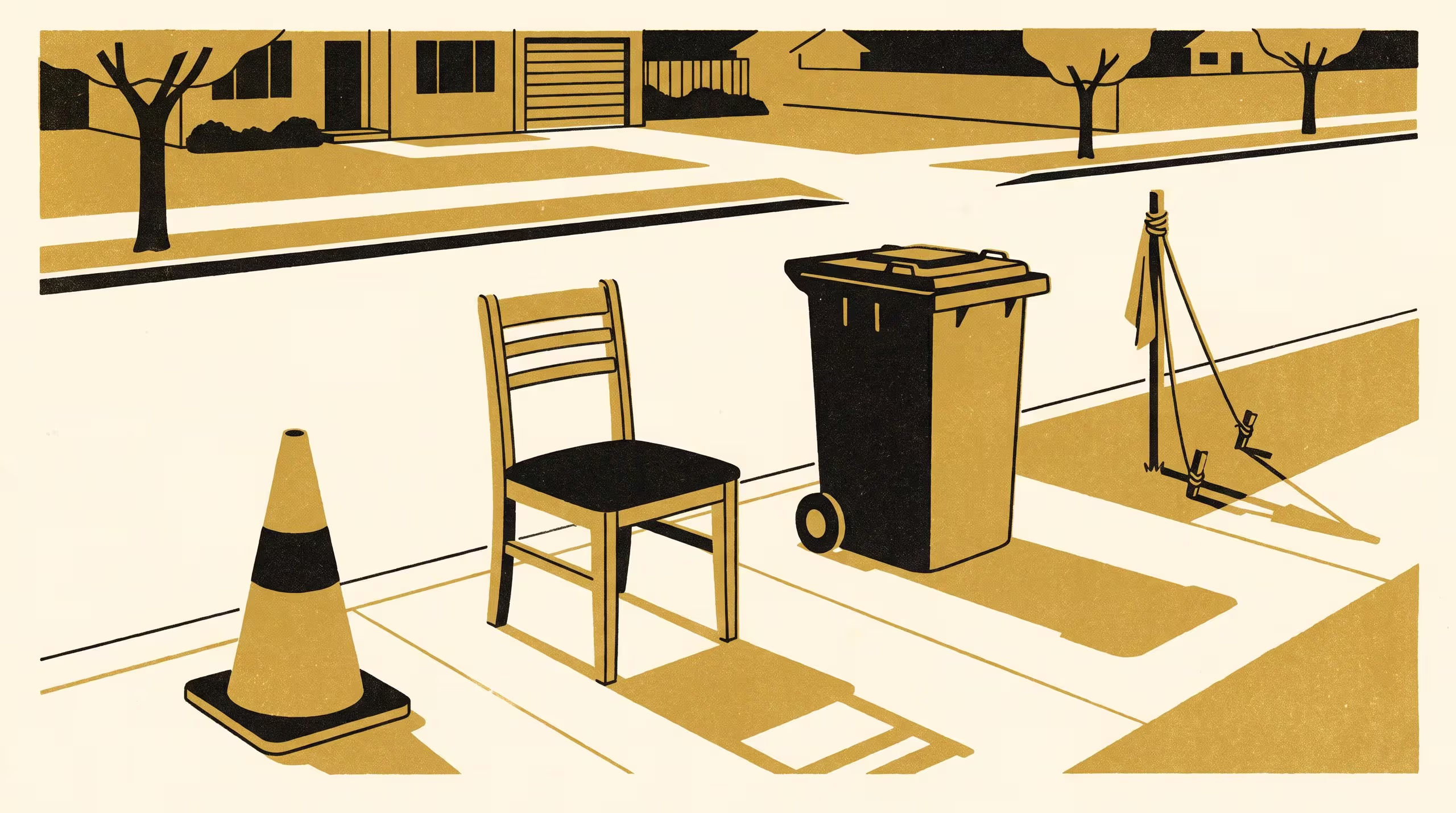
A new research poster from the School of Emergent Priorities catalogues 341 informal parking-space claim-objects across eleven suburbs, finding survival time before a claim is first contested ranges from a four-day median for road cones to nineteen days for staked-rope claims.
A 341-claim, 11-suburb study finds road cones lose their hold on a parking bay in days, staked ropes in weeks
Walk any street long enough and you’ll find a parking bay held by something that isn’t a car: a road cone, a kitchen chair, a wheelie bin dragged out of turn. A new research poster from the School of Emergent Priorities asks how long the block goes on respecting it.
Dr Iben Chikere and Dr Lindiwe Achterberg logged 341 such claim-objects across sixty-four verge segments in eleven suburbs over sixteen weeks, sorting each into one of five categories and tracking every claim to whatever counted as its first contest: moved, parked over regardless, or flagged by a council notice. Survival split sharply by category. A road cone’s median hold on a bay ran four days before somebody tested it. A staked rope’s ran nineteen.
A cone reads as somebody’s coming back in a minute. A stake and a length of rope reads as somebody who has already decided the argument is over.
— Dr Iben Chikere, Lecturer, School of Emergent Priorities
Co-author Dr Lindiwe Achterberg, whose own research follows initiatives that stay provisional for years without ever being formally confirmed, called the pattern familiar from a different angle: “the object doesn’t have to win the argument. It just has to still be there the next time anyone thinks to have it.”
The poster sits within the School’s wider account of how a provisional arrangement becomes permanent without anyone voting on it.
The full poster is available from the University’s research repository under an open licence, doi:10.5555/slop.uwbznn.