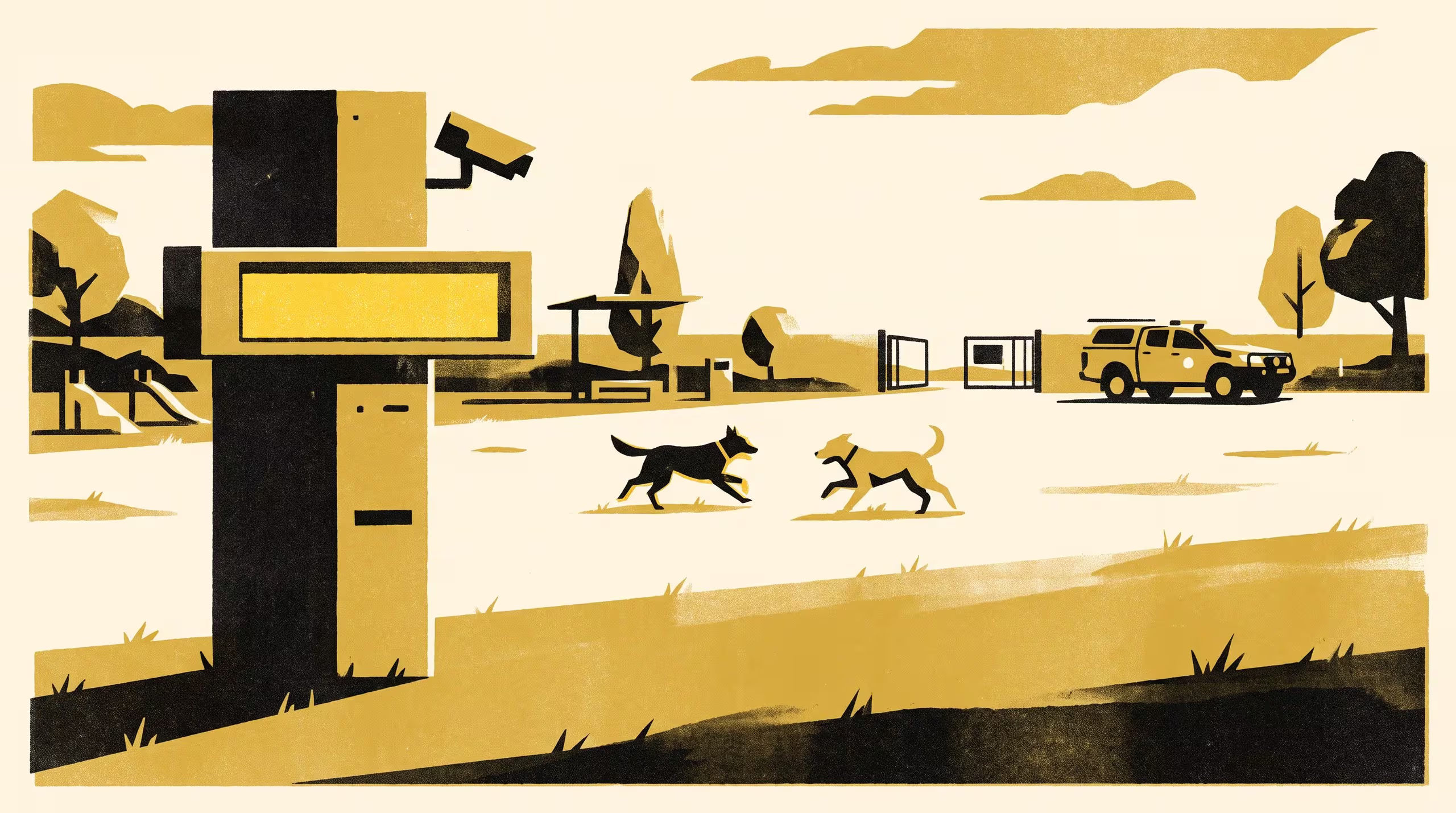
A new research poster from the School of Continuous Improvement tracks a live off-leash compliance sign across seven council dog parks, finding ranger patrol timing tracks the sign's own reading more closely than the leash-law citations it was installed to validate.
A 46-site-week study finds ranger patrol timing follows a compliance sign's own reading more closely than the leash-law citations it was installed to validate
A percentage on a park noticeboard is supposed to describe what already happened underneath it. A new research poster from the School of Continuous Improvement asks what happens once the number starts describing what happens next instead.
Dr Solveig Adeyemi and Dr Bram Ntuli tracked forty-six site-weeks across seven council dog parks fitted with a live off-leash compliance sign, setting its overnight reading against the leash-law citations rangers issued in the same week, and against when each patrol actually rolled out the gate. Citations agreed with the sign only loosely across the panel. Patrol timing didn’t: on weeks the sign read high overnight, the next patrol arrived markedly earlier than usual, whatever the complaint line had logged.
A sign like this one isn’t just reporting on the park any more. It’s started telling the roster what to expect before anyone’s phoned anything in.
— Dr Solveig Adeyemi, Lecturer, School of Continuous Improvement
Co-author Dr Bram Ntuli, Lecturer and Convenor of Improvement Grand Rounds, said the pattern was a familiar shape seen from a different angle: “we spend our Grand Rounds asking what a standing review leaves off the record. Here it’s the roster doing the leaving, and the record is a number nobody rang in to begin with.”
The poster sits alongside a run of School of Continuous Improvement work asking the same question of the University’s own registers, this time turning the instrument on a system well outside campus altogether.
The full poster is available from the University’s research repository under an open licence, doi:10.5555/slop.n00a4y.