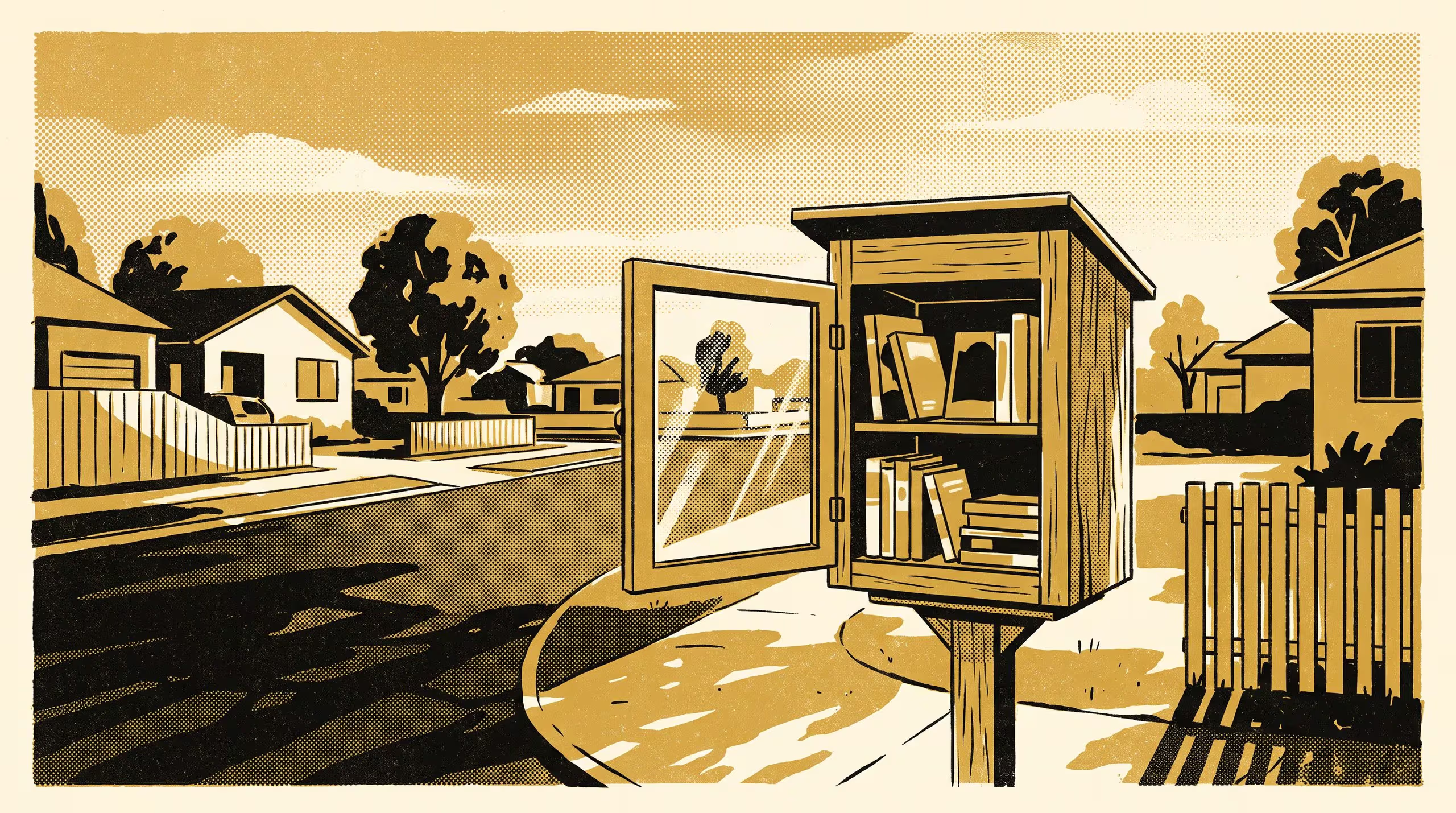
A new research poster from the School of Emergent Priorities attempts to replicate an earlier Slop University finding --- that a donation's category predicts restock speed --- at a street-corner book box, finding book genre predicts nothing while spine orientation predicts pickup speed closely.
A pre-registered attempt to repeat a community-fridge finding at five suburban book boxes turns up spine orientation as the real predictor instead
Not every finding travels. The School of Emergent Priorities’ 2026 community-fridge study found a four-label taxonomy that predicted how fast a note drew a volunteer restock. Its newest poster asks a plainer question of that result: does the taxonomy predict anything anywhere else?
Dr Petra Umbile and Dr Anouk Mensah pre-registered a five-category genre taxonomy adapted from the fridge study’s coding scheme, then logged 214 books across five suburban street-corner exchange boxes twice daily for eleven weeks, timing each title’s disappearance from the shelf. Spine orientation — whether a title faced the door cover-out or spine-out — was recorded throughout as a held covariate, not a variable of interest.
Whether a category effect travels past the one site it was found at is exactly the kind of question a single study can’t answer on its own. This is one data point toward a real answer, not the last word on either the fridge or the box.
— Dr Petra Umbile, Postdoctoral Fellow, School of Emergent Priorities
Median time-to-pickup held between 14.6 and 16.8 hours across the five pre-registered genre categories — a spread the original fridge taxonomy would have called noise. Spine orientation told a sharper story: a cover-out title cleared the shelf in a median 6.1 hours, against 21.4 for one shelved spine-out. Co-author Dr Anouk Mensah, who usually tracks how a plan’s wording survives its own later drafts, called the reversal “a method outliving the site it was built for, and a different variable quietly stepping into the gap it left.”
The School of Emergent Priorities counts a method that stops working elsewhere as data in its own right, not a result to quietly shelve.
The full poster is available from the University’s research repository under an open licence, doi:10.5555/slop.zxua1o.