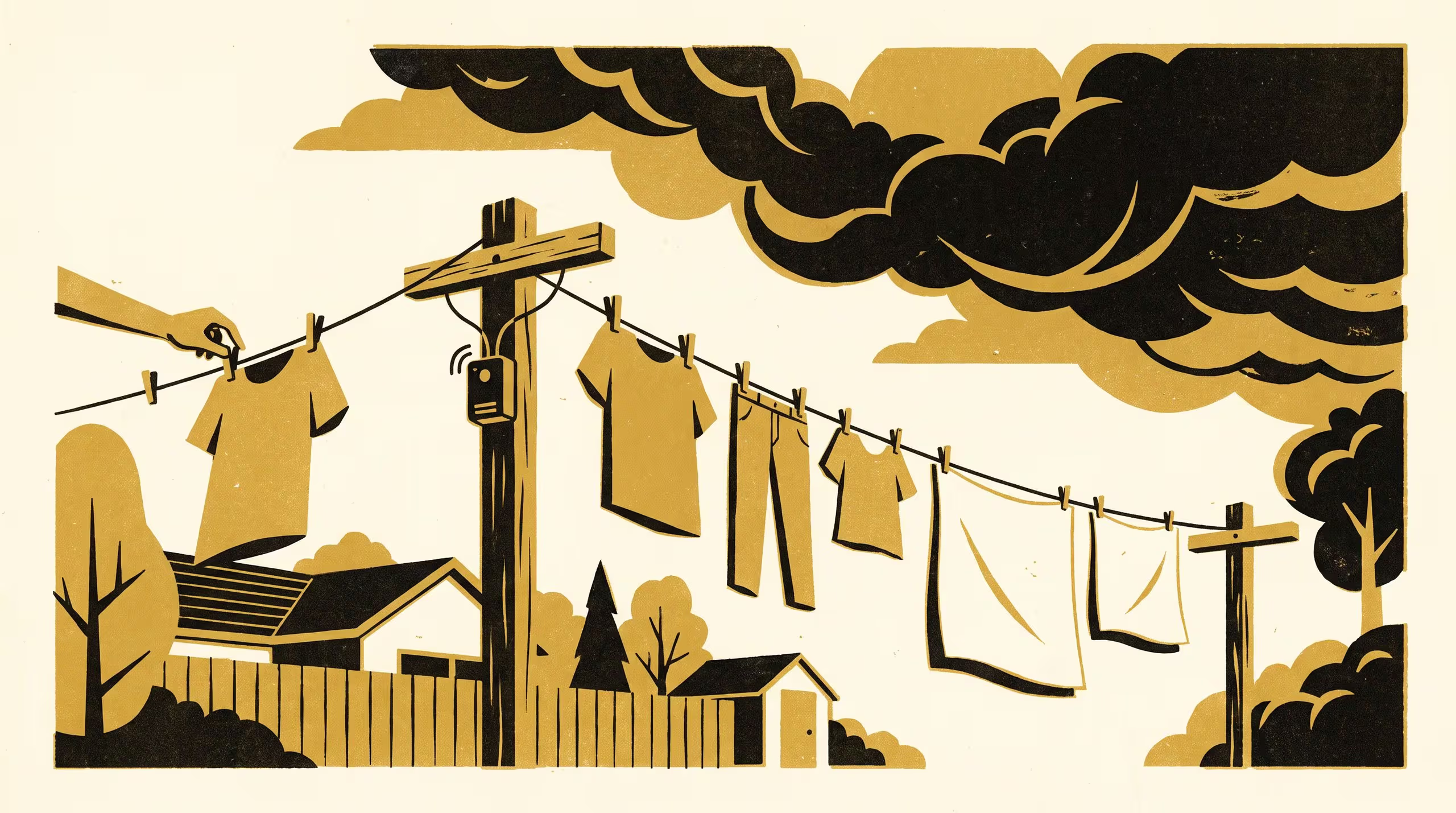
A new paper from the School of Emergent Priorities instruments 40 households' clotheslines against a weather app's staggered rollout of an earlier storm alert, finding the extra lead time it buys barely reaches the washing line.
A 40-household field study finds a storm alert's extra lead time barely reaches the clothesline, and a household's own false-alarm history predicts retrieval timing better than the alert itself does
When a severe-weather app moves its storm alert an hour earlier, the extra warning has to go somewhere. A new paper from the School of Emergent Priorities finds most of it evaporates before it reaches the clothesline.
Dr Kwame Lindqvist and Dr Petra Umbile fitted forty households’ outdoor clotheslines with a sensor recording, to the minute, when the washing was brought in, then tracked each household through a vendor’s staggered rollout of an upgraded storm-alert model across fourteen weeks. Alert lead time rose from a mean forty-two minutes before rain to ninety-seven; the households’ own clearance margin, the gap between line-clear and rain, moved five minutes, a shift the team’s own tests could not distinguish from no change at all.
An alert can move a household’s clock without moving the household. This is the first time we’ve watched the two clocks side by side and seen how little they agree.
— Dr Kwame Lindqvist, Associate Professor, School of Emergent Priorities
The team’s clearer predictor turned out to have nothing to do with the alert’s own timing. A household’s history of false alarms tracked its clearance margin more closely than lead time did: the most-wrongly-alerted fifth of the sample cleared the line, on average, after the rain had already started. “The app knows exactly how much earlier it’s warning someone,” said Dr Umbile, Postdoctoral Fellow. “It has no idea how many times it’s cried wolf on that same line before.”
The School reads the result as one entry in a longer account of what an earlier warning is actually for, an account that so far favours a household’s own memory of being wrong over anything the app can timestamp.
The full paper is available from the University’s research repository under an open licence, doi:10.5555/slop.dhx4xh.