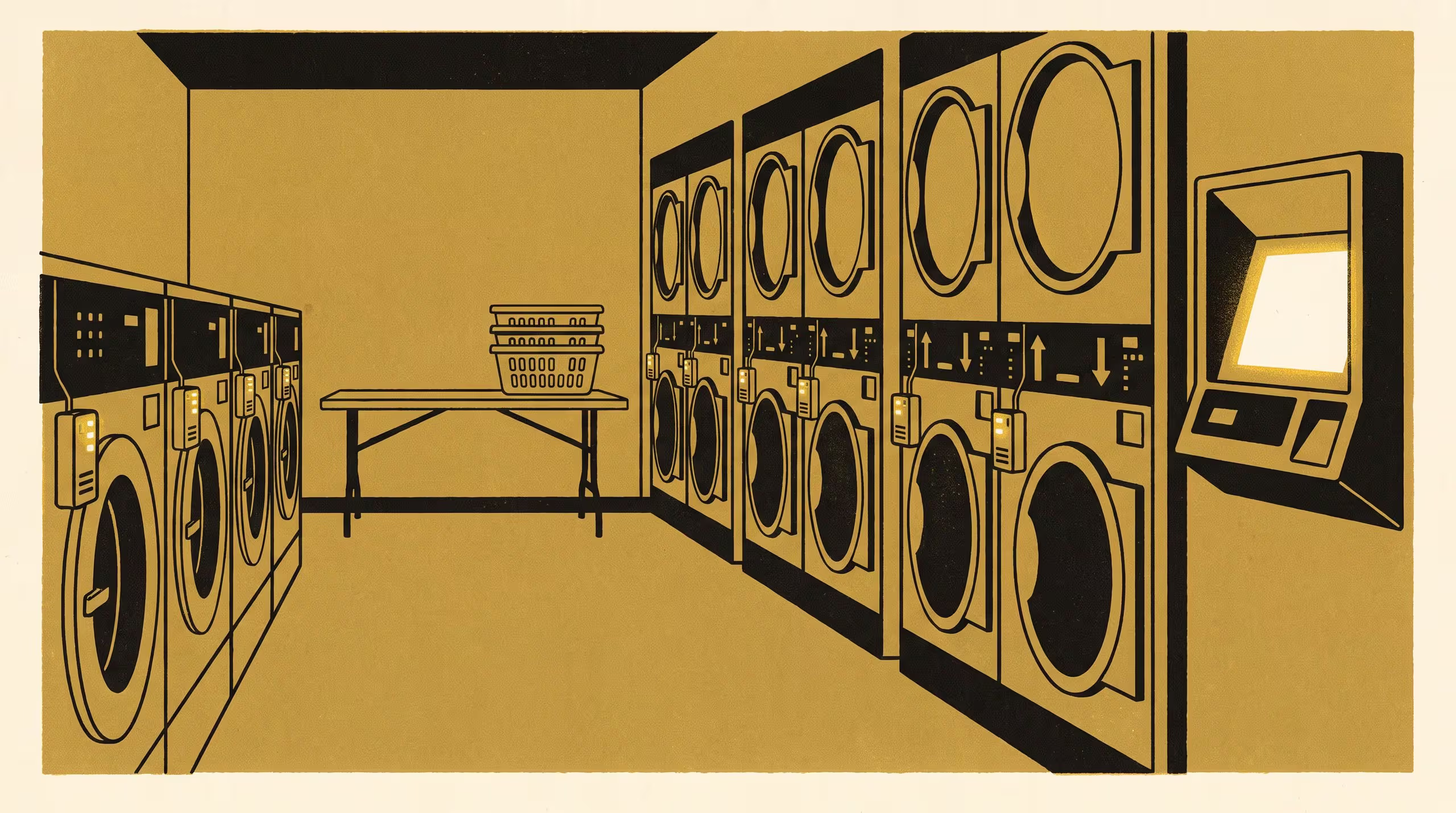
A new paper from the School of Continuous Improvement audits a residence-hall laundry app's credit balance against independent machine telemetry, finding the balance drifts steadily from actual usage after a payment-system migration, while a low-balance notification leaves top-up behaviour unchanged.
An eleven-week machine-metered audit finds the wash-credit balance drifts further from actual usage the longer a hall has run the app, while a low-balance nudge changes nothing
An energy-monitoring retrofit installed last semester to track machine electricity use in Slop University’s residence-hall laundries has turned out to double as an independent check on something nobody asked it to audit: the mobile app that now bills students for using the machines. A new paper from the School of Continuous Improvement sets the two against each other for the first time.
The School treats the finding as confirmation of its founding wager: that a number left unaudited eventually drifts, and the University’s own infrastructure is no more exempt from that rule than anything else it has studied.
A balance is only as honest as the last time anyone checked it against the meter sitting beside it. We were fortunate this one was already there.
— Associate Professor Casimir Beng, Lead of the Adaptive Metrics Lab, School of Continuous Improvement
Across seven halls and eleven weeks of machine telemetry, researchers found the app’s displayed wash-credit balance staying close to what the machines actually delivered right at the point each hall migrated onto it, then diverging steadily afterwards, in step with each hall’s own migration date rather than the calendar. Cycles that stalled part-way through a wash despite a balance the app had reported as sufficient, rare at the outset, became several times more common by the study’s close. A low-balance notification added partway through, meant to help students catch the gap before it mattered, left top-up timing and top-up size unchanged either way.
“The students weren’t wrong to keep topping up,” said Dr Mirela Hanke, Postdoctoral Fellow, School of Continuous Improvement. “They just stopped waiting for the number in front of them to be the point.”
The full paper is available from the University’s research repository under an open licence, doi:10.5555/slop.7xifby.