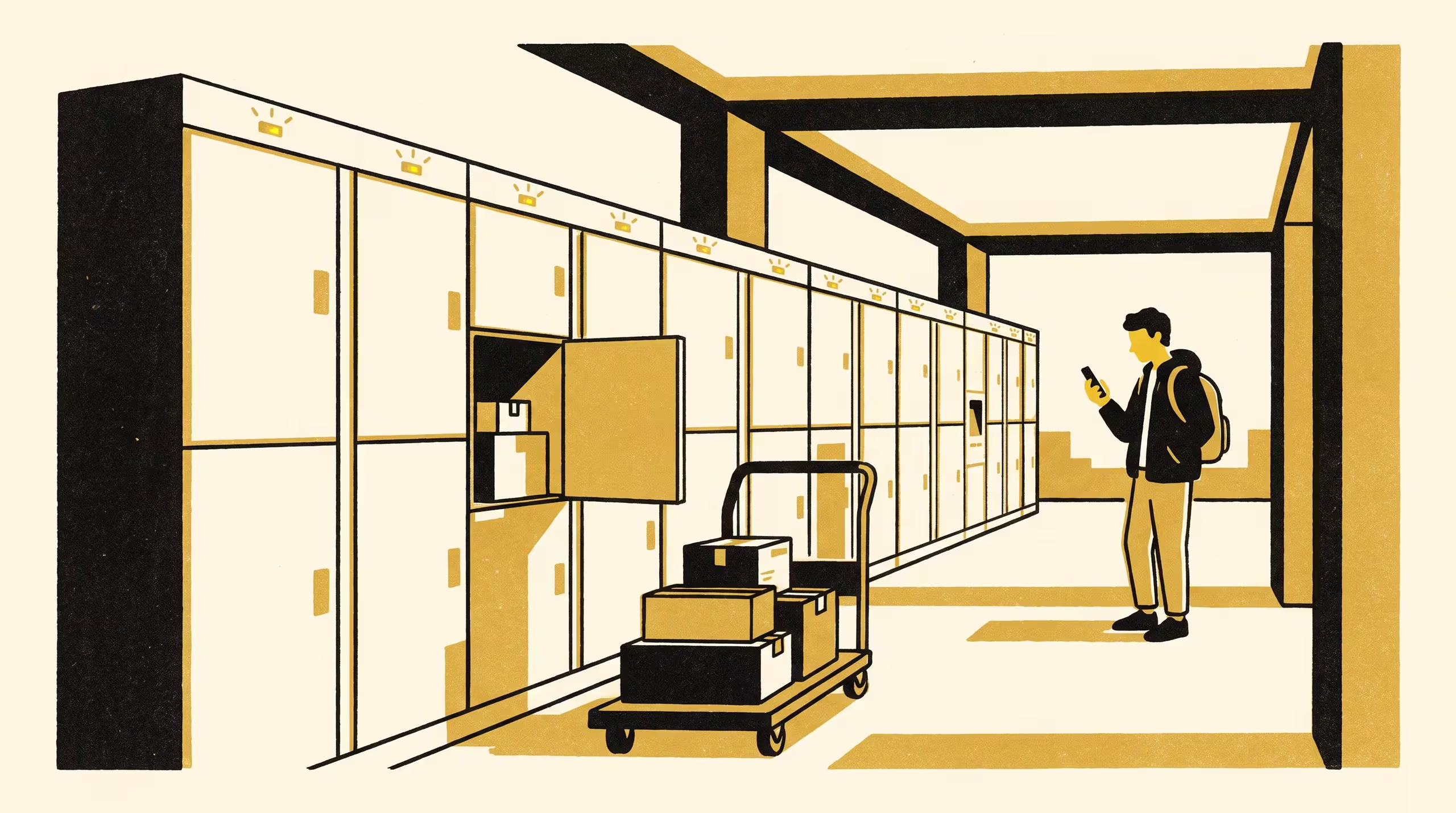
A new research poster from the School of Continuous Improvement compares a parcel-locker bank's predictive pickup alert against the locker's own door-sensor confirmation, finding the faster notification arrives before the parcel is loaded in close to one pickup in five.
An 11-week door-sensor audit finds the predictive pickup alert beats the locker's own confirmation in nearly one pickup in five
Slop University publishes a service-level target for how quickly a parcel-locker notification reaches a student’s phone. It has never published one for whether the locker is actually loaded when that notification arrives. A new research poster from the School of Continuous Improvement puts the two figures beside each other for the first time.
Across three parcel-locker banks and eleven weeks this year, researchers Associate Professor Casimir Beng, Dr Mirela Hanke, and Dr Joost Nwosu set the predictive alert’s own send time against the door’s own contact sensor — the two instruments a locker keeps entirely to itself. The comparison lands on exactly the seconds the University’s existing service target already counts, and on a small but real share of pickups where the two disagree about whether anything is inside yet.
We’re grateful to the students who kept walking over to a locker that wasn’t ready yet and told us, rather than quietly giving up on the app.
— Associate Professor Casimir Beng, Lead of the Adaptive Metrics Lab, School of Continuous Improvement
“The next question is whether the light and the alert can be made to agree before a student has to work it out standing at the door,” said Dr Mirela Hanke, Postdoctoral Fellow, School of Continuous Improvement. The finding is being read across the School as exactly the kind of gap its evaluation-ecosystem agenda exists to surface: two instruments, installed for different reasons, finally asked to check each other’s work.
The full poster is available from the University’s research repository under an open licence, doi:10.5555/slop.yqm3vd.