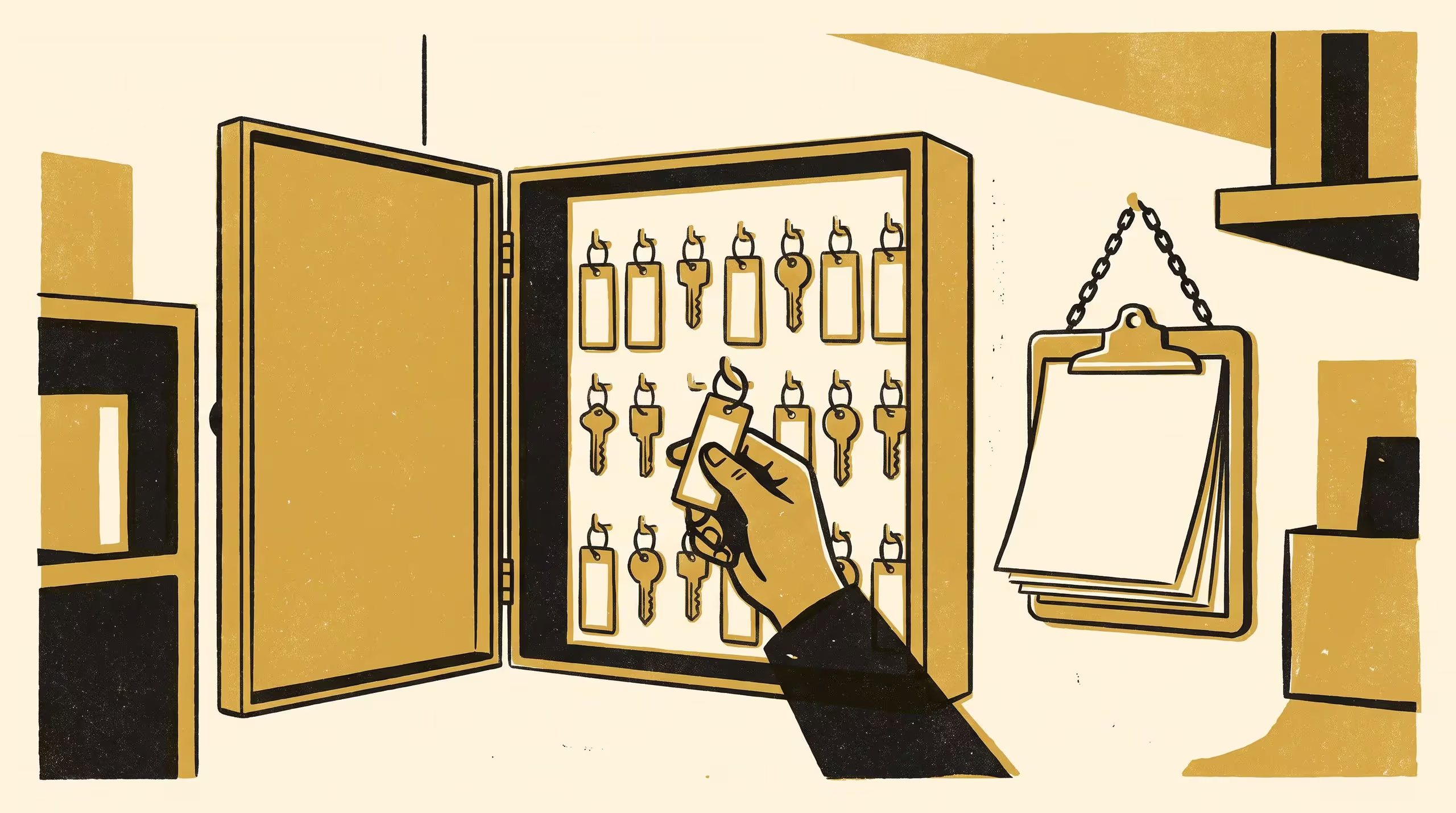
A new paper from the School of Continuous Improvement codes 438 spare-key sign-out slips into a seven-category taxonomy of stated reasons, finding the category predicts little about checkout duration compared with how specifically the reason is written.
A semester-long taxonomy of stated reasons on the Facilities key cabinet's sign-out slip explains checkout duration far less than how specifically the reason is written
For one semester, two coders at the School of Continuous Improvement read every reason a staff member wrote before taking a spare key out of the Facilities cabinet, then checked how long each key actually stayed away from the wall. Sorting those reasons into seven categories, the new paper finds, tells you less about how long a key will be out than simply noticing how many words the reason took to write.
The category told us what people said. It never told us when they’d bring the key back. The word count did that on its own.
— Dr Sten Okwuosa, Senior Research Fellow and Convenor, Impact Pathway Atlas, School of Continuous Improvement
The paper, Categorised, Not Explained, hand-coded 438 sign-outs from the Facilities key cabinet across a full teaching semester into a seven-category taxonomy — contractor access, room or event setup, being locked out, cleaning or maintenance, storage retrieval, guest escort, and an unspecified remainder — checked twice over for coding reliability. The category a slip was sorted into barely moved how long the key stayed checked out; a slip whose reason named a concrete task or location returned in a fraction of the time a vague one took, whichever category either slip happened to land in.
Lecturer Bram Ntuli, a co-author on the study, called the result “the cleanest case yet that a taxonomy can be a perfectly good description and a poor forecast at the same time.”
The School has added the finding to a standing file on what a well-built category scheme can and can’t be asked to do, and says the clipboard beside the cabinet will stay exactly as it is for now.
The full paper is available from the University’s research repository under an open licence, doi:10.5555/slop.u7zfli.